
What Is Apigenin Powder and Why Is It Gaining Popularity in Supplements?
October 21, 2026
If you've been keeping up with ingredient trends in the sleep and wellness supplement sector, you've likely seen apigenin powder popping up everyplace - from sleep stack capsules to relaxing gummies. But what is it precisely and why are so many DTC brands and contract manufacturers scrambling to include it to their formulas? Let me take you through the reasons why this flavonoid deserves your attention.
What Is Apigenin Powder?
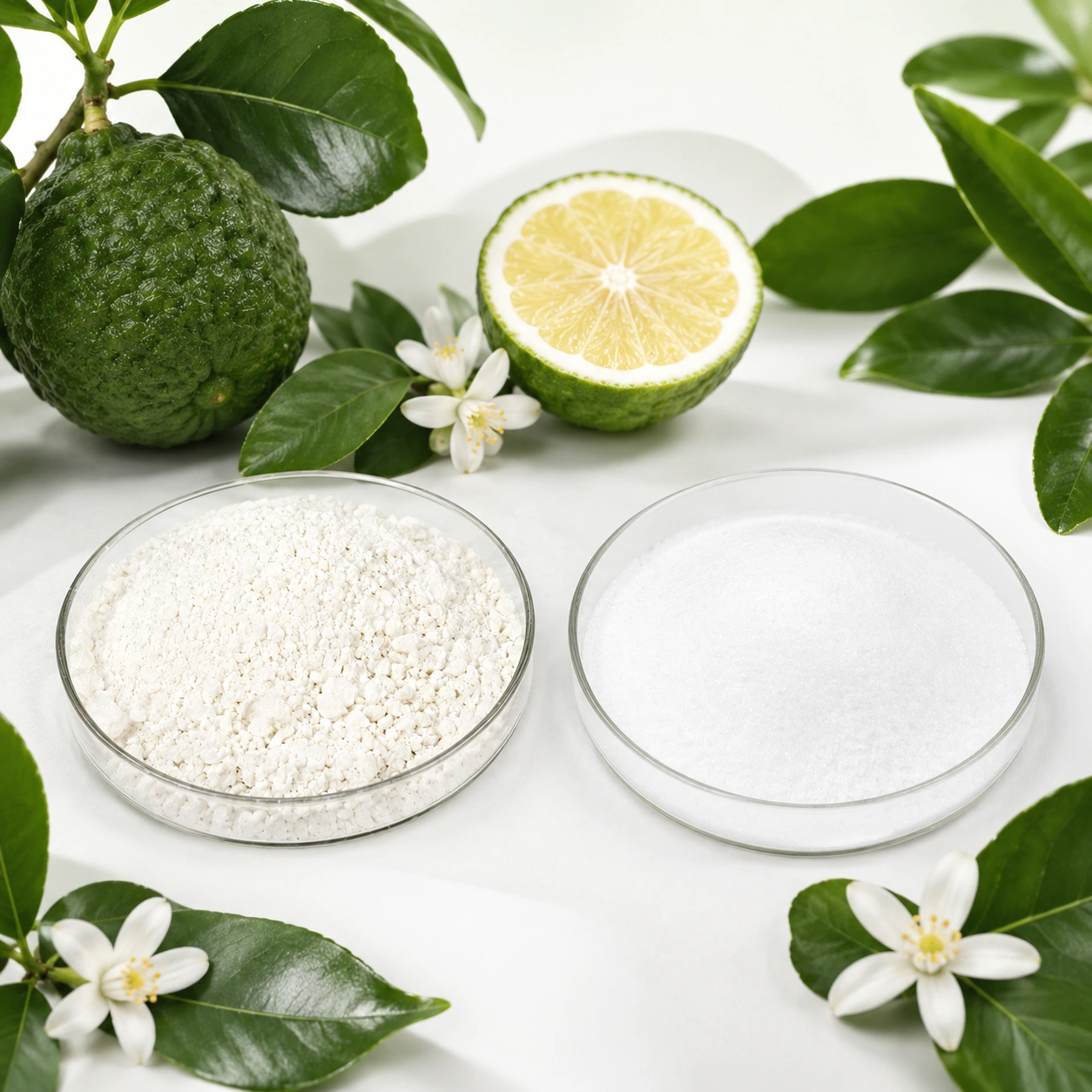
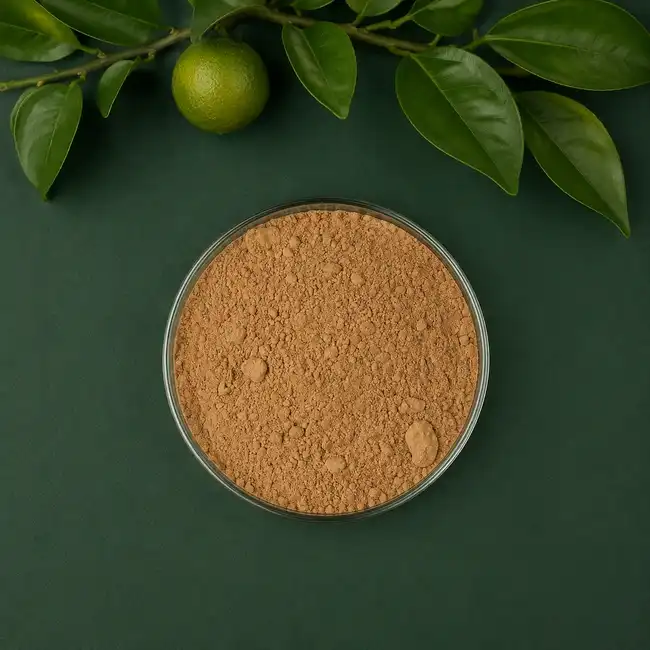
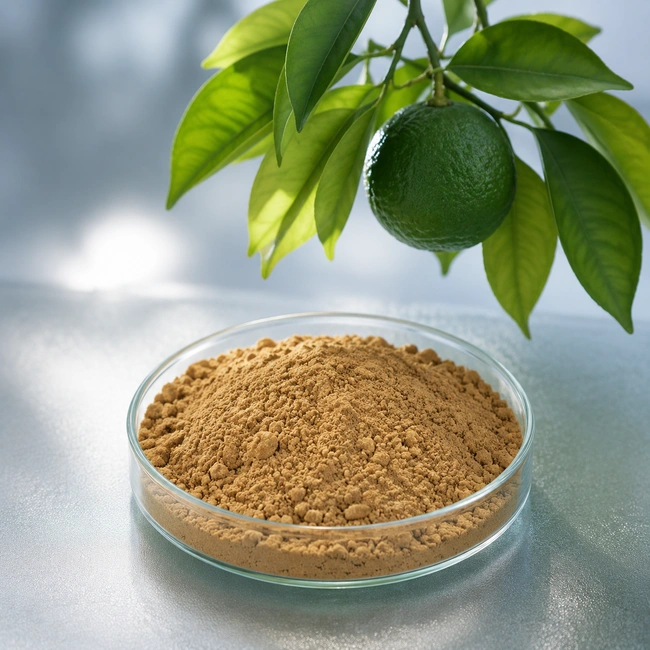
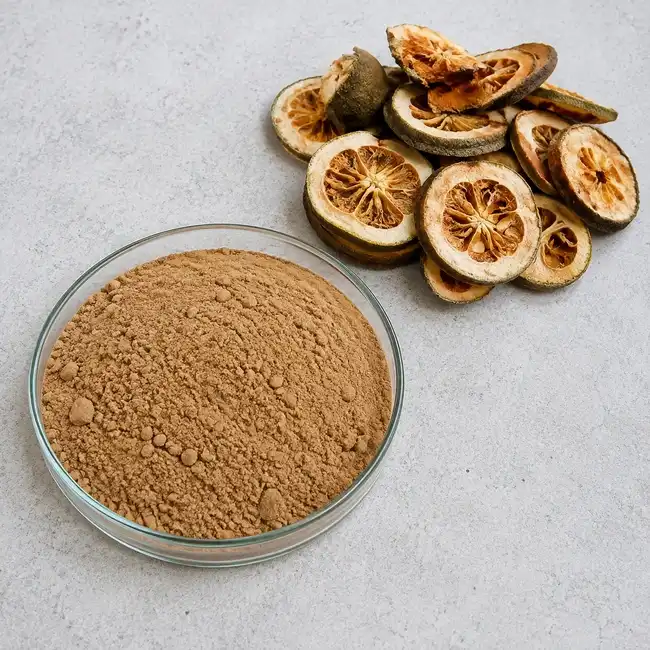
Apigenin powder (CAS No. 520-36-5) is a naturally occurring flavone that is chemically known as 4',5,7-trihydroxyflavone. It is taken from parsley, celery, citrus plants, and chamomile flowers. Kang Biotech's apigenin powder comes from the bitter orange plant Citrus aurantium L. It has the chemical formula C₂₈H₃₄O₁₅ and has been tested and proven to be 98% pure using HPLC. The EINECS number for it is 236-216-9, and it looks like a light yellow to yellow powder.
Standardization is what sets pharmaceutical-grade apigenin powder apart from raw plant products. Some raw chamomile extracts may only have 5–10% apigenin powder. Our 98% HPLC-grade material, on the other hand, gives formulators accurate, repeatable dosing—usually between 50 mg and 200 mg per serving—without the plant waxes or changing potency that come with crude powders.
Understanding Apigenin Powder: Definition and Key Properties
How Apigenin Works in the Body
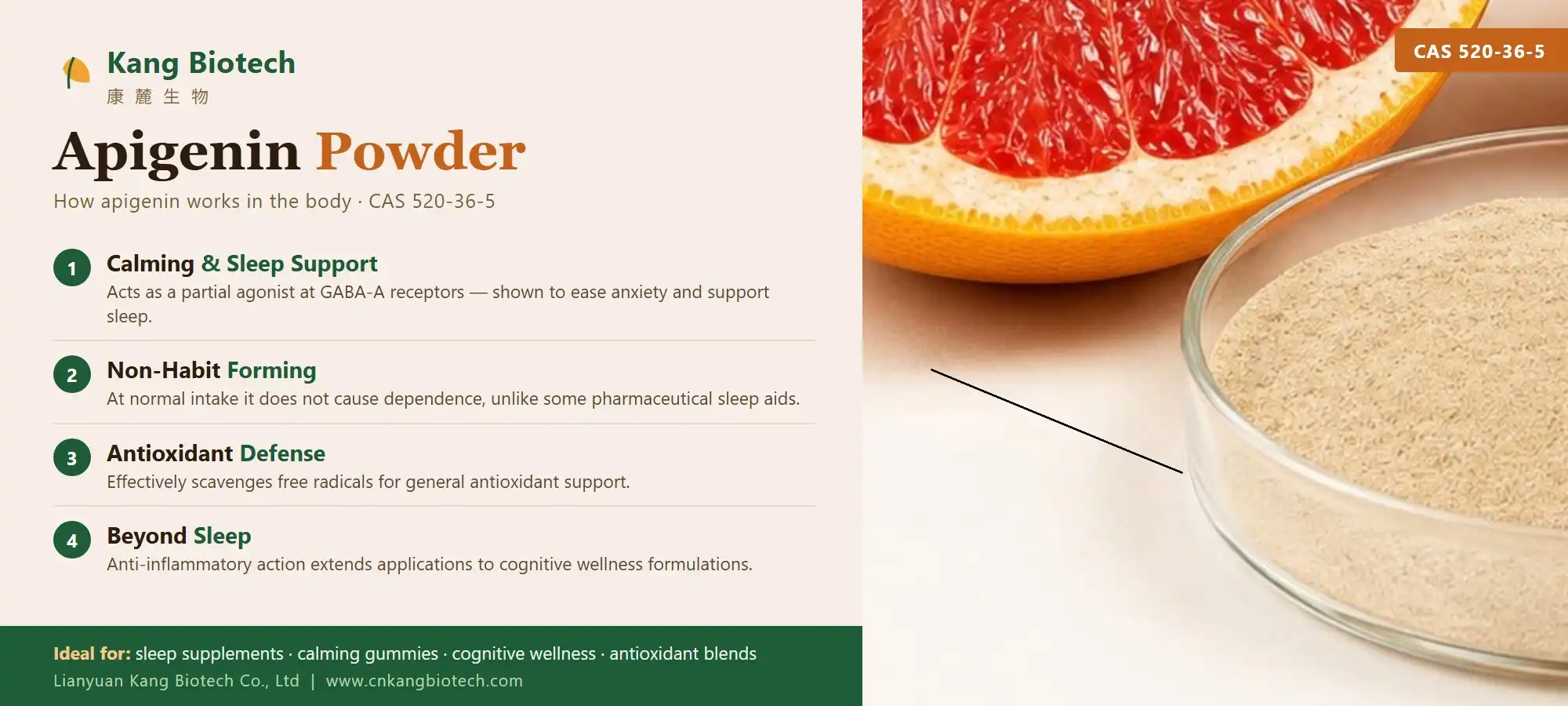
Apigenin powder mostly works as a partial agonist at GABA-A receptors, which explains why it has been shown to help people with anxiety and sleep. When taken in normal amounts, it does not cause dependence like some pharmaceutical sleep aids do. It also effectively gets rid of free radicals and reduces inflammation, which means it can be used in formulations for more than just sleep, like those for cognitive wellness and general antioxidant support.
Bioavailability Considerations for Formulators
Apigenin powder is lipophilic, which means that regular powder doesn't mix well with water. This is easy to work with in capsule and softgel forms; formulators often mix it with medium-chain triglycerides or use micronized grades (D90 < 10 microns) to make them easier to dissolve. When used in drinks, cyclodextrin inclusion complexes or liposomal solutions work best. Kang Biotech sells regular 80-mesh powder, and if you ask, they can also make micronized grades.
Apigenin Powder vs. Alternatives: Key Comparisons for Procurement
The choice of ingredients is more important than most people think when making a sleep stack or rest recipe. All three of these ingredients—apigenin powder, luteolin, and quercetin—are flavonoids that have antioxidant and anti-inflammatory properties. However, their ways of working and how they are positioned in the market are very different.
Luteolin is structurally similar to apigenin powder, but it is better at fighting inflammation and isn't usually linked to changing GABA receptors. Quercetin is used to help the nervous system and keep the heart healthy, which makes it a completely different market story. If a brand is going for sleep, relaxation, or the "sleep cocktail" format (apigenin powder + magnesium + L-theanine), apigenin powder is still the most popular ingredient and has the clearest story for customers.
When comparing formats, bulk powder vitamins are cheaper and give you more options for how to make them. Stability problems can happen with liquid concentrates. For OEM/ODM production, it's best to use bulk apigenin powder with verified COA paperwork. Its 98% HPLC purity makes sure you're not paying for filler.
Benefits and Safety Profile of Apigenin Powder for B2B Buyers
Key Functional Benefits
There is published research that supports the use of apigenin powder in supplement formulations. Here are the main places where there is the most evidence:
- Sleep and relaxation support: Apigenin powder's partial agonism at GABA-A receptors helps with sleep and relaxation. It does this by lowering anxiety and sleep latency without making you dependent on sedatives. A 2017 study published in Phytomedicine showed that certain plants can help reduce anxiety in animal models, which fits with this idea.
- Antioxidant activity: Apigenin powder successfully removes reactive oxygen species, which is important for goods focused on maintaining cell health and aging in a healthy way.
- CD38 inhibition: New study connects apigenin powder to CD38 inhibition, which raises NAD+ levels in cells. This connects it to the market for longevity supplements, which is a growing related area.
- Anti-inflammatory modulation: Several in vitro studies confirm that apigenin powder can stop pro-inflammatory cytokines, which makes it useful for a wider range of wellness products.
Regulatory and Safety Considerations
Most people agree that taking apigenin powder supplements in normal amounts (50–200 mg/day) is safe. When joining the US market as a business, buyers should be aware that products added after 1994 may need to be reported to the FDA as a "New Dietary Ingredient." In the EU, Novel Food rules should be looked at again based on the style and promise. Reliable apigenin powder providers back up their regulatory files with full paperwork, such as a certificate of analysis (COA), HPLC test results, and botanical traceability. With every order, Kang Biotech sends a full set of paperwork.
Procurement Guide: How to Source High-Quality Apigenin Powder
When looking for bulk apigenin powder, you should never base your choice on price alone. A direct-to-consumer company protecting its Amazon listing cares a lot more about purity checks, clear supply chains, and reliable wait times. These things really set trustworthy apigenin powder sellers apart from trade brokers:
- Purity documentation: Ask for 98% HPLC assay reports with every batch. Consistency from batch to batch is a must for repeat formulas.
- Botanical traceability: Check the source of the plant that was said to be used. Kang Biotech gets apigenin powder from Citrus aurantium L. plants grown in Hunan Province, China. The company can track the extract all the way from the plantation to the finished product.
- Natural vs. synthetic origin: Natural apigenin powder is more expensive than synthetic apigenin powder because it comes from plants. For brands that need to back up their "natural" claims, C14 carbon dating can prove that an ingredient comes from a plant.
- MOQ and sample availability: New businesses can't handle high MOQs. Kang Biotech has a minimum order quantity of 1 kg, and samples are available so that brands can check the quality before committing to a large order.
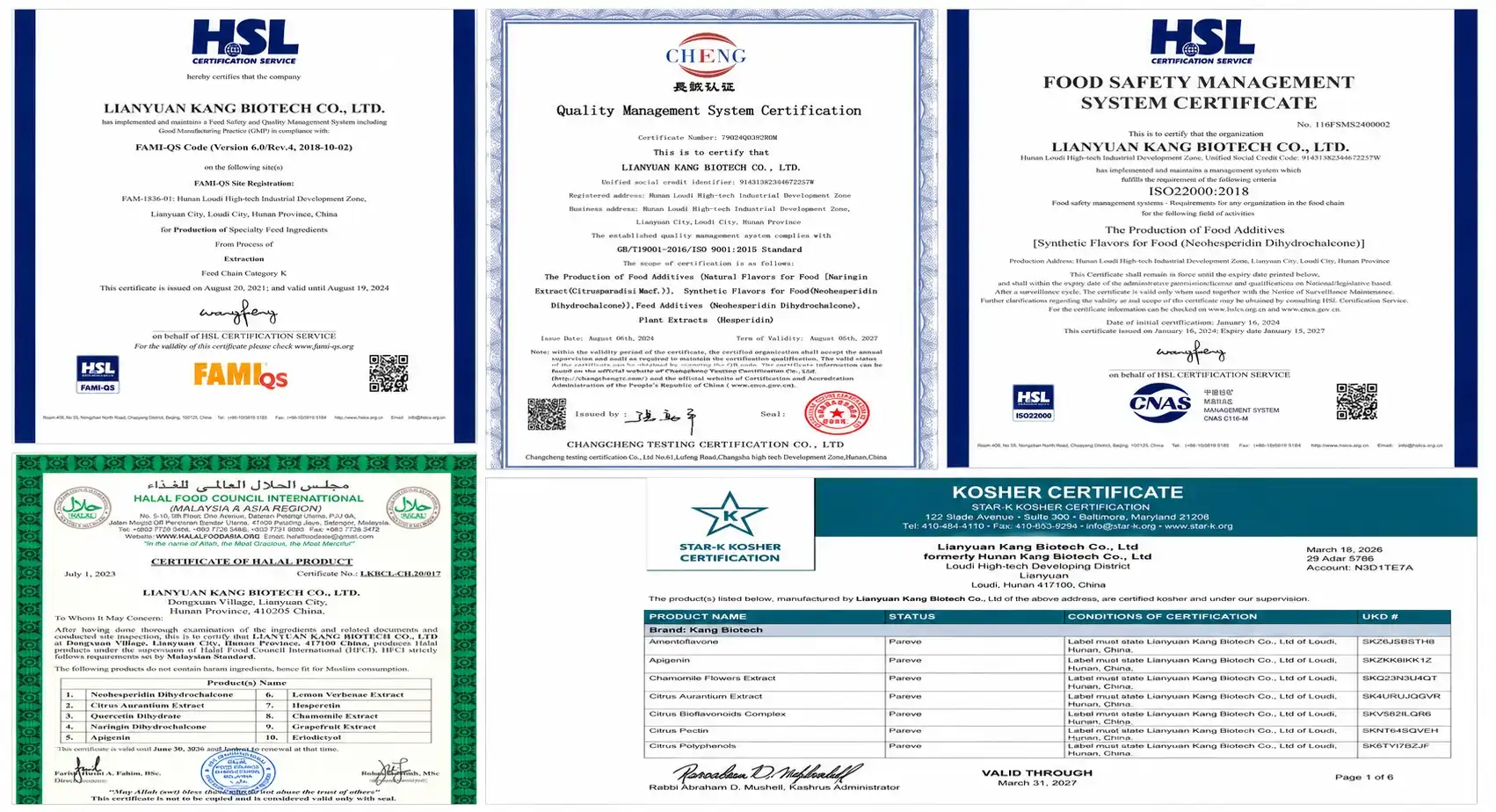
- Certifications: Make sure you have ISO 9001, ISO 22000, HACCP, Kosher, and Halal certifications as a minimum to be compliant with global market standards.
After going over these criteria, you should test a physical sample before placing your first commercial order. Testing your sample in a lab that is not connected to you adds another level of verification that protects your brand further down the line.
Future Trends and Market Outlook for Apigenin Powder in Supplements
According to Grand View Research (2023), the sleep supplement market in North America will be worth more than $100 billion by 2030. People prefer natural ingredients that don't make them dependent on the supplement. Apigenin powder is at the point where three trends are coming together: the sleep economy, the NAD+ life space, and the desire for clean labels.
As an option to melatonin, which is limited in some European markets, formulators are putting together more and more of the "sleep cocktail" mix of apigenin powder, magnesium glycinate, and L-theanine. There is a lot of room for brands that can move quickly and get high-purity apigenin powder from a good source.
The other important thing to think about is the resilience of the supply system. When a top-selling SKU depends on a single active ingredient, brands that trade directly with manufacturers instead of going through middlemen get more stable prices and a steady supply of goods.
Conclusion
Apigenin powder is on shortlists of ingredients for good reasons: it has strong mechanistic evidence, a clean plant origin, a range of formulation options, and a consumer story that rings true across health, sleep, and calm categories. When brands and contract makers are growing in this space, the choice of which seller to buy from comes down to how reliable they are, how well they can verify purity, and how well they can grow without any problems. These aren't just theoretical worries; they have real effects on things like product accuracy and business continuity.
FAQ
1.What purity level of apigenin powder should I specify for supplements?
For making supplements, 98% HPLC is the norm for commercial-grade apigenin powder. This level of purity allows for precise milligram dosing and gets rid of the batch variability that comes with extracts that aren't as well standardized.
2.How should apigenin powder be stored to maintain potency?
Apigenin powder reacts to light. Keep it in cases that can't be opened or exposed to light in a cool, dry place below 25°C. When stored properly, things stay active for 24 to 36 months. It is a good idea to test again after two years.
3.Can apigenin powder be used in functional beverages?
Standard apigenin powder doesn't mix with water, so it won't spread out in drinks that contain water. To keep the stability and absorption of cyclodextrin in beverages, inclusion complexes or nano-emulsified forms are suggested.
4.What is the minimum order quantity for apigenin powder?
Kang Biotech's minimum order size is 1 kg, and they offer samples so that customers can check the quality before placing large orders. Small items are sent by FedEx, while bigger amounts are sent by air or sea freight.
5.Is your apigenin powder natural or synthetic?
Our apigenin powder comes from a plant called Citrus aurantium L. If asked, C14 carbon dating can be used to prove that something is naturally occurring.
Source Your Apigenin Powder from Kang Biotech
In Hunan, China, Kang Biotech has over 20,000,000 m² of bitter orange plantations and a 33,000 m² approved production center where they make apigenin powder. We ship from ready-to-ship stock, from 1 kg samples to full commercial volumes, and we can help with OEM and ODM. You can email our technical team at sales02@kangbiotech.com to ask for a sample and COA paperwork right now.
References
1. Salehi, B. et al. "The Therapeutic Potential of Apigenin." International Journal of Molecular Sciences, 2019.
2. Viola, H. et al. "Apigenin, a Component of Matricaria recutita Flowers, Is a Central Benzodiazepine Receptors-Ligand with Anxiolytic Effects." Planta Medica, 1995.
3. Shukla, S. & Gupta, S. "Apigenin: A Promising Molecule for Cancer Prevention." Pharmaceutical Research, 2010.
4. Grand View Research. "Sleep Aid Supplements Market Size & Trends Report." Grand View Research, 2023.
5. Elshabrawy, H.A. et al. "Flavonoids as Modulators of GABA-A Receptors." Neurochemical Research, 2020.
6. Rajput, S.A. et al. "Apigenin: A Review of Its Occurrence, Biological Activity, and Potential Nutraceutical Applications." Journal of Functional Foods, 2021.

Send Inquiry
Related Industry Knowledge
- How to Select a Bulk Naringenin Powder Supplier
- Apigenin for Sleep: What This Chamomile Compound Does
- How Sweet Is Neohesperidin Dihydrochalcone Powder?
- What Is Naringenin Powder and How Is It Used?
- Evidence for the Health Effects of Hesperidin
- What Is Apigenin Powder and Why Is It Gaining Popularity in Supplements?
- Hesperidin: A Citrus Treasure with a Rich History