Apigenin for Sleep: What This Chamomile Compound Does
September 8, 2026
If you've been tracking the sleep supplement market lately, you already know that apigenin powder has moved from niche ingredient to must-have formulation component almost overnight. This flavonoid — standardized to 98% purity via HPLC and derived from Citrus aurantium L. — binds to GABA-A receptors in the brain, producing measurable calming and sleep-promoting effects without the dependency risks associated with pharmaceutical sleep aids. Whether you're building a "sleep stack" gummy or a clean-label capsule line, understanding what apigenin powder actually does — and how to source it responsibly — is the foundation of a competitive product.
What Is Apigenin and How Does It Support Sleep?
The Science Behind GABA Receptor Binding
Apigenin, with the CAS number 520-36-5, is a flavone that occurs naturally and has the formula C28H34O15. It is categorized under EINECS 236-216-9. At the level of the brain, apigenin partially binds to benzodiazepines on GABA-A receptors and makes them work. Viola et al.'s 1994 study in Planta Medica confirmed this binding activity, which leads to less neuronal excitability. This is the biological process most directly linked to falling asleep faster and staying asleep longer at night.
Concentration and accuracy are what set high-purity apigenin powder apart from regular chamomile flower extract. A lot of different plant chemicals are found in crude chamomile extracts, but only 0.5 to 3% of them are apigenin. When working with milligram-level dosages, it's important that the active load stays the same in every batch of a 98% HPLC-standardized powder.
Antioxidant Activity That Supports Restorative Sleep
Not only neurochemicals affect how well you sleep. Oxidative stress has been shown to mess up the structure of sleep, especially the deep-wave and REM states. Several in vitro studies have shown that apigenin powder has significant free radical scavenging activity. This creates a physiological environment that is better for restorative rest. Because it works as both a neuroprotectant and a neuroprotectant, it is a very good single ingredient for a multi-benefit sleep recipe.
Health Benefits and Safety Profile
For relaxation and sleep support, research backs up a dose range of 50–200 mg per day. Apigenin powder has been studied on both humans and animals and has been found to be safe at these concentrations. Unlike many synthetic sedatives, it doesn't make you sleepy in the morning or build up a tolerance that can be measured after regular use at standard doses.
Here are the main functional qualities of apigenin powder that make it useful in a wide range of formulations:
- Anxiolytic activity: Apigenin lowers anxiety-related neural firing by changing GABA-A receptors. This is one of the main reasons people say they have trouble sleeping. This makes it a good fit for "calm and sleep" product lines.
- Anti-inflammatory action: Pro-inflammatory cytokines, such as IL-6 and TNF-α, are stopped by apigenin, according to study published in Biochemical Pharmacology. More and more research shows that chronic low-grade inflammation can make it hard to sleep. This property is directly relevant to sleep health marketing.
- Antioxidant capacity: Scavenging free radicals helps cells stay healthy while you sleep, when your body is healing itself the most. This gives brands a trustworthy extra benefit to talk about.
Because of these features, apigenin powder is a flexible ingredient that supports a clean, evidence-based product story. This is exactly what direct-to-consumer (DTC) brands need to stand out on Amazon and in niche retail.
When it comes to not using it, apigenin may combine with CYP450 enzymes in large amounts, and makers should say not to use it while pregnant. Peer-reviewed research hasn't found any major side effects from taking standard supplement doses.
How Apigenin Powder Compares to Other Natural Sleep Ingredients
Concentration and Formulation Precision
Standard chamomile extract (usually a 2–4:1 concentration) can't give the precise dose that the preparation of a finished product needs. A 98% HPLC-standardized apigenin powder lets formulators make sure that each serving has the exact amount of 50 mg or 100 mg of apigenin, without the batch differences that come with plant extracts. This is very important in regulated markets where label claims have to match what's inside.
Flavonoids quercetin and luteolin are very similar to apigenin and both have some anti-inflammatory effects. However, neither of them binds to GABA-A receptors as strongly. Researchers have looked at luteolin for its ability to protect neurons and quercetin for its benefits to the heart. However, neither of these chemicals has the sleep-specific effect that makes apigenin the only one of its kind in the sleep supplement category.
Synergy in Sleep Stack Formulations
The new "sleep cocktail" trend combines apigenin, magnesium glycinate, and L-theanine. This mix works on several pathways at the same time, including apigenin's ability to change GABAergic signals, magnesium's ability to block NMDA receptors and relax muscles, and L-theanine's ability to increase alpha waves. This combination works well in candy and pill forms, and high-purity apigenin powder mixes well with both of them without causing any stability issues.
Sourcing High-Quality Apigenin Powder: What to Verify
There are different kinds of apigenin powder on the market. Instead of just looking at a spec sheet, procurement teams should demand specific paperwork and the ability to track goods when they are looking at different suppliers.
Before you place your first order, you should check the following things:
- Purity certification: Ask for an ISO-accredited third-party laboratory to give you a 98% HPLC certificate of analysis. For real ingredient purchase, batch-specific COAs are the norm, not generic ones.
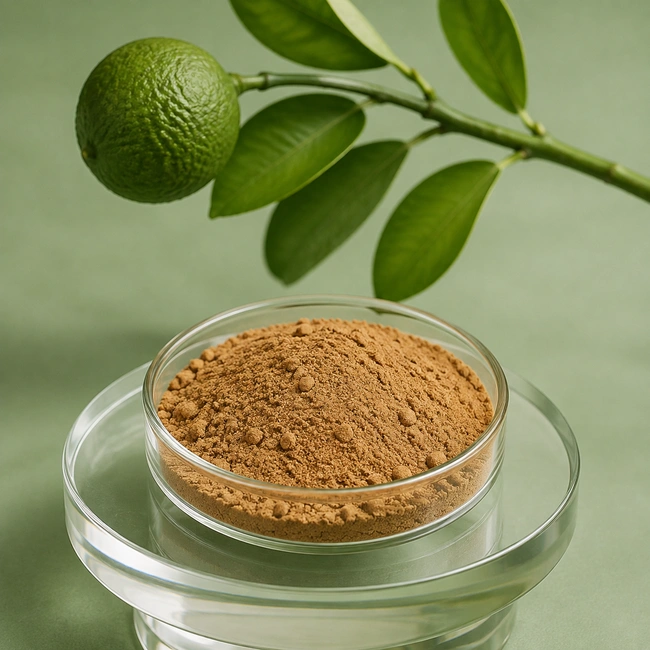
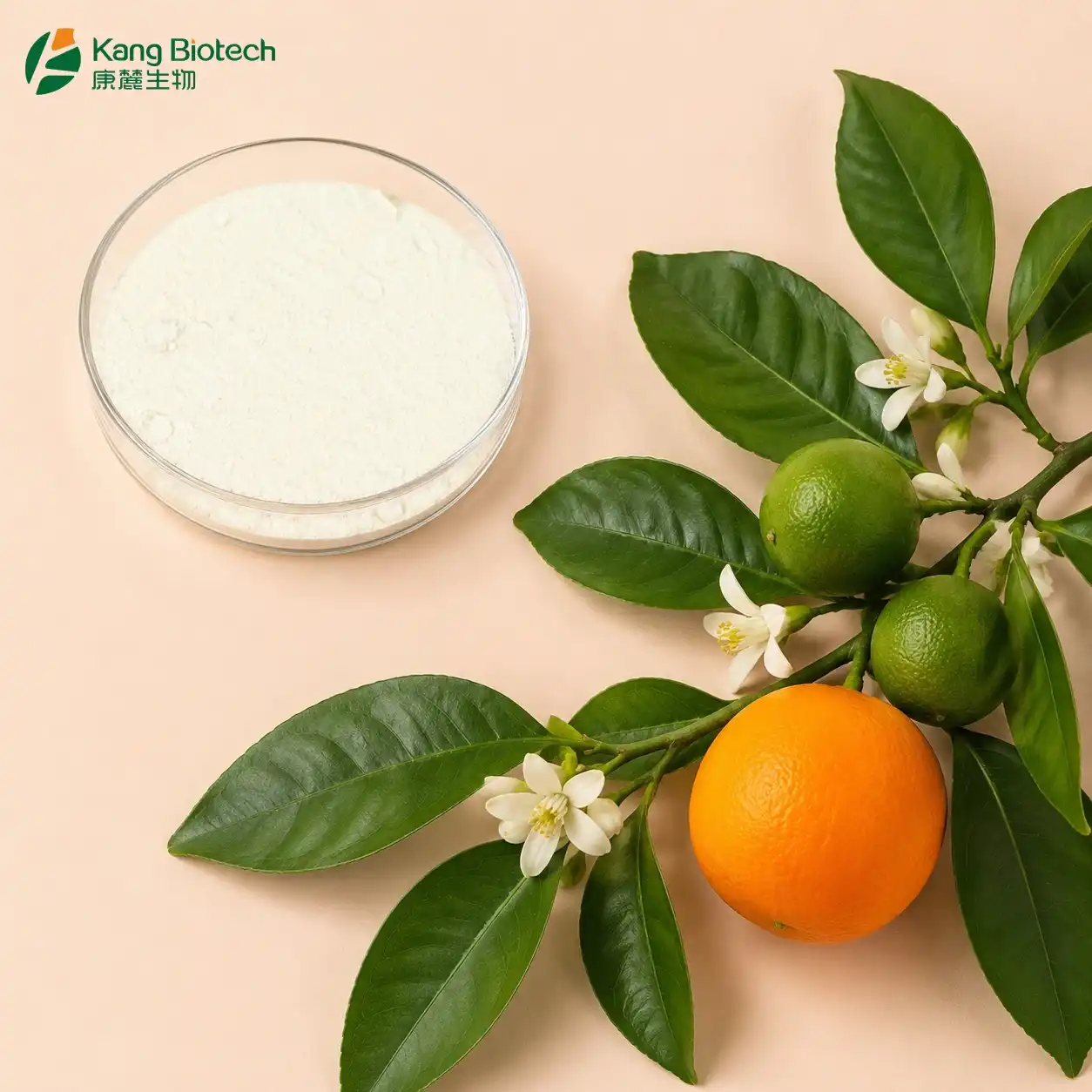
- Botanical traceability: Make sure you know which plant came from where. Kang Biotech's apigenin powder comes from Citrus aurantium L. (bitter orange) plants grown in Lianyuan, Hunan Province. The whole supply chain, from the farm to the drum, can be tracked.
- Manufacturing credentials: When it comes to manufacturing, you should look for at least ISO 9001, ISO 22000, HACCP, Halal, and Kosher certifications. These aren't just papers; they show that the production process was followed correctly.
- MOQ and sample availability: A reliable maker will give samples before committing to a large order. Kang Biotech has a low-risk trial-to-scale procurement model that works with samples and a minimum order quantity of 1 kg.
All of these things help you tell the difference between a real manufacturer and a trading company that sells third-party goods at a higher price.
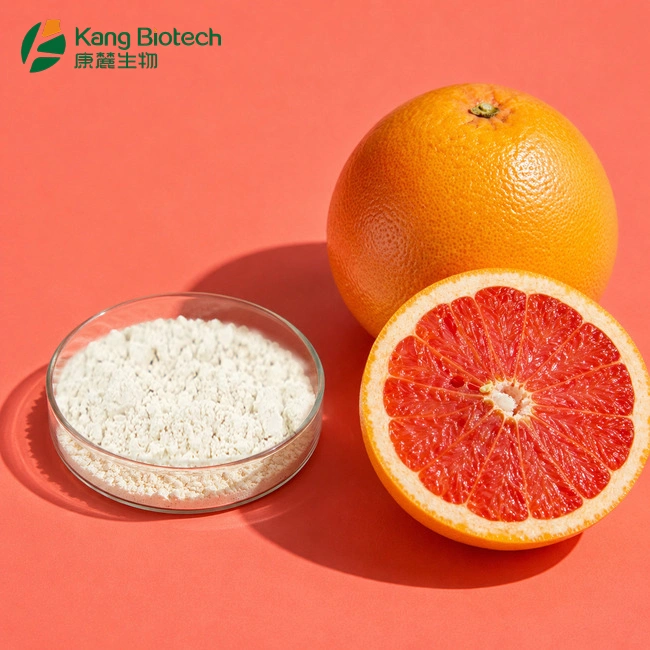
Kang Biotech makes apigenin powder using both water extraction and ethanol extraction. The powder is a light yellow to yellow crystalline powder that is packed in 25 kg drums. There is always stock on hand so that orders can be sent out quickly. Small orders are sent via FedEx, and large commercial orders are sent by air or sea freight.
Integrating Apigenin Powder Into Your Product Line
Formulation Formats and Stability Considerations
At the usual particle size of 80 mesh, apigenin powder works well in capsules and softgels. Because it is lipophilic, it needs to be mixed with a fat-containing carrier phase or mixed in before it is used in gummy forms. Kang Biotech provides OEM and ODM customization services, such as micronized grades (D90 < 10 microns) for uses that need better breakdown. In the United States, apigenin is labeled as a food ingredient so that it can follow the rules. Brands that want to get into the market should talk to their regulatory counsel about the NDI notification requirements. Kang Biotech's technical team can help with this process by providing ingredient documentation. At pH 3.0 to 7.0, stability is kept. Apigenin powder has a shelf life of 24 to 36 months when stored properly in a cool, dry, and light-resistant environment. For long-term inventory, it's best to do a new batch test every 24 months.
Conclusion
Apigenin powder has a solid, well-researched place in the market for sleep aids. Its ability to work as an antioxidant, inhibit inflammation, and activate GABA-A receptors gives formulators real science to work with, not just a trendy ingredient story. With 98% HPLC purity and a citrus source that can be tracked, it gives serious DTC brands and contract makers the stability they need in their formulations. It's likely that apigenin will become even more important as the sleep stack group grows, rather than less important.
FAQ
1.What dosage of apigenin is effective for sleep support?
50–200 mg of high-purity apigenin every day may help you sleep and relax, according to research. At 98% HPLC purity, it is possible to make a precise low-dose formulation without adding impurities from lower-quality botanical matrices.
2.Is apigenin powder natural or synthetic?
The apigenin powder made by Kang Biotech comes from a plant called Citrus aurantium L. Carbon-14 testing can prove that something is naturally occurring, telling the difference between material that comes from plants and material that is made from petroleum.
3.How does apigenin differ from chamomile extract?
Chamomile extract usually has between 0.5 and 3 percent apigenin in it, along with many other plant chemicals. Standardized apigenin powder that is 98% pure gets rid of that variation, making it possible to give exact doses and make sure that finished goods work the same way from batch to batch.
4.Can apigenin powder be used in gummy formulations?
Yes, with some changes to the composition. Because apigenin likes fat, it needs a solubilizing carrier or a fat-based dispersion medium to make sure that it is evenly distributed and bioavailable in the finished product.
5.What certifications should I request from a supplier?
If the people you want to sell to needs them, ask for batch-specific COAs with HPLC test results, ISO 9001/22000 certificates, HACCP paperwork, and Halal/Kosher certifications. All of these belong to Kang Biotech.
Source Your Apigenin Powder With Kang Biotech
It is known that Kang Biotech makes and sells apigenin powder. They grow bitter oranges on more than 20 million square meters of land, have a 33,000 square meter GMP-certified production center, and can track their supplies directly from the raw plant to the finished product. As little as 1 kg is needed. To ask for a COA, sample, or recipe advice, email sales02@kangbiotech.com and talk to our technical and sales team.
References
1. Viola, H., Wasowski, C., Levi de Stein, M., et al. (1995). Apigenin, a Component of Matricaria recutita Flowers, Is a Central Benzodiazepine Receptors-Ligand with Anxiolytic Effects. Planta Medica, 61(3), 213–216.
2. Wang, M., Firrman, J., Liu, L., & Yam, K. (2019). A Review on Flavonoid Apigenin: Dietary Intake, ADME, Antimicrobial Effects, and Interactions with Human Gut Microbiota. BioMed Research International.
3. Salehi, B., Venditti, A., Sharifi-Rad, M., et al. (2019). The Therapeutic Potential of Apigenin. International Journal of Molecular Sciences, 20(6), 1305.
4. Shukla, S., & Gupta, S. (2010). Apigenin: A Promising Molecule for Cancer Prevention. Pharmaceutical Research, 27(6), 962–978.
5. Elsohly, M. A., & Gul, W. (2014). Constituents of Cannabis Sativa. In Handbook of Cannabis. Oxford University Press.
6. Miroddi, M., Calapai, G., Navarra, M., Minciullo, P. L., & Gangemi, S. (2013). Passiflora incarnata L.: Ethnopharmacology, Clinical Application, Safety and Evaluation of Clinical Trials. Journal of Ethnopharmacology, 150(3), 791–804.