
Polymethoxy Flavonoids Powder: A Guide to Citrus PMFs
November 16, 2026
When you take polymethoxy flavonoids powder from citrus fruits, you'll find PMFs like nobiletin, tangeretin, and sinensetin. These chemicals break down better in fat than flavonoids found in citrus fruits, like hesperidin, because they have more methoxy groups. Polymethoxy flavonoids powder is present in supplements, functional foods, and formulas for healthy aging. What are PMFs? How are they made and tested? How can I compare grades? What should I ask a supplier before I place an order? Another thing I talk about is the standard that Kang Biotech gives you: an 80% HPLC extract that has been used for nobiletin and tangeretin.
What Is Polymethoxy Flavonoids Powder and Where Do Citrus PMFs Come From?
Citrus PMFs and Their Key Compounds
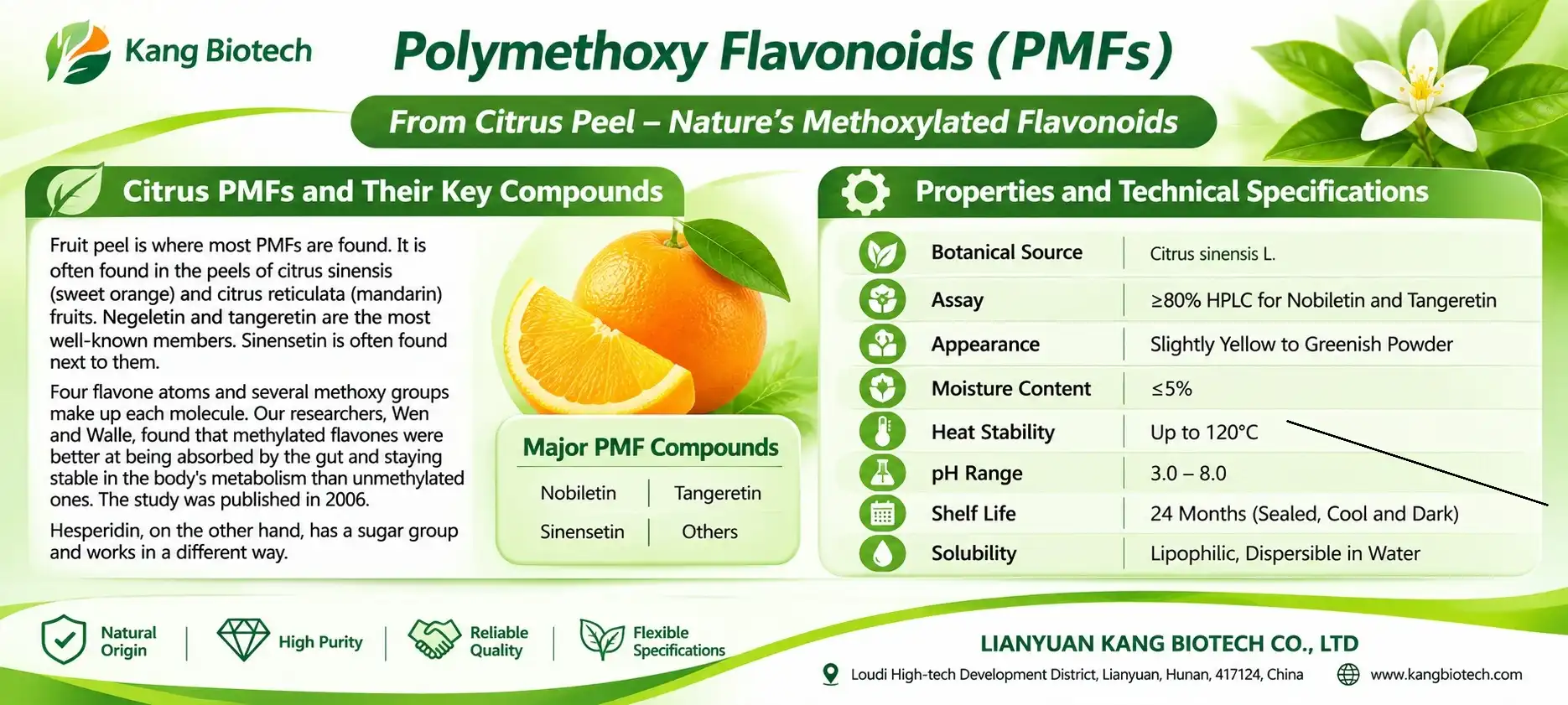
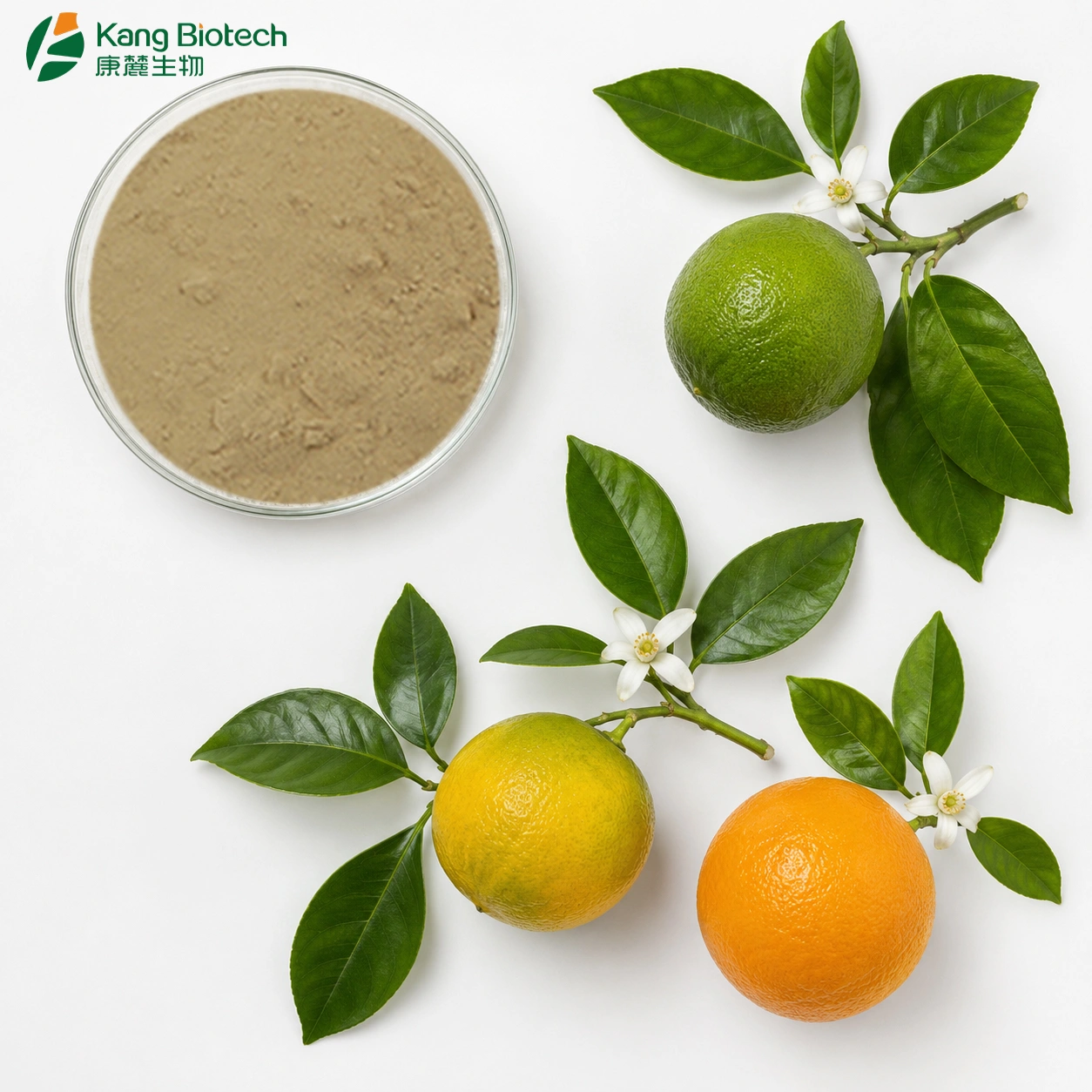
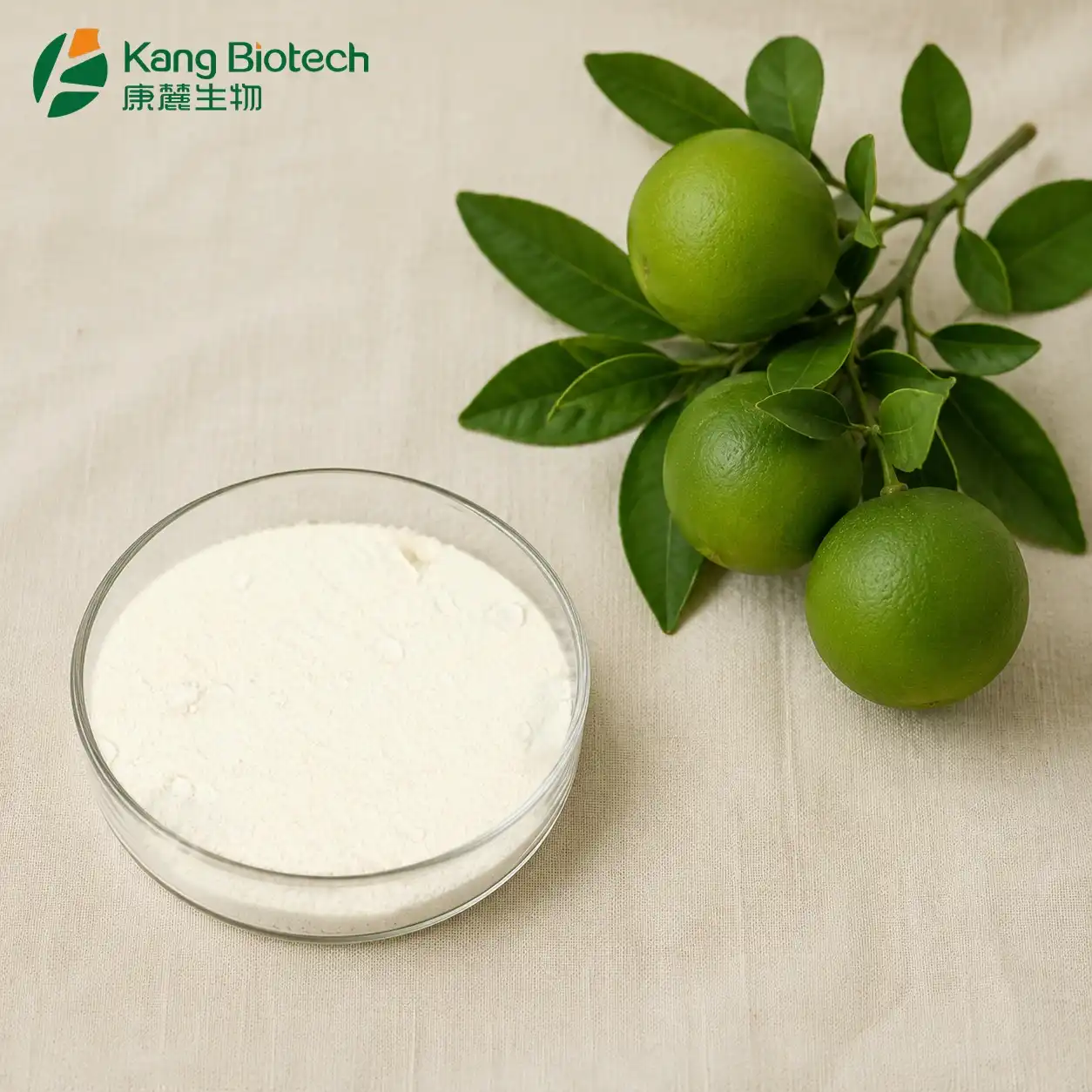
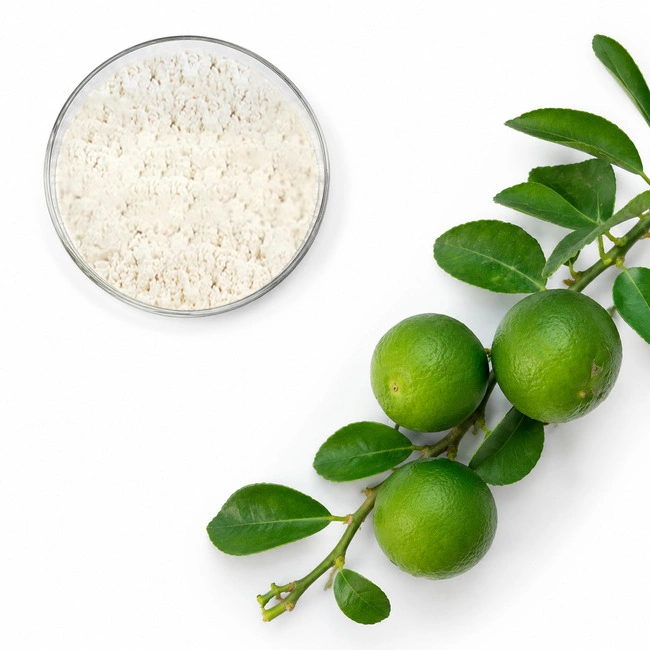
Fruit peel is where most PMFs are found. It is often found in the peels of citrus sinensis (sweet orange) and citrus reticulata (mandarin) fruits. Negeletin and tangeretin are the most well-known members. Sinensetin is often found next to them. Four flavone atoms and several methoxy groups make up each molecule. Our researchers, Wen and Walle, found that methylated flavones were better at being absorbed by the gut and staying stable in the body's metabolism than unmethylated ones. The study was published in the journal Drug Metabolism and Disposition in 2006. Hesperidin, on the other hand, has a sugar group and works in a different way. When you go shopping for polymethoxy flavonoids powder, you can find different types, such as a multi-PMF extract, a single-compound powder, or a peel extract with a clear PMF level. That's why I always start with the specification line.
Properties and Technical Specifications
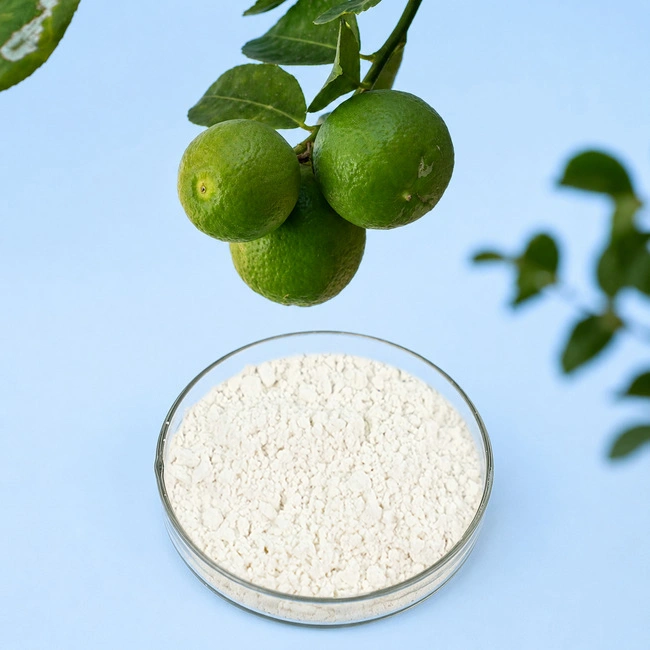
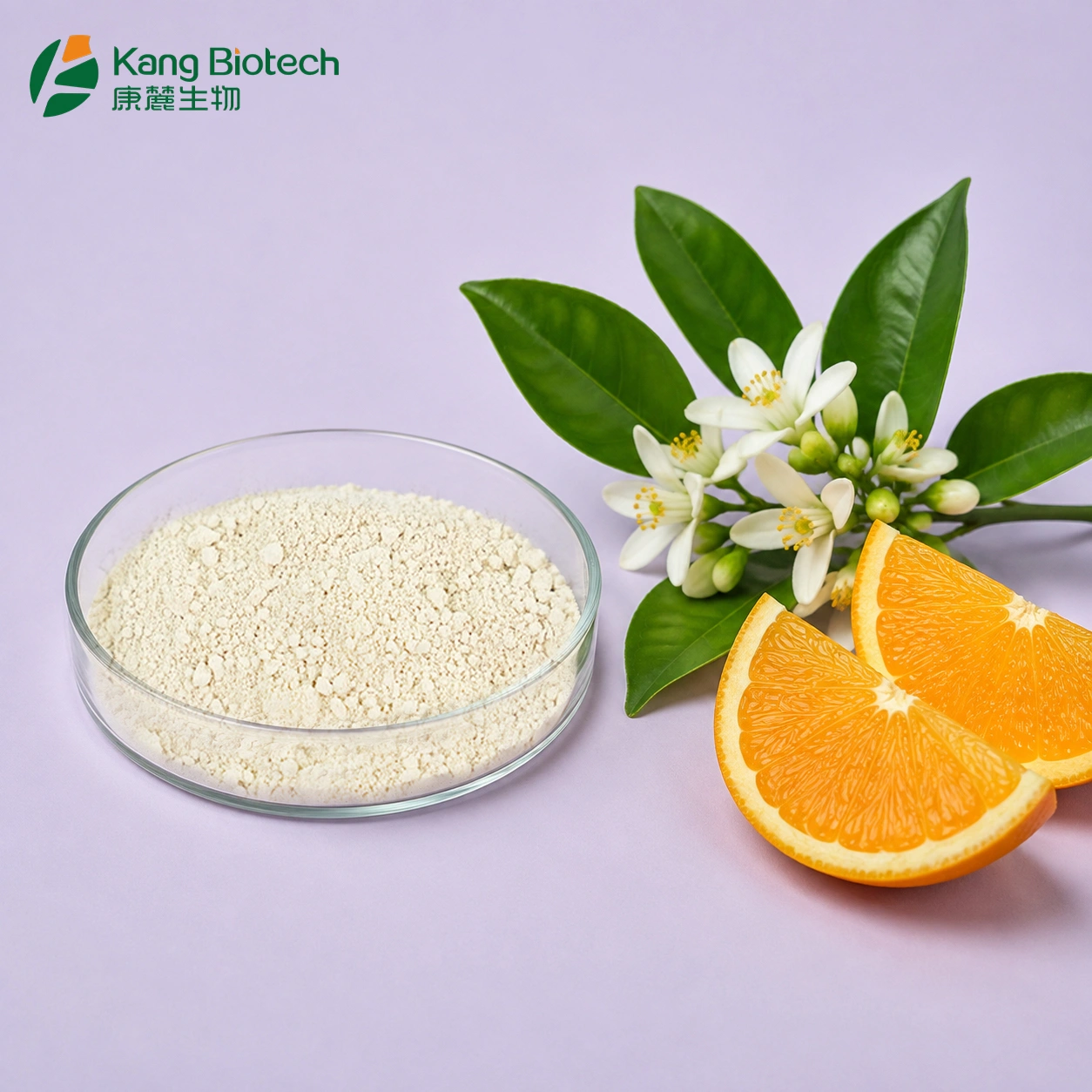
That is why our polymethoxy flavonoids powder is safe for food. It comes from Citrus sinensis L. It has been set to 80% HPLC for both nobiletin and tangeretin. There are hints of yellow and green in the powder, and the color changes as you add more of it. It doesn't have more than 5% water. Because it can handle temperatures up to 120°C and pH levels between 3.0 and 8.0, the extract is good for hot-filling and spray-drying. The food will last for 24 months if it is sealed, kept cool, and kept dark. Glossy flavonoids mix with water, but this powder doesn't because the molecules are lipophilic. You can change things to get different levels of specifications.
Composition and Nutritional Characteristics
For the phytochemicals it has, people buy small amounts of polymethoxy flavonoids powder. Not for the calories or vitamins it has. There are different ways to read a pure compound, a peel extract, a spray-dried material, and a carrier-based blend on paper, so the composition changes based on the format. You should check the certificate of analysis to see the total PMF content, levels of each marker, carrier composition, residual solvents, and contaminant results. Also, be sure of the species, part of the plant, where it came from, and how it was extracted. Kang Biotech is in charge of more than 20,000,000 m² of bitter orange plantations in Lianyuan, Hunan Province. We can see for ourselves how good the raw materials are, and there is a clear record of what happened.

Polymethoxy Flavonoids Powder Benefits and Potential Uses
Research Areas Behind Citrus PMFs
Researchers are interested in citrus PMFs because they have antioxidant properties and help with metabolic health and brain health. According to a study published in 2011 in Diabetes, nobiletin could lower VLDL levels and atherosclerosis in mice that had insulin resistance because of the food they ate. Researchers in 2019 published a review of nobiletin that looked at it in models of Alzheimer's and Parkinson's disease. A review of chemistry from 2009 in the Journal of Functional Foods lists a lot more bioactivities. Most of this work has been done on cells and animals. What happens is based on the chemical, the dose, and how it is given. These results are interesting to me, but I don't think they mean anything for sure. What brands say about their claims should be the same.
Applications in Supplements and Foods
Polymethoxy flavonoids powder is used by formulators in functional drinks, sports nutrition, nutraceutical blends, capsules, tablets, and softgels. Because PMFs are lipophilic, pills, softgels, and liquids made from fats tend to work well for them. Based on our technical data, micronized material can still be used after being homogenized at high shear in the beverage production process. As long as the processing temperature and pH are normal, the extract stays strong. Micro-encapsulation and emulsification are two ways we make clear drinks that can be mixed with cold water. The rules for each type of PMF use are different. They are also used for research projects and cosmetics. To make sure the format is right for the product, look at the particle size, color, flavor, how stable it is in heat and light, and how well it works with other ingredients.
Fit for Healthy Aging and Metabolic Formulas
Most of the time, anti-inflammatory and longevity brands want a story with more than one flavone agent, not just one. The concentrated polymethoxy flavonoids powder has a lot of different chemicals in it. It naturally has a lot of nobiletin and tangeretin. It's not even close to being like one molecule. Because it naturally has antioxidants, it also supports clean label positioning for healthy aging. Some groups that work with older people mix PMFs with omega-3 fatty acids. These kinds of claims need to be carefully worded and in the US always come with a disclaimer. Also, the FDA does not list PMFs as GRAS on their own. Before you go live, talk to a lawyer about your claims and the rules that apply to you.
How Polymethoxy Flavonoids Powder Is Extracted, Tested, and Formulated
Extraction and Manufacturing Steps
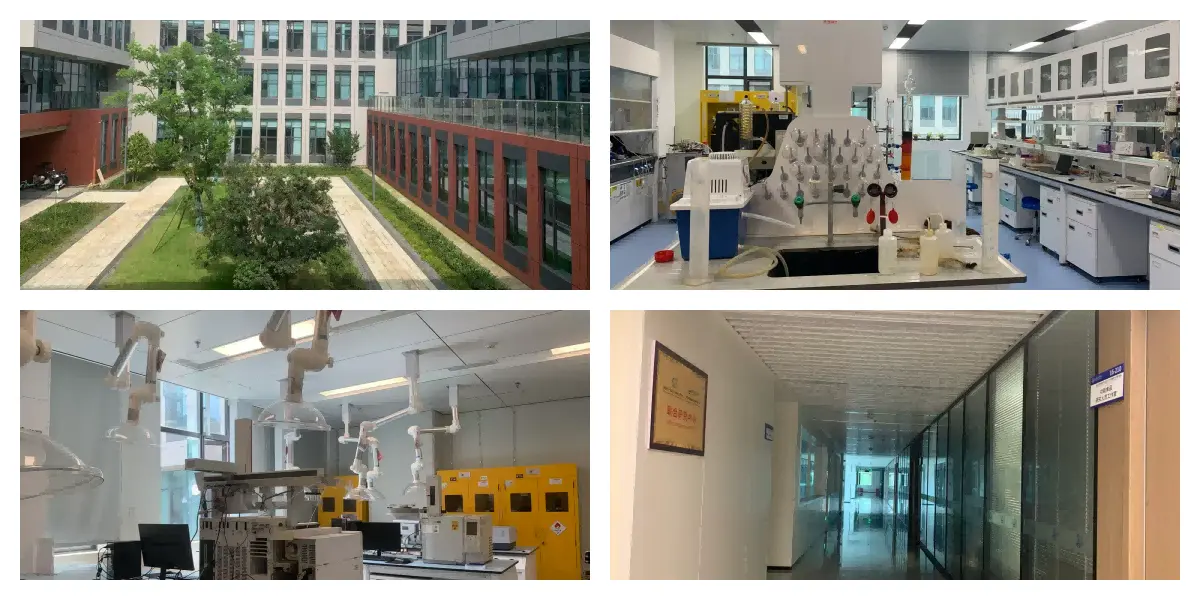
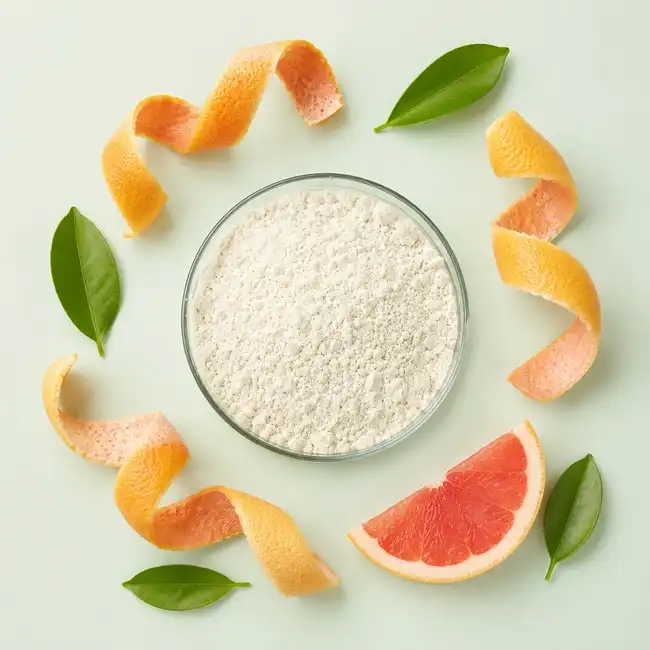
People pick out citrus peel, clean it, dry it, and then grind it up to make polymethoxy flavonoids powder. And then either water extraction or ethanol extraction is done, based on how pure and easily soluble the drug needs to be. The next steps are to filter, concentrate, clean, recover the solvent, and dry the mixture. When we clean something, we get rid of chlorophyll, waxes, and other unwanted things, but we don't touch the bioactive markers. After being sprayed dried, milled, and mixed, the assay, flowability, and color were set. KANG BIOTECH has a 33,000 m² building with 9 lines for making things. Our technical staff has been extracting citrus fruits for more than 20 years. We are also in charge of a research center that our company and the Hunan Institute of Agricultural Product Processing and Quality Safety work together on.
Quality Control and Testing
Microbiology, heavy metals, and lab tests are done on every batch of our polymethoxy flavonoids powder. Using HPLC-DAD fingerprinting on their ratios to find fake nobiletin, tangeretin, and sinensetin is a good way to find fake synthetic analogs. Heavy metal tests (Pb, As, Cd, and Hg) are done with the USP <233>. For microbial limits, the AOAC total plate count and yeast and mold methods are used. It can be seen from the GC-MS residual solvent analysis that the amount of ethanol stays below the ICH limit of 5000 parts per million. There are more than 400 pesticide residues that we check for. Flavonoids and carbon-14 tests show that the citrus comes from a natural source. There is a certificate of analysis for each batch push. It is approved by ISO 9001, ISO 22000, HACCP, FAMI-QS, Halal, and Kosher.
Solubility and Formulation Performance
This step is where a lot of projects get stuck. Pure polymethoxy flavonoids powder is lipophilic, which means it doesn't mix well with water. What it does is based on the particle size, purity, crystal form, pH, temperature, and the kind of carrier that is used. Many times, micronization, emulsification, lipid-based systems, complexation, and encapsulation are used to fix things. A very pure powder isn't always the best choice for drinks. Ask for the test medium, concentration, temperature, and how stable it is to reconstitute when you ask for data. Some of our products can be dissolved in cold water and are aerated. For oil-based softgels, do a small test run to make sure they mix well with your base.
Polymethoxy Flavonoids Powder Comparison: How to Choose the Right Type
PMF Blend Versus Single-Compound Powder
Hesperidin or naringin are the two main types of flavonoid powder that come from citrus fruits. What PMF powder is all about are the methoxylated parts. When you use a nobiletin or tangeretin powder, it only targets one marker with a clear assay, while a PMF blend sends out many compounds at once. If your science story is about a single molecule, a powder with only one compound will do. If you want a more complete picture, a multi-PMF extract is the way to go. People who sell the mix can also use it as a base to make more goods to sell. The words "natural," "enriched," "standardized," and "high-purity" should not be mixed up. It's not always true that "natural" means "purer," "more soluble," or "longer stable."
Reading Specifications and Fingerprints
It should say what "80%" on the label. Our polymethoxy flavonoids powder has to meet 80% HPLC for nobiletin and tangeretin. Ask each supplier to explain what a number means (for example, the sum of two markers or the total number of PMFs) and what standards and methods were used to get it. Another thing you should ask for is a chromatographic fingerprint. This will show how much nobiletin, tangeretin, sinensetin, and other flavones are there. Fingerprints let you see if a batch is consistent and if a broad claim is true. You shouldn't really compare PMF content and total flavonoid content from a colorimetric assay because they are different. Our team can talk about the fingerprint data we have on your group.
Common Pitfalls When Buying
People often do three things wrong when they are looking for polymethoxy flavonoids powder. First, they mix up the total amount of flavonoids and PMF. Second, they picked the powder that cost the least per kilogram without looking at how much it cost per active unit. A powder that costs less might have more carrier or less testing. Third, they think that clean means it flows well or tastes good. Check this in your own matrix to see if it's true. The lot number, test date, method, assay definition, and contaminant results should all be written on a useful COA. Finally, compare the rules for labeling and claims in the US with those in the EU or UK. Something that works for one market might need to be changed for another.
Buying Polymethoxy Flavonoids Powder in Bulk from a Manufacturer
Questions to Ask Before You Order
Before I recommend a supplier, I use a short list. You should think about these three things before you buy polymethoxy flavonoids powder.
- Technical data: Ask for the specification, a recent batch COA, the analytical method, marker levels, a chromatographic fingerprint, solubility data, shelf life, and storage needs. The documents should state botanical source, plant part, and extraction method, so you can trace each claim to a lot. Request them before sampling, not after.
- Commercial terms: Confirm the sample policy, minimum order quantity, price per active unit, packaging, labeling, export documents, and production capacity, and get payment terms and Incoterms in writing. Ask how the supplier handles repeat orders, because steady supply over several years matters more to a growing brand than one attractive quote.
- Product trial: Run the sample in a pilot formulation before final approval. Check stability, taste, color, dosage, and delivery format, and record the results against your own specification. This step costs little and prevents expensive surprises during scale-up. Include any heat, light, or storage stress your finished product will face.
When these checks are done, the same criteria are used to compare suppliers, not what the ads say.
Supply, Packaging, and Logistics from Kang Biotech
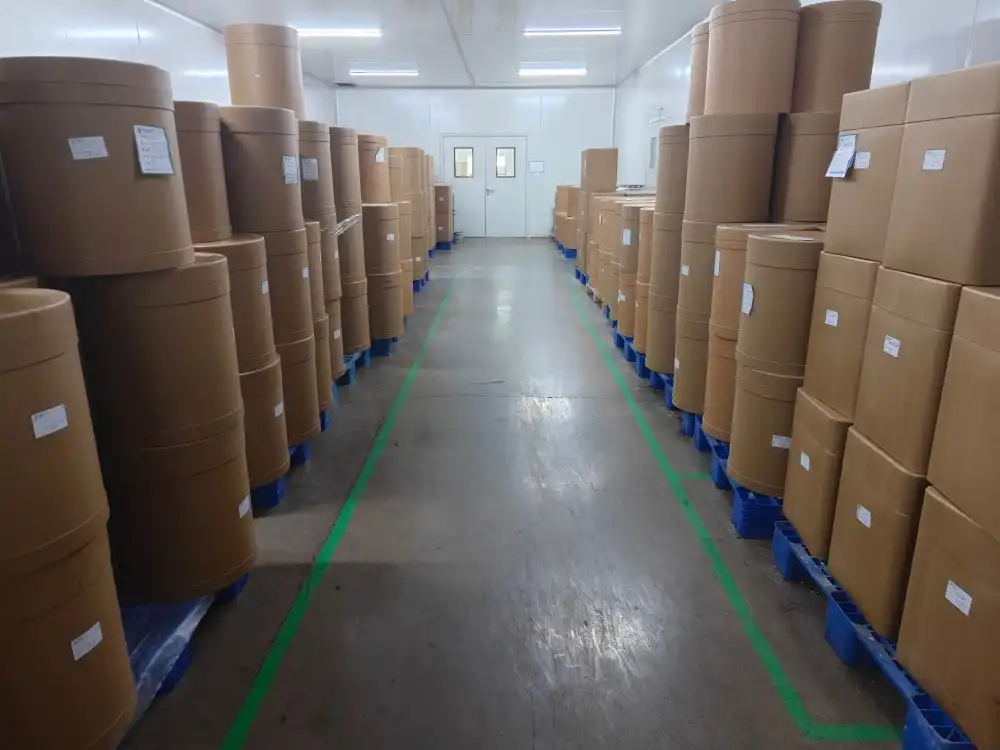
Over 40 countries have bought from Kang Biotech since it began in 2011. Our polymethoxy flavonoids powder is always sent in a 25 kg fiber drum with two food-grade polyethylene liners to keep out water. You can get samples, and 1 kg is the least you can order. We always have standard specs on hand. Large orders are sent by air or sea freight, along with the paperwork needed for customs and regulations. FedEx sends small packages. They can check our COA against the one they have if they want to see if it matches a nobiletin single-compound.
OEM and ODM Projects
Many brands need more than a bulk drum. Kang Biotech offers OEM and ODM services, such as custom labeling, packaging, packaging, and purity. We also get help with formulation from our technical team. To start, you need to choose the dosage form, serving size, formula idea, label language, target market, and volume you expect. A lot of the time, the first steps toward lab testing, pilot formulation, pre-production approval, bulk order, and batch release are technical advice and sample review. As soon as you tell us what PMF profile you want for your polymethoxy flavonoids powder, we'll let you know what ways of extracting and purifying it can give you that. People who work in tech support and sales help people with their questions and needs.
Conclusion
The label tells you what kind of polymethoxy flavonoids powder is being sold. This powder comes from citrus fruits and is made up of chemicals like nobiletin, tangeretin, and sinensetin. The lipophilic structure explains why the structure is interesting for research and why it can't dissolve in water. Formulators get around these issues by using encapsulation, emulsification, or lipid-based formats. If you look at the extraction method, the HPLC assay definition, the chromatographic fingerprints, and the contaminant testing, you can tell one lot from another. Instead of PMF data, you can't use the total number of flavonoids. A blend powder and a single-compound powder are used for various tasks. PMFs have mostly been studied in cells and animals, so claims need to be carefully worded. A sample, a batch COA, and a pilot formulation are the best ways for buyers to compare.
FAQ
1. Is polymethoxy flavonoids powder water soluble?
That's not how it is purest. PMFs don't spread well in plain water because they like fats. We have drink mixes that you can mix with cold water and are made by emulsification or micro-encapsulation. A small test will let you know if the standard powder spreads well. It works best for softgels and liquids that are based on fats.
2. What is the shelf life?
Food can be stored for 24 months if it is sealed, kept cool, and out of the light. Every time you use the liner, make sure to seal it again for safety.
3. How does it compare with hesperidin?
It has a sugar group, and PMFs have methoxy groups that make them like fats more. Methylated flavones are better absorbed in the gut and help keep the metabolism steady, but the effects depend on how much is given and how it is put into the body. They both help come up with ideas, but they don't switch places.
4. What are the minimum order and sample terms?
You can get samples, and a 25 kg drum is the standard pack. You have to order at least 1 kg. Small packages are sent by FedEx.
5. How do you verify botanical origin?
Carbon-14 testing and HPLC-DAD fingerprinting are used to make sure that the citrus comes from natural sources and to find any added chemicals. The fingerprint also lets you know when the markers are not arranged in a normal way.
Request a Polymethoxy Flavonoids Powder Quote from Kang Biotech
Want to buy polymethoxy flavonoids powder from a business that has it in stock? A 1 kg order is the least you can place. You can get samples, an 80% HPLC extract, and OEM/ODM service when you buy directly from Kang Biotech. Send an email to sales02@kangbiotech.com with the details, volume, and location you want. Our team will get back to you with a quote, a COA, and a sheet of specifications. Visit cnkangbiotech.com to find out more.
References
1. Li S, Pan M-H, Lo C-Y, et al. Chemistry and Health Effects of Polymethoxyflavones and Hydroxylated Polymethoxyflavones. Journal of Functional Foods, 2009.
2. Wen X, Walle T. Methylated Flavonoids Have Greatly Improved Intestinal Absorption and Metabolic Stability. Drug Metabolism and Disposition, 2006.
3. Mulvihill EE, et al. Nobiletin Attenuates VLDL Overproduction, Dyslipidemia, and Atherosclerosis in Mice With Diet-Induced Insulin Resistance. Diabetes, 2011.
4. Nakajima A, Ohizumi Y. Potential Benefits of Nobiletin, a Citrus Flavonoid, against Alzheimer's Disease and Parkinson's Disease. International Journal of Molecular Sciences, 2019.
5. Goh JXH, et al. Nobiletin and Derivatives: Functional Compounds from Citrus Fruit Peel for Colon Cancer Chemoprevention. Cancers, 2019.
6. International Council for Harmonisation. ICH Q3C(R8) Guideline for Residual Solvents, 2021.

Send Inquiry
Related Industry Knowledge
- How to Find a Reliable Naringenin Powder Manufacturer
- Polymethoxy Flavonoids Powder: A Guide to Citrus PMFs
- Naringin Dihydrochalcone vs Neohesperidin DC: Key Differences
- What Are the Benefits of Naringin?
- 4 Benefits of Naringin For Your Health
- How Naringin Dihydrochalcone Supports Sugar Reduction
- Nobiletin Benefits for Brain Health and Metabolism
- Glucosyl Hesperidin Bulk Supplier: What Buyers Should Check
- Nobiletin Uses, Benefits & Dosage
- What Is Apigenin Powder and Why Is It Gaining Popularity in Supplements?