
How Naringin Dihydrochalcone Supports Sugar Reduction
October 28, 2026
Naringin dihydrochalcone (CAS 18916-17-1) is a flavonoid sweetener generated from citrus fruits and is created via catalytic hydrogenation of naringin, a naturally occurring bitter chemical found in grapefruit. It has a clean, long-lasting profile and near-zero caloric contribution. It provides ~300 to 1,800 times the sweetness of sucrose at threshold values. naringin dihydrochalcone meets two separate needs for B2B formulators of sugar-reduced beverages, protein powders and plant-based products simultaneously: it replaces bulk sugar sweetness and masks bitter off-notes from functional actives, all under a recognised food-safe regulatory framework.
Understanding Naringin Dihydrochalcone and Its Role in Sugar Reduction
What Is Naringin Dihydrochalcone?
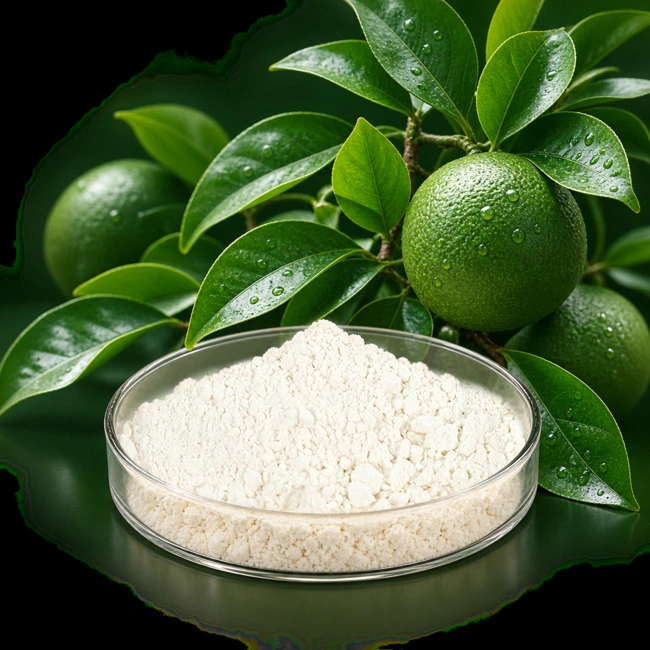
The primary flavonoid in grapefruit peel, naringin, is treated with a base before being transformed with a catalyst to produce naringin dihydrochalcone. In this process, the bitter precursor is turned into a dihydrochalcone molecule, which tastes very different. According to HPLC, the final material is a white, solid powder that is 98% pure. Its CAS number is 18916-17-1 and its chemical formula is C₂₇H₃₄O₁₄. The structural cousin neohesperidin dihydrochalcone (CAS 20702-77-6) has a longer sweetness start than naringin dihydrochalcone. It also has a much smoother finish without the menthol-like aftertaste.
How It Reduces Sugar in Formulations
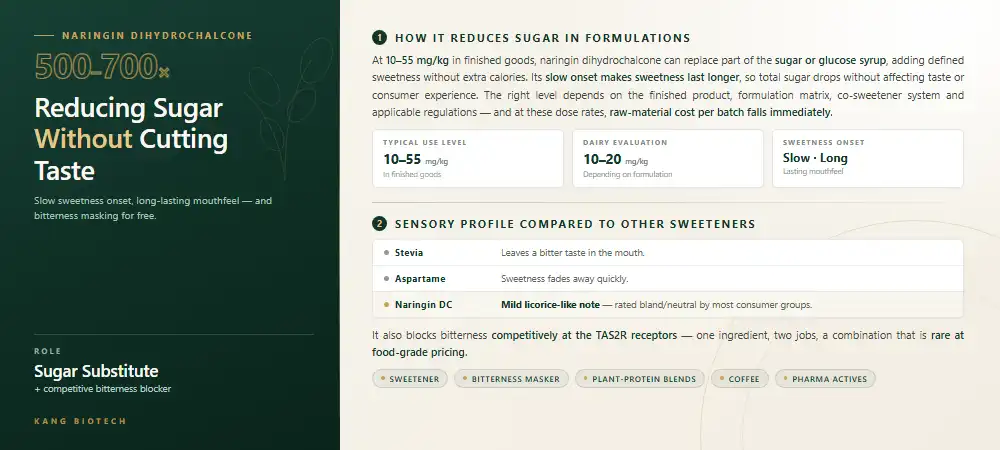
Naringin dihydrochalcone, which is 10–55 mg/kg in final goods, can be used instead of sugar or glucose syrup to add a certain amount of sweetness without adding many calories. Since it starts to become sweet slowly, the sweetness lasts longer. This means that less overall sugar can be used without affecting the taste or experience of the customer. The appropriate use level depends on the finished product, formulation matrix, co-sweetener system, and applicable regulatory requirements. For dairy products, 10–20 mg/kg may be evaluated depending on the formulation. Because these dose rates are so low, the cost of raw materials per batch goes down right away.
Sensory Profile Compared to Other Sweeteners
Stevia leaves a bitter taste in your mouth, and aspartame goes away quickly. Naringin dihydrochalcone, on the other hand, has a mild licorice-like note that most customer groups say is bland. It can also stop bitter tastes by competing with bitter taste receptors (TAS2R family). Plus, it can be used for two different things at once, like mixing plant proteins, coffee, or pharmaceutical actives. The fact that this is a food-grade item in this price range is pretty rare, and it can do two things.
Comparing Naringin Dihydrochalcone with Other Sweeteners for Procurement Decisions
Sweetness Potency and Dosage Efficiency
The sweetness of naringin dihydrochalcone can be 300 to 700 times that of sugar, depending on the quantity and matrix. In the real world, this means that a 1 kg drum can hold a lot of finished drinks. Stevia (steviol glycosides) is usually 200 to 400 times sweeter than sugar. Sucralose, on the other hand, is about 600 times sweeter. Because aspartame is about 200 times stronger, it needs a bigger dose. Naringin dihydrochalcone is in a range that makes combining it with stevia extremely beneficial because each compound balances out the other's drawbacks.
Processing Stability
Naringin dihydrochalcone is stable up to 160°C, so it can be used for baking, pasteurizing, and making heavy-duty feed pellets at high temperatures. When the temperature stays above 100°C for a long time, aspartame breaks down. Stevia rebaudiosides are stable, but they can clump together in acidic carbonated drinks. The ability of naringin dihydrochalcone to stay stable at high temperatures means that formulators don't have to redo the formula as often when process conditions change. This is helpful for formulators who run multiple SKUs through the same processing line.
Regulatory and Cost Comparison
FDA GRN 902 (2020) and FEMA have both approved the use of naringin dihydrochalcone as a fragrance. Neohesperidin dihydrochalcone (E 959) is not the same as this chemical in the eyes of European regulators. This is because they are molecular isomers with different assessment profiles. This means that limits on how much you can use do not change automatically between them. When a buying team sells to both the US and the EU, they need to know the exact EU limit for naringin dihydrochalcone and not just use the E 959 limits. The paperwork for the COA should show that heavy metals are present (Pb < 1.0 ppm by ICP-MS) and that Salmonella and E. coli microbes are not present.
Applications of Naringin Dihydrochalcone in Industry Sectors
Beverages and Functional Drinks
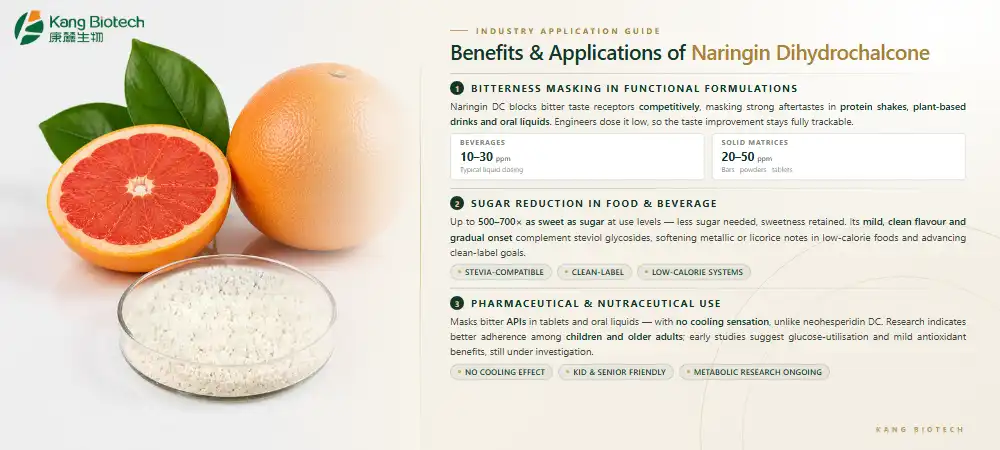
This is true for many things, like carbonated drinks with few calories and protein shakes that are ready to drink. Naringin dihydrochalcone hides the metallic smell of stevia when mixed with steviol glycosides at 10–30 ppm. It also makes the sweetness last longer. There is no need to change the amount of stevia used because this solves a common problem with drinks that are sweetened with it. Sports drinks with citrus flavors are the best because naringin tastes good and comes from citrus fruits.
Dairy, Frozen Desserts, and Plant-Based Products
It doesn’t change when frozen or defrosted so it may be used in reduced sugar yoghurts, ice creams and plant-based milk alternatives. It helps to achieve objectives of reducing sugar levels in diets when bulk sweeteners such as maltitol or sorbitol might cause digestive problems in larger quantities. Recipes for oat or almond milk may call for extra sweetness, and naringin dihydrochalcone may cover that gap without the chalkiness that polyols provide to the milk.
Pharmaceutical Masking and Pet Food
It is hard for people to handle APIs that are bitter in liquid oral solutions and chewable tablets. Naringin dihydrochalcone stops bitter sensors from working in a way that other substances that hide tastes can't. The ingredient can handle the high-temperature pelleting process (above 120°C) without changing the taste, which takes out a lot of other flavor modifiers. It is used in prescription pet food and palatant systems for dogs and cats.
Procuring Naringin Dihydrochalcone: What B2B Clients Should Know
Quality Standards and COA Requirements
Those responsible for purchasing should need a complete COA. Heavy metal (Pb, As, Hg, Cd) concentrations should be determined by ICP-MS, solvent residues from the hydrogenation process, microbiological counts (Salmonella, E. coli, yeast, mould), moisture (< 12%) and particle size (80-100 mesh) should be determined. For feed, ISO 9001, ISO 22000, HACCP, Halal, Kosher and FAMI-QS are key standards for the international market. If a seller can’t submit batch-specific COA papers within 24 to 48 hours of the request, the supply chain is at risk. It doesn't matter what the price is.
MOQ, Sampling, and Lead Times
It takes at least 1 kg to place an order with Kang Biotech, and samples can be sent to a lab to be tested. 25 kg is usually packed in a fiber drum that is lined with plastic. Small test orders are sent out within days by FedEx, and large orders are sent by air or sea freight, based on the arrival schedule. This timeline is typical for flavor-house procurement: it takes 5–10 days from the time of the inquiry to the receipt of the COA, 7–14 days for the sample to arrive, and 2–4 weeks for the lab to review it.
Supply Security and OEM Options
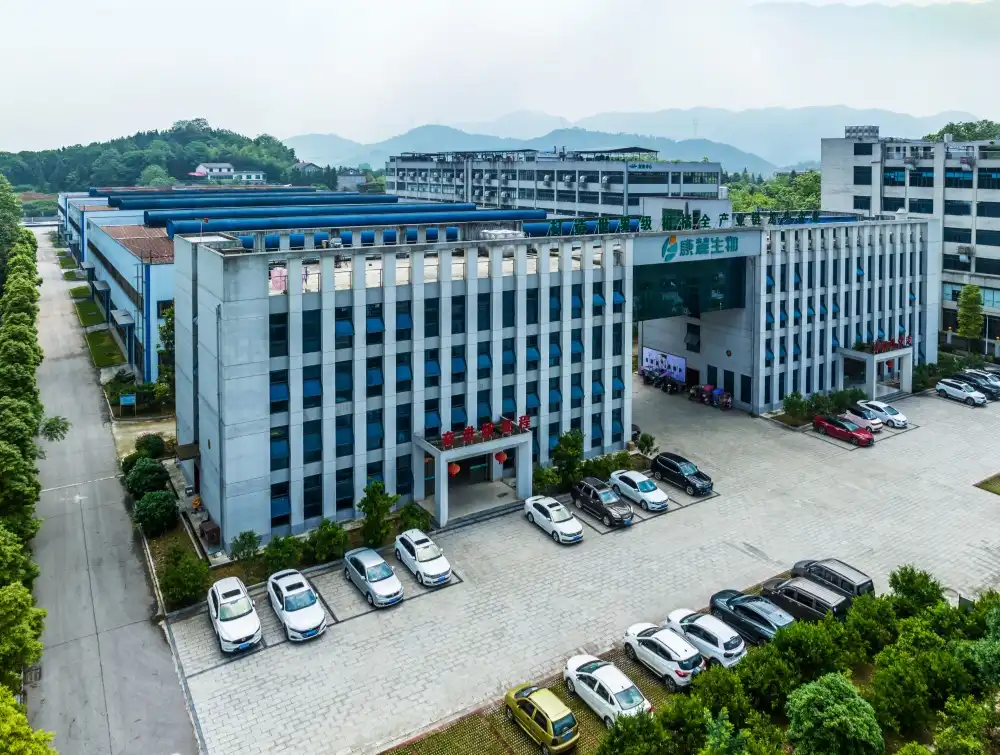
More than 20,000,000 m² of bitter orange farms in Lianyuan, Hunan Province, are cared for by Kang Biotech. So, they have direct control over the quality of the raw products and know that the prices will stay the same. OEM and ODM can change the standards, amount of purity, particle size, and type of packing. Multi-SKU flavor solution providers need this so they only have to deal with one supplier for different versions of the specifications. This way, they don't have to manage relationships with several vendors. The 33,000 m² plant has 9 production lines that make sure there is a steady flow of goods for both small tests and big sales.
Optimizing Procurement and Usage of Naringin Dihydrochalcone for Maximum Sugar Reduction Impact
Blending Strategies for Formulation Teams
Naringin dihydrochalcone is compatible with acesulfame-K, stevia and monk fruit. You can notice that it masks the fragrance of the co-sweetener and lengthens the sweetness. The application engineers must begin at the low end of the dosage range and test the constituent at every 10 ppm along the target grid. The sweetness intensity varies with the matrix and the bitterness-masking impact might make the overall system seem less sweet. These things happen.
Inventory and Demand Planning
Naringin dihydrochalcone comes from bitter oranges. If you're in charge of more than one SKU, you should plan to keep 60 to 90 days' worth of supplies on hand in case the prices of seasonal raw materials change. This is because bitter oranges are a seasonal crop. Kang Biotech's combined crop management makes this difference less noticeable, but it's still there. For yearly amounts higher than the commercial threshold amounts, it is possible to make long-term supply agreements that lock in prices.
Conclusion
A safe and inexpensive way to lower sugar levels is to use naringin dihydrochalcone in drinks, dairy, functional foods, and medicines. It's not like choices with only one function because it can both make things sweeter and less sharp. When procurement teams have a certified CAS number (18916-17-1), GRAS status, and full compliance papers from a direct maker, they know they can move from testing samples to market supply. It's a good choice for formulators who want to make products with less sugar and better labels because it needs a small amount to work, stays stable at high temperatures, and has a clean taste.
FAQ
1. Is naringin dihydrochalcone the same as neohesperidin dihydrochalcone?
No. Both are dihydrochalcone sweeteners found in citrus, but they are structural isomers and have distinct CAS numbers. Naringin dihydrochalcone CAS number is 18916-17-1 and neohesperidin dihydrochalcone is 20702-77-6. Their taste characteristics are different: naringin dihydrochalcone has a cleaner finish, while neohesperidin DC has a menthol-like smell. They also have different EU regulatory thresholds.
2. What is the recommended use level in beverages?
Typical application rates in sugar-free and low-calorie drinks are 25–55 mg/kg. In liquid dairy products, 10-20 mg/kg is often adequate. The exact dose depends on the target matrix, the co-sweetener system and the intended sweetness duration.
3. Does naringin dihydrochalcone add calories to finished products?
The caloric contribution at the levels employed in food applications is low – virtually nil. Because the substance is so potent, you only need trace amounts each serving.
4. Is it heat-stable for use in baked or pasteurized products?
Yes. Naringin dihydrochalcone is stable up to 160°C therefore suitable with pasteurisation, UHT, baking and feed pelleting operations.
5. What certifications does the COA cover?
Kang Biotech's COA include HPLC purity, ICP-MS heavy metal analysis, solvent residues, microbiological testing, moisture and particle size. The plant is certified for ISO 9001, ISO 22000, HACCP, Halal, Kosher and FAMI-QS.
Partner with Kang Biotech — Your Naringin Dihydrochalcone Supplier
Kang Biotech has been making naringin dihydrochalcone for over 11 years and has direct control over 20,000,000 m² of orange farms. This means they can promise a steady flow of powder from the farm to the end product. We’ve got 98% HPLC-grade stuff in stock and ready to ship right away. The minimum order quantity is only 1 kg. You can get DDP prices and full COA forms in 24 to 48 hours. Send an email to sales02@kangbiotech.com or visit cnkangbiotech.com to ask for a sample or a consultation on how to make a batch.
References
-
Borrego, F., & Montijano, H. (2003). Neohesperidin Dihydrochalcone and Other Citrus Sweeteners. In: Natural Food Colorants. Springer, New York.
-
Kinghorn, A. D., & Compadre, C. M. (Eds.). (2001). Low-Calorie Sweeteners: Present and Future. World Review of Nutrition and Dietetics, Vol. 85. Karger Publishers.
-
Kroyer, G. (2010). Stevioside and steviol glycoside as food sweetener and their physiological functions. Emirates Journal of Food and Agriculture, 22(3), 237–244.
-
O'Brien Nabors, L. (Ed.). (2012). Alternative Sweeteners (4th ed.). CRC Press / Taylor & Francis Group.
-
Rouseff, R. L. (Ed.). (1990). Bitterness in Foods and Beverages: Developments in Food Science. Elsevier Science Publishers.
-
U.S. Food and Drug Administration. (2020). GRAS Notice No. GRN 000902: Dihydrochalcone Sweeteners from Citrus Sources. FDA Center for Food Safety and Applied Nutrition.

Send Inquiry
Related Industry Knowledge
- Neohesperidin Dihydrochalcone Powder vs Stevia: Which Natural Sweetener Wins?
- The Power of Naringin
- Naringin Dihydrochalcone: Advances in Applications and Research
- Naringenin Powder vs Naringin: Key Differences Explained
- Glucosyl Hesperidin Bulk Supplier: What Buyers Should Check
- Apigenin: Health Benefits, Sources, and Safety
- Nobiletin Uses, Benefits & Dosage
- Naringenin Powder in Dietary Supplements: Formulation Guide
- What Is Naringenin Powder and How Is It Used?
- What Is Apigenin Powder and Why Is It Gaining Popularity in Supplements?