
Naringin Dihydrochalcone vs Neohesperidin DC: Key Differences
November 12, 2026
Despite the fact that naringin dihydrochalcone and neohesperidin DC are related citrus-derived sweeteners, they are two different molecules with different CAS numbers. Our type of naringin dihydrochalcone (CAS 18916-17-1) is 500–700 times sweeter than sucrose. Neohesperidin DC (CAS 20702-77-6) is made from neohesperidin. Most books and articles say it has a mass of about 1,000 to 1,800 times a sugar. Both can make things less bitter, but they are not the same in terms of strength, taste, or control. If you want to make sure the ingredient tastes good, test it in your final base, and check that the paperwork is correct for the U.S. market before you buy it.
Taste-testing teams, distributors, and brands can use this guide to see how things really stand before they ask for samples.
Naringin Dihydrochalcone and Neohesperidin DC: Basic Definitions
What Each Ingredient Is
Bitter, astringent, and off-notes that last a long time can happen in drinks, protein powders, supplements, and plant-based foods. Two things that come from citrus fruits are often talked about. Naringin dihydrochalcone is referred to as NADC or naringin DC. Naringin is the first part. Naringin is a bitter flavonoid that is found in grapefruit and other citrus fruits. Nasperidin, which is found in bitter orange, is one of the building blocks of NHDC. A strong base is used on both types of precursors, and then they are hydrogenated. In this case, the bitter flavanone turns into the sweet dihydrochalcone. Both compounds were found by a U.S. A study by the U.S. Department of Agriculture looked for ways to make citrus juice less bitter. They can't be twins, so I treat them like two different tools.
Why Chemical Identity Matters
Naringin dihydrochalcone has a CAS number of 18916-17-1 and a molecular weight of approximately 582.55 g/mol. NHDC is made up of the chemicals C28H36O15 and has a molecular weight of 612.6 g/mol. The CAS number for it is 20702-77-6. People mix up quotes and orders because the numbers look the same. You should write down the grade, the CAS number, and the method of analysis on every request. We sell naringin dihydrochalcone powder that is safe for food and has been tested and found to be 98% pure by HPLC. It is white to off-white and breaks down in hot water and ethanol that is mixed with water. There is a difference between a label that says "natural citrus" and a specification sheet. Before you look at prices, make sure you know what the product is, how it was made, and what its assay is.
How Production Shapes the Powder
Lemon oils have been made by Kang Biotech since 2011. We take care of 20,000,000 m² of bitter orange plantations in Lianyuan, Hunan. We also have a plant that is 33,000 m² and has 9 production lines. In our method for making naringin dihydrochalcone, naringin is first cleaned up with water or ethanol, and then it is hydrogenated with a catalyst. Hydrogenation is a part of the process, so I tell lab teams to ask any supplier for heavy metal data and residual solvent results along with the assay. The particles are 80 to 100 mesh, which makes it easier for the powder to spread out in mixing tanks. Because the powder absorbs some water, it's important to keep the humidity under control so that the right dose is given.

Naringin Dihydrochalcone vs Neohesperidin DC: Key Differences
Sweetness Intensity and Sensory Profile
You'll first notice a sweetness gap. Data that has been made public shows that our naringin dihydrochalcone works about 500–700 times better than sucrose. But NHDC works about 1,000–1,800 times better. These numbers are just suggestions; they change depending on the concentration, pH, temperature, and the standard sugar level. Both of them taste sweet at first and then slowly fade away. Most of the time, NHDC is said to have a menthol-like finish, but our application notes say that naringin dihydrochalcone has a cleaner finish and a mild licorice-like note. Not as strong can also help when you want to hide because the sweetness blends in better and is less likely to stand out.
Bitterness Masking and Stability
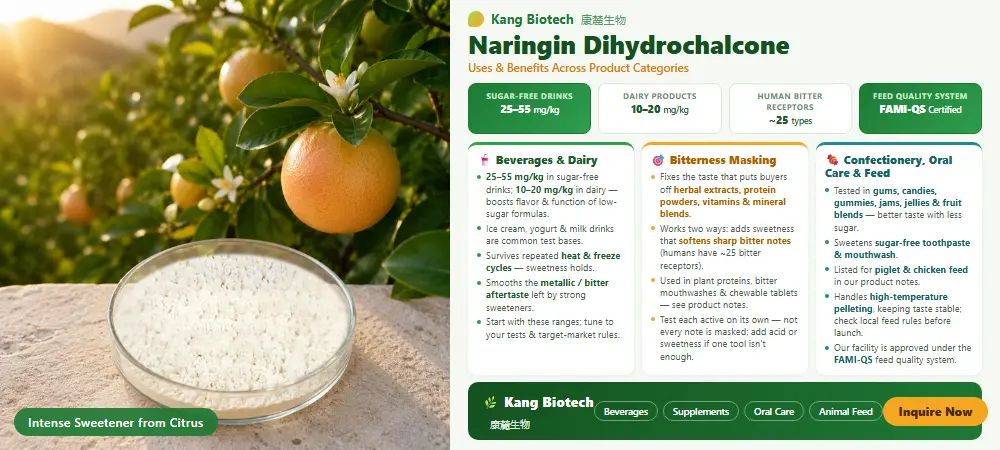
It is not clear which ingredient hides bitterness better. There is a difference between masking and making something taste sweeter. Studies that change the bitter taste of things show that the results depend on the type of bitter compound that is used. We discovered that naringin dihydrochalcone stays stable even after being heated and pasteurized. It can also handle temperatures up to 160°C, which means it can be used in drinks, baked goods, dairy products, and frozen foods. It can also be mixed with stevia to get rid of the metallic aftertaste. Ideal starting amounts are 10–20 mg/kg for dairy products and 25–55 mg/kg for sugar-free drinks. You decide what level to use by smelling and tasting the ingredient. This is because the acids, proteins, and minerals in the base change how the ingredient works.
Advantages and Limits of Each
Naringin dihydrochalcone is characterized by simple dosing, a cleaner note finish, and 1 kg sample orders. You'll have to do your own tests because it hasn't been regulated as long as NHDC in some markets and there aren't as many public sensory studies on it. Because it isn't as strong, a recipe needs more grams of it to get the same sweetness level as NHDC. This means you should look at the price per serving instead of the price per kilogram. NHDC is sweeter per gram and has been used for longer to hide tastes. On the other hand, its menthol-like finish can be unpleasant in neutral items. These two things don't win every project. You should think about the total cost, the paperwork, the supplies, the dose, and the results you get from your senses.
Which Ingredient Is Better for Different Applications?
Beverages and Protein Systems
Sugar-free beverages, functional drinks and protein smoothies have their problems. Stevia leaves a metallic aftertaste, and plant proteins might taste like beans or chalk. Naringin dihydrochalcone is also heat stable and active in low ppm levels, making it suited for hot-fill and UHT lines. Check the pH and clarity of the completed drink, and how the minerals and proteins work together. These factors may influence how the drink tastes, sweet or bitter. NHDC might perform well for systems looking for a powerful high per gram and don't mind a sweet flavour following. If you are making ready to drink supplements you should never use merely water, always use the genuine base at the proper pH.
Dairy, Frozen, and Confectionery
Our results suggest that naringin dihydrochalcone may prevent the loss of sweetness in frozen-thawed yoghurt, milk drinks and low-sugar ice cream. Once the acid and fruit notes are gone the slowly rising sweetness may improve the flavour of jellies, jams, fruit desserts, candies and gum. Chewable tablets and candy introduce acid, heat and moisture. Check the shelf life to know how long the sweetness lasts. Dairy replacements also taste harsh, since they are manufactured from pea, soy or oat proteins. So they are an excellent approach to compare the two substances in the same manner.
Pharmaceutical, Oral Care, and Feed Uses
Plaque, mouthwash, chewable tablets, liquid oral solutions, and animal feed are some of the things we list in our application notes. If you want to use them in medicine, talk to your own experts about how well the excipients work with each other, how the drugs release, how toxic they are, and whether they are approved by regulators. These checks aren't just for food. Being able to handle pelleting at high temperatures helps keep the flavor of pig and chicken food consistent. Teams that work on pet food can test naringin dihydrochalcone along with the flavoring system they already have. But before they do this, they should check the rules for animal food everyplace they go, such as at the US FDA Center for Veterinary Medicine.
How to Choose Between Naringin Dihydrochalcone and Neohesperidin DC
A Five-Step Selection Process
Give some details about the taste issue: do you want more sweetness, less bitterness, a more balanced taste, less sugar, or help with the aftertaste? Second, make rules about things like pH, heat exposure, dosage, MOQ, and how much you want each serving to cost. These rules should be technical and business-related. Third, get samples of both ingredients that are the same. Fourth, put sensory panels that can't be seen in the final base. It's best to do this at a few different dose levels. Fifth, study the documents for the type of people you want to use them and how often they should be used. Based on the cost per finished unit, effective dosage, stability, supply continuity, lead time, and cost per finished unit, choose the one that fits your project's total cost the best. It doesn't matter how much less a kilogram costs if you need more masking systems or a higher dose.
Build a Clear RFQ
It is possible to compare quotes if the request is clear. Put these three things in.
- Identity and grade: State the CAS number (18916-17-1 for naringin dihydrochalcone, 20702-77-6 for NHDC), the assay method, and the grade. Ask for a COA that lists HPLC assay, heavy metals, microbial results, and residual solvents, so every supplier answers the same question on the same basis. Request the lot number as well.
- Volumes and packaging: List your lab sample size, pilot quantity, and expected annual volume. Our standard pack is a 25 kg fiber drum with a polyethylene liner, the minimum order is 1 kg, and samples are available. Mention any OEM or ODM packaging and labeling needs early, since these affect lead time.
- Delivery and landed cost: Name the destination country, delivery terms, and your deadline. We hold stock, ship small orders by express courier, and send larger orders by air or sea. Ask each supplier for landed cost per kilogram, then convert it to cost per finished serving using the dose that won your sensory trial.
If the specs are the same, R&D and procurement can compare offers on the same terms.
Mistakes That Slow Projects Down
Things go wrong that are easy to avoid when they take too long. Some buyers get naringin dihydrochalcone, which is sweet, mixed up with naringin, which is bitter. For some, high sweetness means strong masking, or approval in one country means approval everyplace. The only way to hide how acids and proteins work together is to test in water. When you look at quotes for different grades, assays, and MOQs, the math is wrong. You can fix them by making sure the person is who they say they are and that they have a valid CAS number, testing the finished product, looking into the market rules, and comparing quotes that are the same in terms of specifications. Do not open the containers you use to store samples. Keep them below 25°C and at least 60% humid. This will make sure that test scores are the same from one test to the next.
Regulatory, Safety, and Quality Considerations
Rules Differ by Market
The US, the EU, the UK, China, and other places have different rules about what is approved, how it is used, how it is labeled, and how it is classified. In the EU, the number for adding neohesperidin DC is E 959. Because naringin dihydrochalcone is a different substance, do not assume that the limits or listings for E 959 apply to it. The GRAS and FEMA forms for CAS 18916-17-1 can be found in the US. Remember that neohesperidin DC is connected to FEMA 3811. There is talk about a FEMA number and GRAS status in the information about our product. Need the supporting file? Ask us for it, and then have your regulatory advisor match each item to the CAS number.
Safety Data and Consumer Groups
Your regulatory team needs to look at toxicology data, the dosage that will be used each day, and the people who will be using the product. This is because both ingredients come from citrus flavonoids. Businesses that want to sell sensitive items or items that are used with medicines should get information on safety and possible side effects before putting them on the market. I can't change that review, and these ingredients don't say anything good for you. Once we give them the specs and quality documents, your advisors can decide if they are right for each product and market. If the market asks for more proof, a review early on also stops a rewrite late on.
What a Complete COA Shows
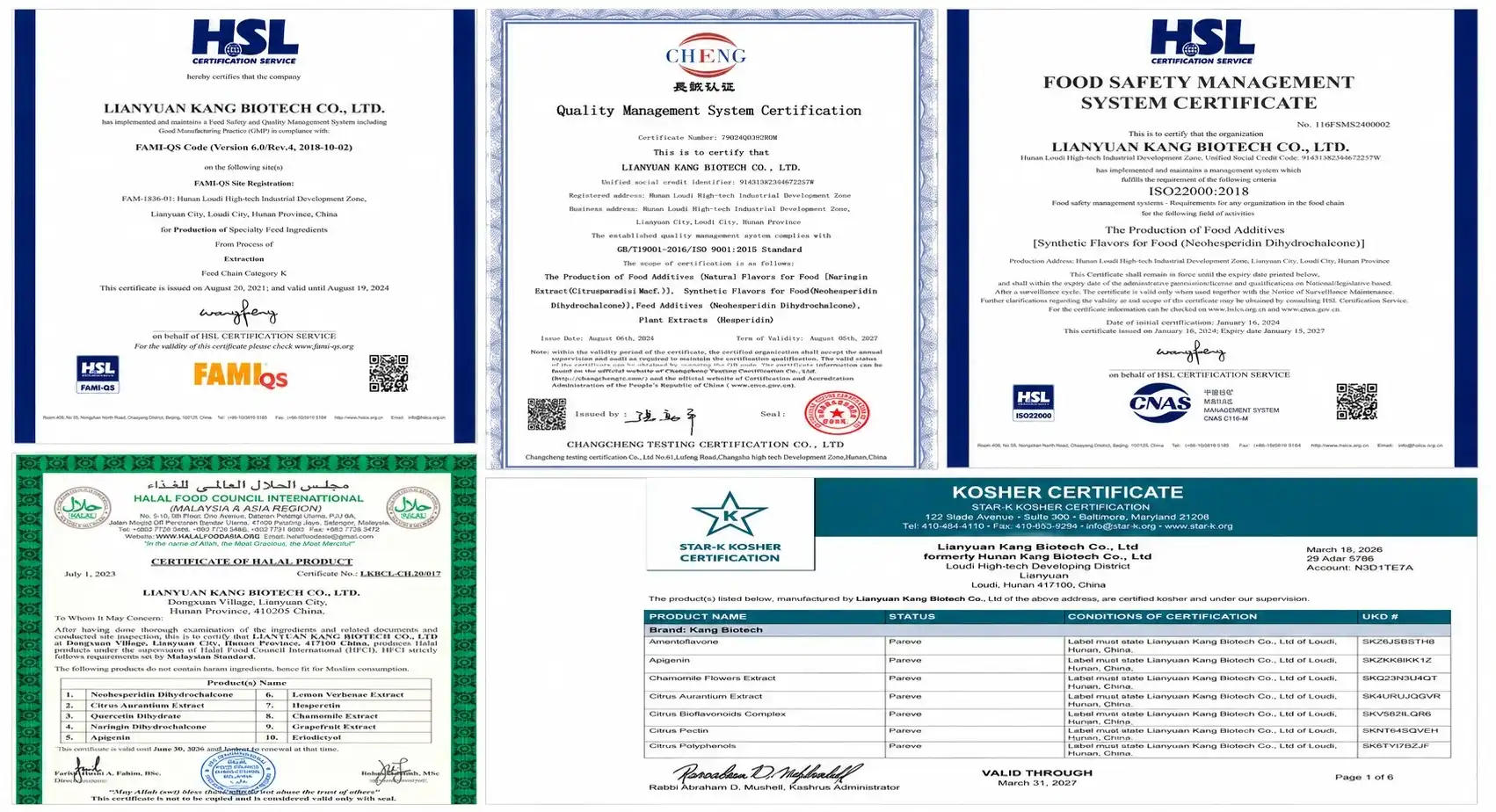
The COA should match your needs and the purchase order. Ask for the name of the product, an HPLC test, its moisture level, heavy metals, microbiological results, residual solvents, batch number, and a date that it needs to be tested again or goes bad. The lead level in our naringin dihydrochalcone powder is less than 1.0 ppm, and it doesn't have any Salmonella or E. coli. ISO 9001, ISO 22000, HACCP, Halal, Kosher, and FAMI-QS have all given our factory their stamp of approval. The food we sell is also free of BSE, GMOs, and radiation. If kept in the right way, it will last for 24 months. You can compare lots from one shipment to the next once you can keep track of a batch.
Conclusion
Each naringin dihydrochalcone and neohesperidin DC is made from a different citrus precursor. They also have different CAS numbers and look and act differently in the bottle and on the label. The sweetness level of our grade is around 500 to 700 times that of sucrose. The range given for NHDC is around 1,000 to 1,800 times. The finishes on the two grades are also different. Because they don't hide all bitter compounds, they need to be tested separately before they can be used in medicines, drinks, dairy, sweets, and foods. Rules and information like E 959 and FEMA 3811 belong to NHDC and don't just move to naringin dihydrochalcone. This is why the CAS number and market need to match on the documents. It's a good idea to include more than just the price per kilogram. You should also check the stability, look over the COA, and see how much it costs per finished unit.
FAQ
1. Are naringin dihydrochalcone and neohesperidin DC the same compound?
They're not the same, no. They work in different ways and are made from different materials. Their CAS numbers are 18916-17-1 and 20702-77-6. You should check the CAS number that comes with every quote and certificate.
2. Which one masks bitterness better?
They don't always win. Test two different doses side by side in your own base without telling either one what the other is doing. What happens will depend on the acidity, the pH, and the type of food.
3. Is naringin dihydrochalcone stable in heat?
Our data show that it stays stable when pasteurized, heated under ultrahigh temperatures (UHT), or used in baked goods up to 160°C. Make sure this works in your own process first before you try to make it bigger.
4. What are the MOQ and sample terms?
You can try small amounts, and the smallest order you can make is 1 kg. Each order comes in a 25 kg drum, and you can pick OEM or ODM. Items less than 12 inches go by express courier. Items bigger than 12 inches go by air or sea.
5. Which documents should I request?
Get the COA, the GRAS file, the FEMA file, and the specification. Talk to your regulatory advisor about each one and compare it to CAS 18916-17-1 to make sure it's right for the market and level of use.
Request Samples of Naringin Dihydrochalcone from Kang Biotech
Kang Biotech has been making naringin dihydrochalcone for 11 years. Their 33,000 m² plant makes 98% HPLC powder that is safe for food. We offer samples and have a minimum order size of 1 kg. You can also get 25 kg drums from us, and we have stock that is ready to be sent by express, air, or sea. To find out more, get a COA, and see prices, email sales02@kangbiotech.com or visit cnkangbiotech.com to start comparing products side by side.
References
1. Journal of Agricultural and Food Chemistry, 1969 – "Taste and Structure in Phenolic Glucosides" by Horowitz and Gentili.
2. Chemical Society Reviews, 1977 – "Properties and Syntheses of Sweetness Improvers" by Crammer and Ikan.
3. Chemosensory Perception, 2008 – "Masking Bitter Taste by Molecules" by Jakob Ley.
4. Regulation (EC) No 1333/2008 on Food Additives, European Parliament and Council, 2008.
5. Generally Recognized as Safe (GRAS) Notification Program, U.S. Food and Drug Administration, 2024.
6. Sweeteners and Sugar Alternatives in Food Technology, 2nd Edition, Wiley-Blackwell, 2012.

Send Inquiry
Related Industry Knowledge
- Glucosyl Hesperidin as an Antioxidant: What Research Shows
- What is Neohesperidin Dihydrochalcone?
- Premium Apigenin Extract Powder Superior Manufacturing in China for Global Partnership
- How to Choose a Polymethoxy Flavonoids Powder Manufacturer
- Apigenin Benefits: Sleep, Anxiety, Healthy Aging, and More
- Where Does Hesperetin Powder Fit in Nutraceutical Innovation?
- Neohesperidin Powder: Uses, Benefits and Applications
- Naringin Dihydrochalcone: Advances in Applications and Research
- How Naringin Dihydrochalcone Supports Sugar Reduction
- Hesperidin: The Citrus Bioflavonoid that Supports the Brain & Heart