
What to Check When Sourcing Bulk Neohesperidin Powder
November 20, 2026
When sourcing bulk neohesperidin powder, check six things first: the intended application, the exact chemical identity (CAS 13241-33-3), the HPLC assay and batch consistency, the botanical source and extraction route, the documents that come with each lot, and the supplier's real ability to deliver. Food grade material is not pharmaceutical grade, so confirm the grade your project requires before you request a quote. Compare samples under your own process conditions, not only on a data sheet. At Kang Biotech, we supply neohesperidin powder at up to 98% HPLC. I wrote this guide to help your team qualify any supplier.

Start With Your Application and Product Requirements
Define Whether You Need Neohesperidin Powder for Food, Supplements, Pharmaceuticals, or Cosmetics
Start with the end use, because it sets every other requirement. A beverage or supplement project mainly needs a consistent assay, clean sensory properties, and food safety documents. A pharmaceutical project adds compendial expectations, tighter change control, and often microbial or endotoxin testing. A cosmetic project looks at heavy metals and formulation compatibility. Our neohesperidin powder is food grade, so I always ask buyers to state the target market and finished product up front. If your formulation requires a pharmacopeial grade, tell us before ordering. A food grade label does not replace USP or Ph. Eur. compliance, and clear answers here prevent costly rework later.
Confirm the Required Chemical Identity
Neohesperidin has the molecular formula C₂₈H₃₄O₁₅ and CAS No. 13241-33-3 (EINECS 236-216-9). Several citrus compounds have similar names, so match the name and CAS number on the quotation, COA, purchase order, label, and shipping papers. The most common mix-up involves neohesperidin dihydrochalcone, or NHDC, which has CAS No. 20702-77-6 and the formula C₂₈H₃₆O₁₅. NHDC is made by hydrogenating neohesperidin, so it is a different substance with different sweetness and regulatory status. Ask for an HPLC chromatogram that shows the identity peak against a reference standard. This simple check protects you from receiving the wrong material.
Establish a Practical Procurement Specification
Write a specification that separates must-have parameters from nice-to-have ones. Must-haves normally include HPLC assay, moisture, particle size, residual solvents, microbiological limits, and heavy metals. Nice-to-haves, such as a special particle size or custom packing, can raise cost, so label them clearly. We offer neohesperidin powder from 10% to 98% HPLC, with 98% as our standard, in white or off-white form. Our standard pack is a 25 kg drum, and we can adjust packaging on request. Share the specification with your formulation and quality teams before you send inquiries, so every supplier quotes the same thing.
Evaluate Neohesperidin Powder Quality and Technical Performance
Check Purity, Assay Method, and Batch Consistency
A purity figure on a web page says little without the method behind it. Ask which HPLC method the supplier uses, and request COAs from several recent batches. Compare the assay, moisture, and impurity profile across lots. Small variation points to controlled processing, while large swings create risk for your own release testing. Our neohesperidin powder is tested by HPLC before each lot ships, and we trace each lot from plantation to packaging. Your QC team can then run its own verification on incoming material and compare the result with our COA. Agreement between the two is the best proof of consistency.
Assess Solubility, Dispersibility, and Formulation Compatibility
Test the material under real conditions: your pH, temperature, concentration, and mixing time. Neohesperidin has limited solubility in cold water, so a dry blend, capsule, or tablet may behave differently from a liquid system. Our neohesperidin powder is stable in dry-mix, capsule, and tablet forms and across typical food and supplement processing pH ranges. For liquid products, run a bench trial and check for haze or settling before scale-up. Dosage should come from your own sensory work rather than from another product, since bitterness, base flavor, and format all change the result.
Review Physical and Organoleptic Characteristics
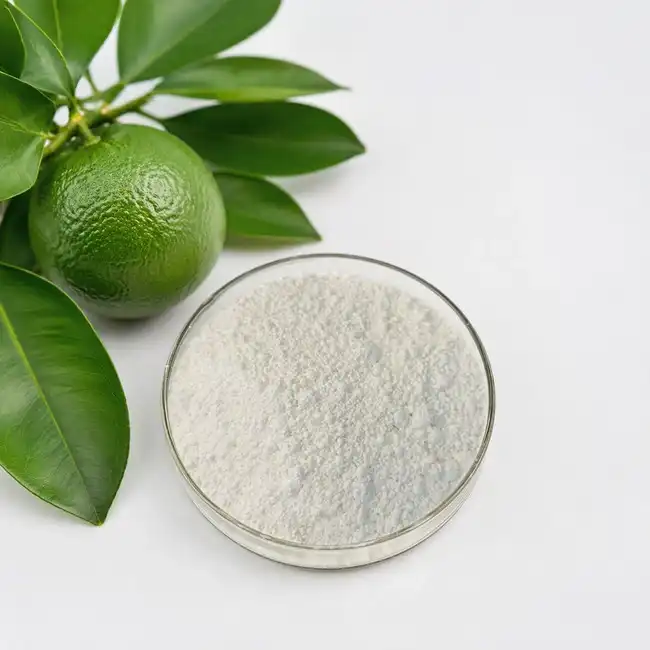
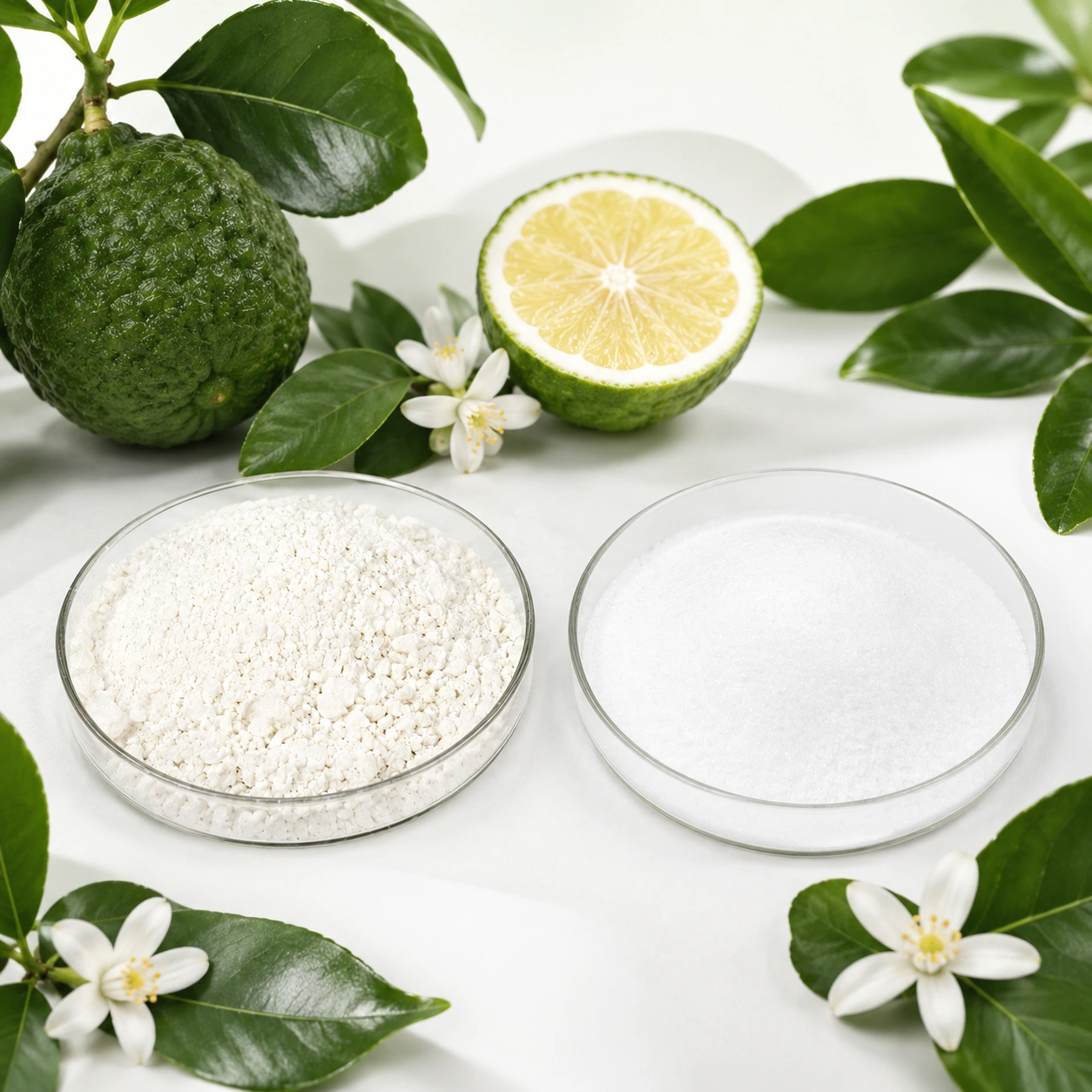
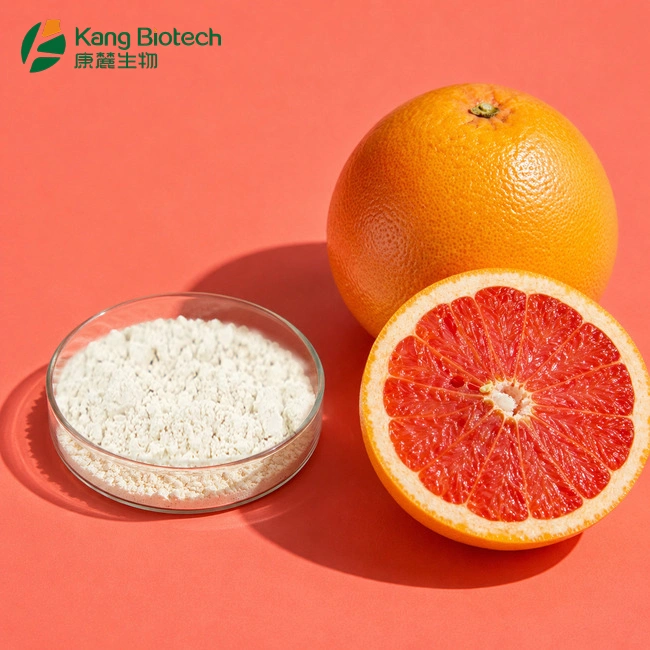
Look at the powder itself. Color, odor, flowability, moisture pickup, and clumping all affect dosing equipment, blending, and tableting. Our product is a white or off-white powder, and a clear color description on the COA helps your team spot drift between lots. Neohesperidin carries a natural bitter and citrus note, which suits flavor blending at low dosage but may matter in a neutral base. Taste a small sample in your actual matrix, and note any change after storage. Record the findings in a short sample report so procurement and R&D read the same results.
Verify the Source, Extraction Process, and Compliance Documents
Identify the Botanical Source and Extraction Process of Neohesperidin Powder
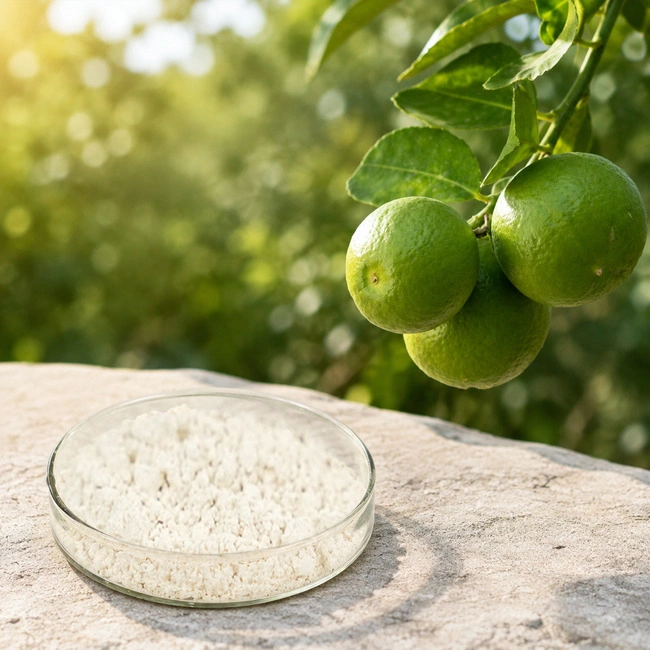
Traceability starts with the plant. Ask for the botanical species, plant part, and origin. Our botanical source is Citrus Sinensis L., and our integrated supply chain includes more than 20,000,000 m² of managed bitter orange plantations in Lianyuan, Hunan Province. We produce neohesperidin powder by water extraction or ethanol extraction, followed by purification, drying, and packaging. Published profiling work shows that citrus flavonoid composition varies by species and tissue, so a named source helps keep batches comparable. Ask any supplier to describe its controls for residual solvent, moisture, and microbial contamination at each step.
Confirm the Required COA Items
A useful COA links one batch to one specification. It should list identity, HPLC assay, appearance, moisture, microbiology, heavy metals, test methods, test dates, and an authorized approval. Request the SDS and TDS too, along with origin and allergen statements and stability data where your quality system needs them. Each of our shipments includes a COA and MSDS plus applicable certificates, and we can discuss additional regulatory or customs papers on request. For pharmaceutical projects, also ask whether endotoxin and residual-solvent data are available for the grade you plan to buy, and get the answer in writing.
Check Certificates and Destination-Market Compliance
Certificates only help when they are current and cover the producing site. Our manufacturing systems hold ISO 9001, ISO 22000, HACCP, Halal, Kosher, FAMI-QS, and SC certification. These are food and feed quality systems, not organic certifications, so we make no organic claim. Compliance also depends on the destination. For the US market, your regulatory team should confirm the status of neohesperidin and of any NHDC use in your product category. For pharmaceuticals, a food grade product does not equal a USP or Ph. Eur. grade, so verify which monograph applies to your formulation.

Compare Neohesperidin With Similar Citrus Flavonoids
Neohesperidin Powder vs. Hesperidin
Hesperidin and neohesperidin both come from citrus and share a hesperetin core, yet they carry different sugars. Hesperidin has a rutinoside sugar and is tasteless, while neohesperidin has a neohesperidoside sugar and tastes bitter, according to classic taste-structure research. Hesperidin is also very poorly soluble in water. Neohesperidin powder is therefore chosen when a bitter citrus note or an NHDC precursor is needed, and hesperidin when a plain flavonoid is wanted. Their CAS numbers differ (hesperidin is 520-26-3), so check the number rather than the name.
Neohesperidin Powder vs. Naringin
Naringin is the bitter flavanone best known from grapefruit. It shares the same neohesperidoside sugar, but its aglycone is naringenin rather than hesperetin, and its CAS number is 10236-47-2. Both compounds taste bitter, yet they are not interchangeable in a formula, a regulatory file, or an analytical method. A supplier that swaps one for the other because both are bitter citrus flavonoids has changed your ingredient. Require the name, CAS number, and HPLC identity on every document, and reject any substitution that was not approved in writing.
Neohesperidin Powder vs. Neohesperidin Dihydrochalcone
NHDC is produced by hydrogenating neohesperidin, which makes neohesperidin the starting material. NHDC is a high-intensity sweetener, roughly 1,500 to 1,800 times sweeter than sucrose, listed as E959 in the EU and as FEMA GRAS 3811 in the US. Neohesperidin itself is not used as a sweetener. Manufacturers that synthesize NHDC buy neohesperidin powder as a precursor, and they watch the assay closely because it affects conversion yield. Kang Biotech makes both substances, so I can say plainly that they have different CAS numbers, specifications, and uses. Always confirm which one appears on your purchase order.

Assess Supplier Dependability, Pricing, and Sampling
Confirm Manufacturer Status and Bulk Supply Stability
Ask whether the company manufactures, distributes, or only trades. A manufacturer can show its plant, its process, and its raw material base. Kang Biotech was founded in 2011 and runs a 33,000 m² facility with nine production lines. We back it with our own bitter orange plantations and more than 20 years of citrus extraction expertise. We also run a Joint Research Center with the Hunan Institute of Agricultural Product Processing and Quality Safety. Ask any supplier about batch size, seasonal risk, and long-term contract support. Our partners in more than 40 countries receive supply from one integrated chain, which limits third-party sourcing risk.

Compare Pricing, MOQ, Packaging, and Delivery
The lowest quote is not always the lowest cost. Compare the same assay, documents, and pack size, then add freight, insurance, duties, and testing to reach landed cost. Our minimum order is 1 kg, and samples are available, so you can test before committing. Standard packing is a 25 kg drum, and it is customizable. We keep stock on hand: small orders ship by FedEx, and larger orders go by air or sea. Stock typically ships within 3–5 business days, while large or custom orders may take 2–3 weeks. Request shelf-life and stability data, and confirm storage conditions in writing.
Use Samples and a Pilot Order Before Approval
Structured trial to minimise risk. Build a simple scorecard for identification, assay, documentation, batch uniformity, performance, logistics and communication. Test the sample for identification, assay, moisture, microbiological, heavy metals, solubility and taste. In cases where the project risk is significant, employ an independent laboratory. Place a pilot order to test processing, packing quality and delivery. We provide OEM and ODM service for specifications, purity, packaging and labelling. Our technical staff is available for application work and after-sales enquiries. The neohesperidin powder approval should be seen as a process with change control, not a one-off purchase.
Conclusion
Sourcing bulk neohesperidin powder works best when the decision follows a clear order. The application and the target market determine the grade and a food grade substance can not be substituted for a pharmacopeial grade. Next is identity: CAS 13241-33-3 distinguishes neohesperidin from hesperidin, naringin and NHDC which have different tastes, uses and regulations. The HPLC technique, batch-to-batch COAs, solubility experiments, and physical attributes demonstrate quality. Traceability and compliance are supported by source and extraction information, current certifications and destination-market evaluation. Then the supplier inspections add the last layer: manufacturer status, capacity, landing cost, MOQ, packing, delivery speed and a sample followed by a pilot order. Together, these stages provide procurement, R&D and QC teams with a single, auditable basis for approving a supplier of neohesperidin powder.
FAQ
1. What Is the Difference Between Neohesperidin Powder and NHDC?
Neohesperidin is a flavanone glycoside in citrus with CAS No. 13241-33-3. NHDC (CAS No. 20702-77-6) is produced by hydrogenation of neohesperidin and is used as flavour modifier and high intensity sweetener . The two are not replacements. Check the cas number on every document.
2. What Should Be Included in a Neohesperidin Powder COA?
A useful COA includes identification, HPLC assay, appearance, moisture, microbiology, heavy metals, test methods, test dates, and authorised permission. We ship with a COA and MSDS plus any required certifications. You may request extra paperwork.
3. What Are the MOQ and Lead Time?
The minimum order is 1 kg, and samples are available. Stock usually ships in 3–5 business days, while large or custom orders may take 2–3 weeks. Small orders go by FedEx, and large orders go by air or sea.
Request Neohesperidin Powder Samples and Bulk Quotes From Kang Biotech
Ready to compare neohesperidin powder under your own specification? As a direct neohesperidin powder manufacturer with ready stock, Kang Biotech offers 98% HPLC material, samples from 1 kg, and OEM/ODM support. Send your application, target market, annual volume, and delivery location to sales02@kangbiotech.com, and our team will reply with a specification, COA, and quotation. More details are available at cnkangbiotech.com.
References
1. Journal of Agricultural and Food Chemistry, 1969: "Taste and Structure in Phenolic Glycosides."
2. Journal of the Science of Food and Agriculture, 2000: "Flavanones, Chalcones and Dihydrochalcones – Nature, Occurrence and Dietary Burden."
3. Molecules, 2007: "Flavonoid Composition of Citrus Juices."
4. European Pharmacopoeia, 11th Edition, 2022.
5. Official Journal of the European Union, 2008: Regulation (EC) No 1333/2008 on Food Additives.
6. Food Chemicals Codex, 13th Edition, 2022.

Send Inquiry
Related Industry Knowledge
- Apigenin for Sleep: What This Chamomile Compound Does
- What to Check When Sourcing Bulk Neohesperidin Powder
- Naringin And Naringenin: What Are Antioxidant Ingredients?
- Apigenin: Testosterone Levels and Other Potential Benefits
- Why Is Polymethoxy Flavonoids Powder Used in Wellness Formulas?
- Tap Into the 7 Amazing Health-Saving Properties of Apigenin
- How to Choose a Neohesperidin Powder Manufacturer
- Neohesperidin Dihydrochalcone Powder vs Stevia: Which Natural Sweetener Wins?
- How to Use Neohesperidin Dihydrochalcone Powder in Beverages for a Low-Calorie Boost?
- Hesperidin: A Citrus Treasure with a Rich History