
Naringin And Naringenin: What Are Antioxidant Ingredients?
November 18, 2026
Naringin and naringenin are citrus flavonoids that researchers study for antioxidant activity, but they are different molecules. Naringin is a glycoside, while naringenin is the sugar-free aglycone left after the sugar units come off. Naringin powder is the purified, standardized form of naringin. It is usually extracted from grapefruit peel, and buyers use it as a natural bittering agent and as a flavonoid ingredient in food, beverage, and supplement formulas. In this guide, I explain how the two compounds differ, how naringin powder is made and tested, and how to choose a supplier with confidence.
Naringin and Naringenin Explained: Key Differences Between These Citrus Flavonoids
Glycoside Versus Aglycone: The Structural Difference
Naringenin is a flavanone with the formula C15H12O5. Naringin (C27H32O14, CAS 10236-47-2) is naringenin bonded to the disaccharide neohesperidose. That sugar attachment changes how each compound behaves. Naringin carries the intense bitter taste that grapefruit is known for. Naringenin is a smaller, less polar molecule with different solubility and a different taste profile. Enzymes and gut bacteria can cleave the sugar from naringin and release naringenin, which is why researchers often discuss the two together. For procurement teams, the practical point is simple: assay methods, specifications, and regulatory paperwork differ for each. Naringin cannot stand in for naringenin on a purchase order, and a COA for one does not cover the other.

What Naringin Powder Is, and What It Is Not
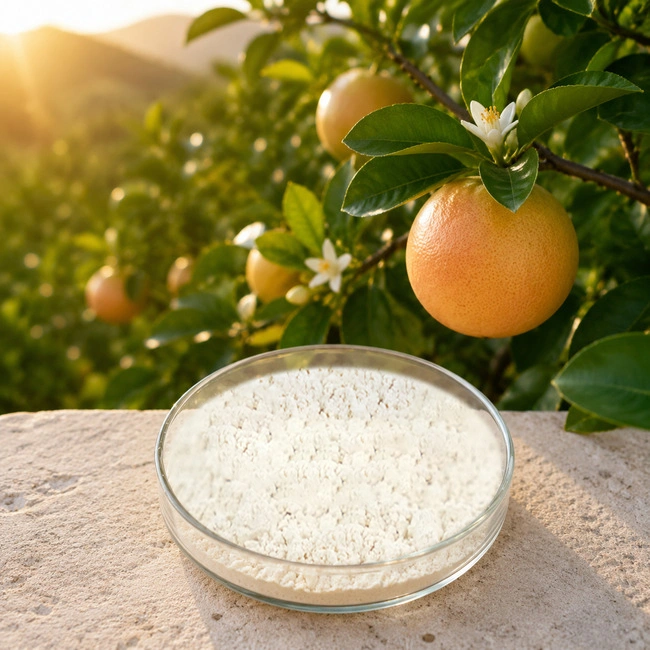
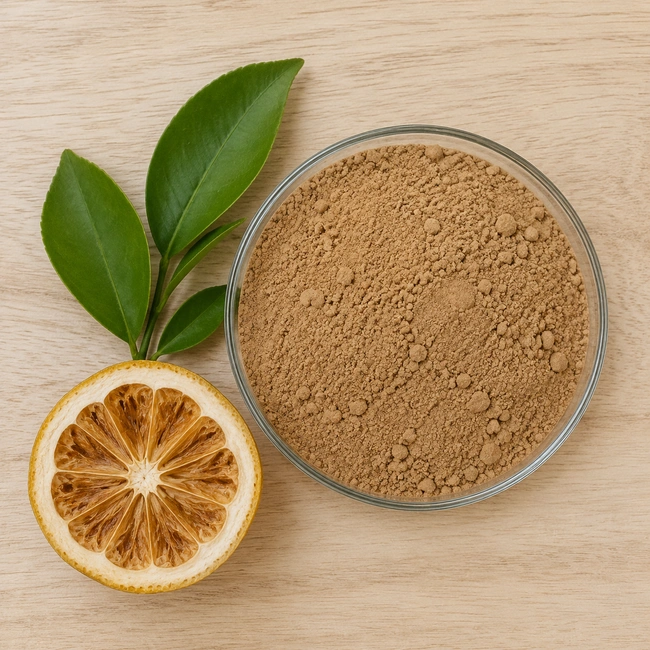
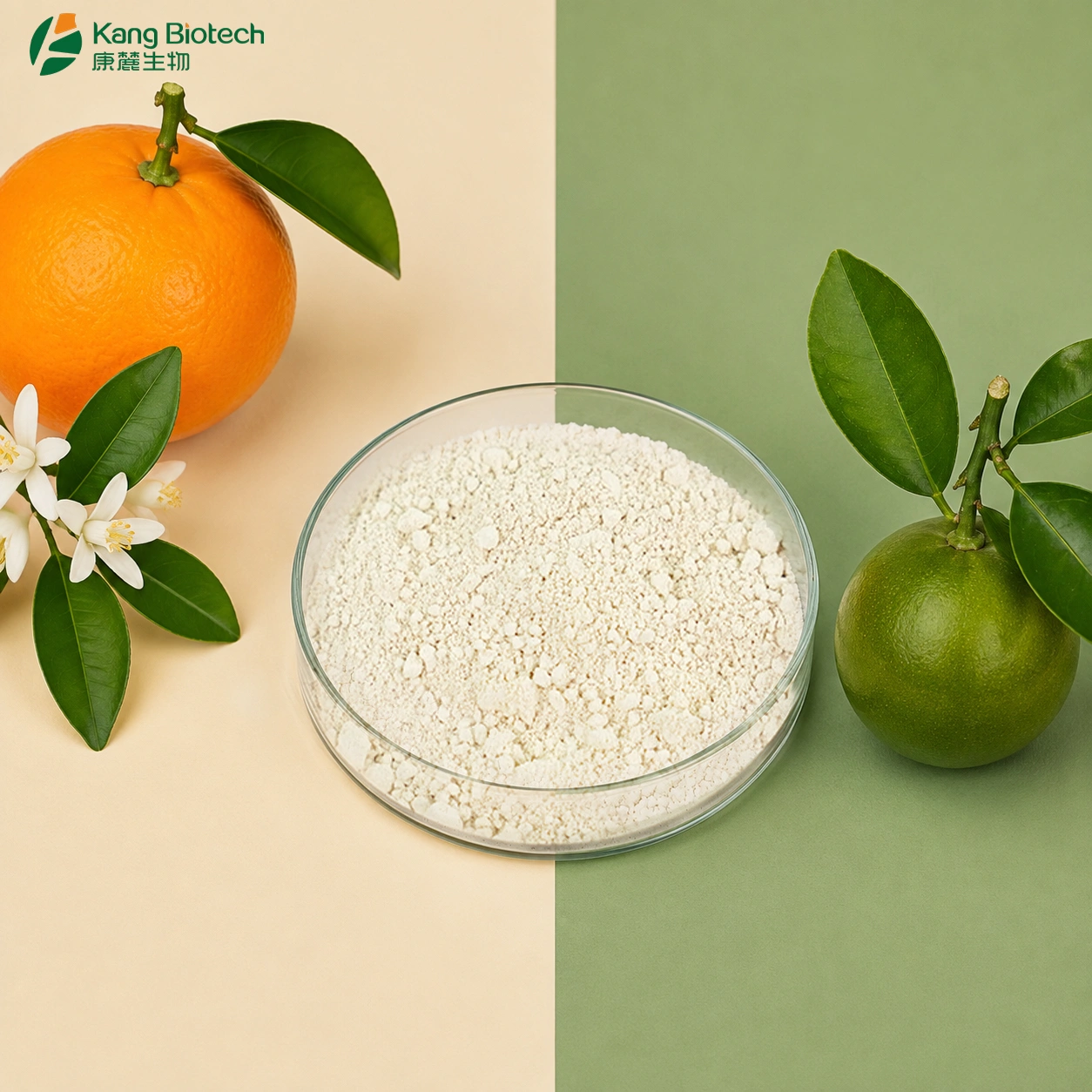
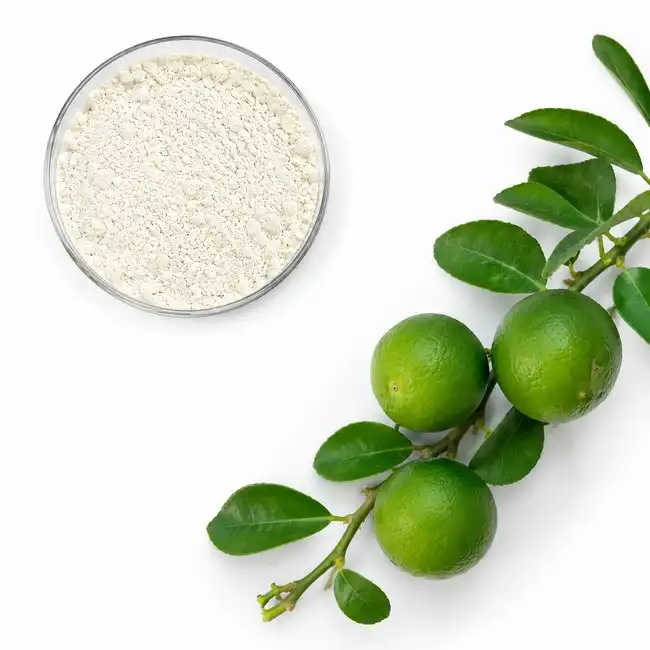
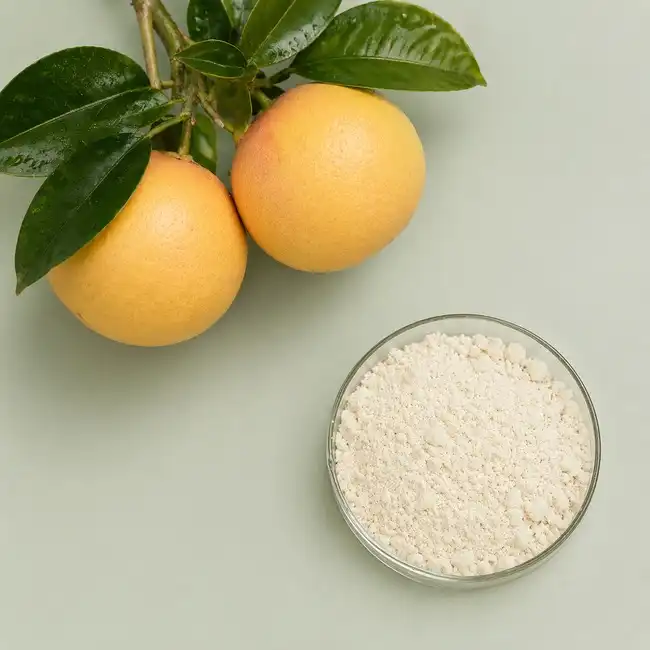
Naringin powder is a single-compound ingredient. Ours is standardized to 98% by HPLC and comes from grapefruit (Citrus paradisi) peel through water or ethanol extraction. It appears as an off-white powder. Grapefruit extract and whole-fruit powder are different materials. They contain naringin alongside many other compounds, so the naringin level varies and the label becomes more complex. Naringin is also not naringin dihydrochalcone, which has its own CAS number (18916-17-1) and is a separate substance. Naringin serves as a starting material in dihydrochalcone sweetener production. Checking CAS numbers on every quote prevents ordering the wrong substance.
How Antioxidant Claims Are Evaluated
Antioxidant status depends on where the evidence comes from. Laboratory studies show that citrus flavonoids, including naringin and naringenin, scavenge free radicals in test systems. Reviews in Advances in Nutrition and Food Chemistry describe these effects. Test-tube results, however, do not equal permitted label claims. In the United States, a supplement or food label needs substantiation and must follow FDA rules on structure-function statements, while cosmetic claims follow separate rules. I advise distributors to treat antioxidant data as background for formulators. Each finished-product brand and its regulatory team should decide what the label may say. Naringin powder is sold as an ingredient, not as a treatment.
Naringin Powder Properties, Benefits, and Uses
Chemical Identity and Physical Profile
Our naringin powder carries clear identity data: CAS 10236-47-2, EINECS 236-216-9, molecular formula C27H32O14, and a molecular weight of about 580.53 g/mol. The standard grade is food grade at 98% HPLC, an off-white powder with moisture below 12%. The botanical source is grapefruit (Citrus paradisi). Assays from 10% up to 98% HPLC are available for projects that need a gentler bitter note or a different active level. Shipments include a COA. I recommend that buyers compare the assay, moisture, and appearance on the COA with their own incoming-goods tests, because validated HPLC data tell you far more than a grade name on a datasheet.

Bitterness, Solubility, and Stability
Naringin tastes intensely bitter, and people can detect it at very low dilutions. That trait helps flavor work, since a small amount adds a clean, controllable bitter note. It also demands careful dosing in sweet or neutral products. Conventional powder dissolves in hot water and aqueous ethanol but stays poorly soluble in cold water, so liquid products often need pre-dissolving or a dispersion step. Our material tolerates pasteurization temperatures and holds its flavor in acidic drinks in the pH 2.5 to 4.0 range. For storage, keep sealed containers at room temperature and away from direct sunlight, because moisture uptake can hurt powder flow.
Applications Across Commercial Products
Naringin powder fits more than one SKU, which matters for distributors who stock multi-use ingredients. Our application list includes beverages and refreshment drinks, beer and alcoholic beverages, chewing gum and confectionery, dietary supplements, and dairy products and baked goods. In tonic waters and craft sodas, it gives a consistent bitter profile. Supplement formulators use it as a citrus flavonoid, and researchers also study it in pharmaceutical and personal-care settings. Grapefruit peel, a by-product of citrus processing, supplies the raw material, so buyers get a traceable flavonoid source. Confirm each use against your target market's rules, and run a small formulation trial before scaling.
How Naringin Powder Is Extracted, Processed, and Standardized
From Citrus Peel to Purified Powder
The route starts with authenticated citrus raw material. Grapefruit peel goes through cleaning and preparation, then water extraction or ethanol extraction. Filtration removes plant solids, and concentration reduces the liquid volume. Purification then separates naringin from other peel compounds before drying, milling, and packaging. The solvent choice affects residual-solvent checks, color, and solubility. Naringin powder from natural extraction differs from semi-synthetic materials, which involve chemical conversion steps. Our supply chain links cultivation, extraction, and production. Kang Biotech manages more than 20,000,000 m² of citrus plantations in Lianyuan, Hunan, and runs a 33,000 m² facility with nine production lines, so raw material and processing sit under one roof.

Standardization and Quality Control
Standardization means every batch targets the same active content. We test from raw material selection through delivery, with checks on moisture, purity, and contamination. A strong distributor specification lists HPLC identification and assay, moisture, heavy metals, pesticide residues, microbiology, particle size, and bulk density. Ask any supplier to state the exact limits for each item in writing. Our quality systems include ISO 9001, ISO 22000, HACCP, FAMI-QS, Halal, Kosher, and SC certifications. We also run a joint research center with the Hunan Institute of Agricultural Product Processing and Quality Safety, which supports extraction work and responses to customer requests.
Naringin Powder Versus Related Citrus Ingredients
Choosing between citrus materials starts with the analytical target. Naringin powder gives you one defined compound with a controlled assay and predictable bitterness. Naringenin powder is the aglycone, so solubility, taste, and documentation differ. Hesperidin powder is a different flavanone glycoside, found mainly in sweet oranges and other citrus, with its own specification. Grapefruit extract carries a broader mix of compounds, which suits a full-citrus profile but makes naringin content less predictable. NHDC is a high-intensity sweetener and flavor enhancer, not a substitute for any of these. Distributors who stock several citrus SKUs benefit from naming the exact compound, CAS number, and assay on every quotation and purchase order.
How to Choose a Naringin Powder Supplier for B2B Procurement
Specification and Documentation Checklist
Write a specification before you request prices. Include the ingredient name, CAS 10236-47-2, assay (98% HPLC or the grade you need), grade, appearance, moisture, particle size, contaminant limits, and packaging. Then ask for a current COA, and confirm which heavy-metal and pesticide results appear on it. Request a technical data sheet, SDS, allergen declaration, and origin statement as well. Our shipments include a COA, MSDS, allergen declarations, and certifications, and we can build market-specific documentation packages. Your regulatory and QA teams sign off on supplier files, so share this checklist with them early. That way the review runs once instead of three times.
Wholesale, OEM, and Logistics Terms
Unit price is only one part of the cost. Confirm pack size, MOQ, pallet configuration, Incoterms, payment terms, lead time, and destination requirements. Our naringin powder packs in 25 kg drums, with a 1 kg minimum order and samples available. We keep stock ready. Small orders ship by FedEx, while large orders move by air or sea. Assay level, purification, testing, packaging, customization, and freight all drive cost, so compare quotes on total landed cost instead of price per kilogram alone. OEM and ODM services cover purity levels, particle size, packaging design, labeling, and formulation support. For private-label or multi-tier distribution, written specifications keep every price tier tied to the same material.

From Sample to Commercial Batch
A five-step workflow lowers risk. First, set the technical and commercial specification. Second, screen suppliers on documents and certifications. Third, test a representative sample for assay, appearance, moisture, bitterness, dispersion, and stability in your own application. Fourth, approve the supplier and a commercial batch, then compare supplier data with in-house results and record any differences. Fifth, monitor consistency through incoming-batch release criteria, change-control rules, and periodic supplier reviews. Many distributors move from a sample to a small trial order and then to a longer supply agreement as the data builds. Citrus harvests vary by season, so ask about stock levels and repeat-order planning before volumes grow.
Naringin Powder Dosage, Safety, and Regulatory Review
Why Dosage Depends on the Application
I cannot give one universal dose for naringin powder, and no responsible supplier can. Raw-material inclusion levels in a bitter-flavor system differ from the amount per serving in a supplement. Both depend on the finished-product format, the target market, and the safety evidence. Flavor use needs very small amounts because bitterness is detectable at high dilution. Formulators should run sensory and stability trials, and qualified formulation, regulatory, or toxicology professionals should set the final level. Keep raw-material inclusion rates separate from consumer intake statements in your documents, so nobody mistakes one for the other.
Grapefruit Interactions and Population Considerations
Grapefruit juice can interact with certain prescription drugs, a topic reviewed in the Canadian Medical Association Journal in 2013. Researchers largely attribute the strongest effects to furanocoumarins, though flavonoids such as naringin have also been discussed, so I treat the question as open for formulation work. Products aimed at people who take medication, pregnant or nursing women, or children need review by a medical or toxicology professional before launch. Labels should carry the warnings your regulatory team judges appropriate. Our role is to supply accurate data on the ingredient, while finished-product claims and safety review stay with the brand owner.
Grades, Regulatory Status, and Claims
Our naringin powder is food grade, but it's more about the documentation than the grade label. Naringin is included in the FEMA GRAS flavour list and has been reviewed by the JECFA. In the U.S., 21 CFR 182.20 includes natural extractives in the category of spices and seasonings, therefore consult regulatory counsel on how it pertains to your application. Naringin is not specifically included on the GRAS style lists in the EU and is not on the Novel Food Union list. Naringenin is a separate compliance stance thus you can't substitute one for the other. Supplements, food and cosmetics have different guidelines, so you need to examine the latest criteria for each channel and maintain antioxidant claims evidence-based.
Conclusion
Naringin and naringenin are related citrus flavonoids, yet naringin is the glycoside and naringenin is the aglycone, so they differ in taste, solubility, specifications, and regulatory treatment. Naringin powder, standardized to 98% HPLC from grapefruit peel through water or ethanol extraction, is a defined compound that supports bitter flavor work, supplement formulas, and other uses. Laboratory antioxidant findings are not label claims, but remain background information. Quality based on genuine source material, regulated extraction and batch testing for assay, moisture and contaminants. Selection of supplier includes specification, paperwork, pack size and landed cost comparison and transition from sample to commercial batch with defined release criteria. The dosage, safety and claims will be driven by the final product and market therefore formulation and regulatory specialists should assess each project.
FAQ
1. Are naringin and naringenin the same compound?
No. Naringin is the glycoside and naringenin is the aglycone. They have different CAS numbers, assays, and compliance paperwork.
2. Is naringin powder water-soluble?
It dissolves in hot water and aqueous ethanol but poorly in cold water. Liquid products often need pre-dissolving or a dispersion step.
3. Which documents come with an order?
Shipments include a COA, MSDS, allergen declarations, and certifications. We can also prepare market-specific documentation packages.
5. What are the minimum order and customization options?
The minimum order is 1 kg, and samples are available. OEM and ODM services cover purity, particle size, packaging, and labeling.
6. How should I store it?
Keep it in a sealed container at room temperature, away from direct sunlight, to limit moisture uptake.
Request Naringin Powder Samples or a Supply Quote from Kang Biotech
Kang Biotech is a direct naringin powder manufacturer with 11 years of production experience, more than 20 years of citrus extraction expertise, ready stock, and 98% HPLC food-grade material in 25 kg drums. Samples start at 1 kg, and OEM or ODM options are available. Send your target grade, annual volume, and destination to sales02@kangbiotech.com, or visit cnkangbiotech.com for details. Our team will reply with a COA and pricing.
References
1. Advances in Nutrition, 2014. Effect of Citrus Flavonoids, Naringin and Naringenin, on Metabolic Syndrome and Their Mechanisms of Action.
2. Pharmaceuticals, 2019. The Therapeutic Potential of Naringenin: A Review of Clinical Trials.
3. Food Chemistry, 2007. Citrus Flavonoids: Molecular Structure, Biological Activity and Nutritional Properties: A Review.
4. Canadian Medical Association Journal, 2013. Grapefruit–Medication Interactions: Forbidden Fruit or Avoidable Consequences?
5. Journal of Agricultural and Food Chemistry, 1969. Taste and Structure in Phenolic Glycosides.
6. Code of Federal Regulations, Title 21, Section 182.20, 2024. Essential Oils, Oleoresins (Solvent-Free), and Natural Extractives (Including Distillates).

Send Inquiry
Related Industry Knowledge
- Neohesperidin Dihydrochalcone Powder as a Natural Sweetener
- What Is Naringin Dihydrochalcone Powder Used For?
- Polymethoxy Flavonoids Powder: A Guide to Citrus PMFs
- How to Choose a Neohesperidin Powder Manufacturer
- NDHC: an updated review on a naturally derived sweetener and flavor potentiator
- NHDC Sweetener Guide: How Neohesperidin Dihydrochalcone Is Changing Low-Calorie Foods
- Naringenin Powder vs Naringin: Key Differences Explained
- 3 Health Benefits of Horny Goat Weed
- Exploring Hesperetin Powder for Modern Cosmetic Formulation
- Hesperidin: A Citrus Treasure with a Rich History