
Neohesperidin Dihydrochalcone Powder vs Stevia: Which Natural Sweetener Wins?
October 28, 2026
If you're a formulator or procurement manager looking at NHDC vs stevia for your next product line, the quick answer is: it is contingent upon what you need from a sweetener. Neohesperidin dihydrochalcone powder has 1,500–1,800 times sweetness of sucrose, zero effective calories, and a unique bitterness-masking action that stevia cannot provide at low dosages. Stevia has high consumer awareness and a clean-label image. Together, they typically do better than each of them alone. This article explains the technical and sourcing differences so your R&D and procurement teams may make a well-informed selection.
Understanding Neohesperidin Dihydrochalcone Powder and Stevia
What Is Neohesperidin Dihydrochalcone?
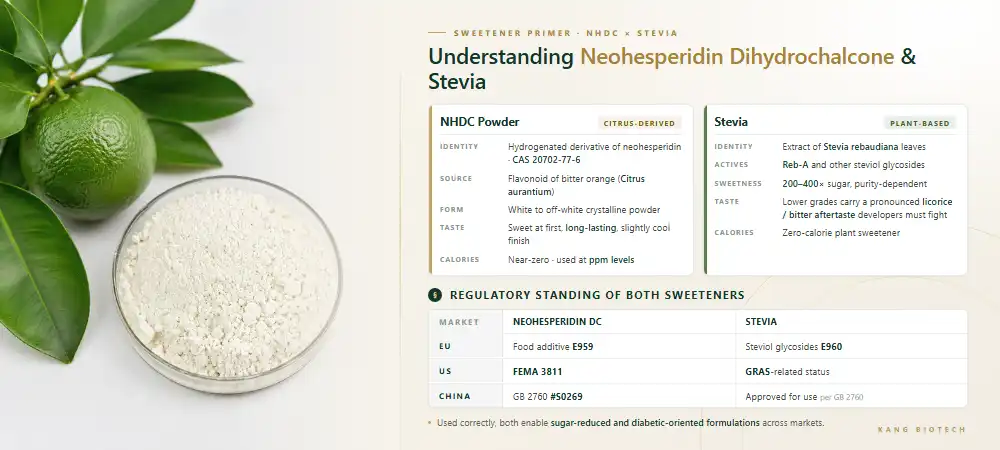
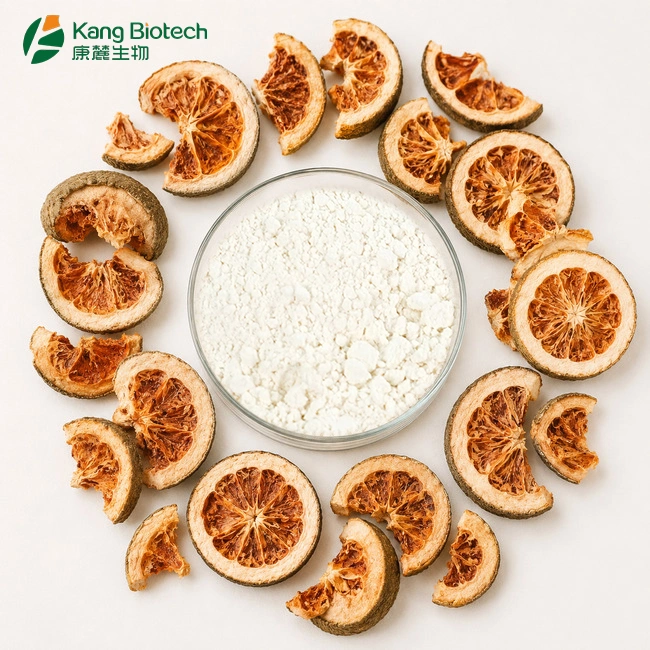
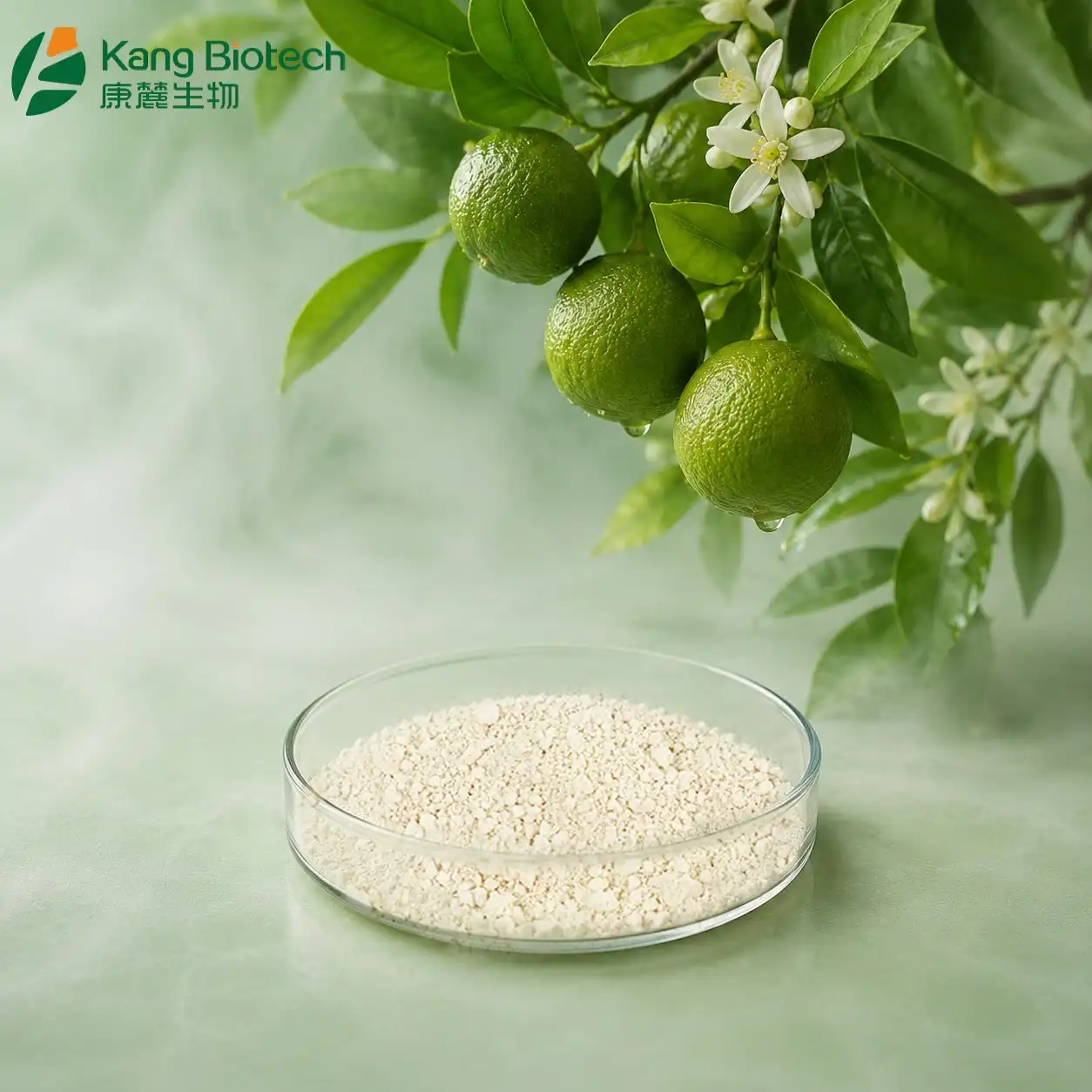
Neohesperidin dihydrochalcone powder CAS 20702-77-6 is a hydrogenated derivative of neohesperidin, a flavonoid found in bitter orange (Citrus aurantium). The resulting powder is white to off white crystalline. It is delicious at first and it remains sweet for a long time. Also the finish is a little chilly. It adds little calories therefore it's a wonderful option for recipes that are low in calories or sugar, utilised in ppm levels.
What Is Stevia?
Stevia is manufactured from the leaves of the plant Stevia rebaudiana. It's sweetened with rebaudioside A (Reb-A) and other steviol glycosides. Depending on the purity of the extract, Stevia is 200 to 400 times sweeter than sugar. A lot of people know it's a sugar from plants that doesn't add calories. But lower grades tend to have a very pronounced liquorice or bitter aftertaste that developers have to really struggle to get rid of.
Regulatory Standing of Both Sweeteners
Both sweeteners have been given the go-ahead by relevant authorities in different markets. Neohesperidin dihydrochalcone powder is clearly marked as a food additive in the EU (E959) and is identified in the US under FEMA 3811. In China, it is known as GB 2760 (#S0269). Steviol glycosides are associated with E960 in the EU and have GRAS-related regulatory status in the US. It is possible to make products that are suitable for sugar-reduced or diabetic-oriented formulations with both of them as long as they are used correctly.
Comparative Analysis: NHDC Powder vs Stevia
Sweetness Intensity and Taste Profile
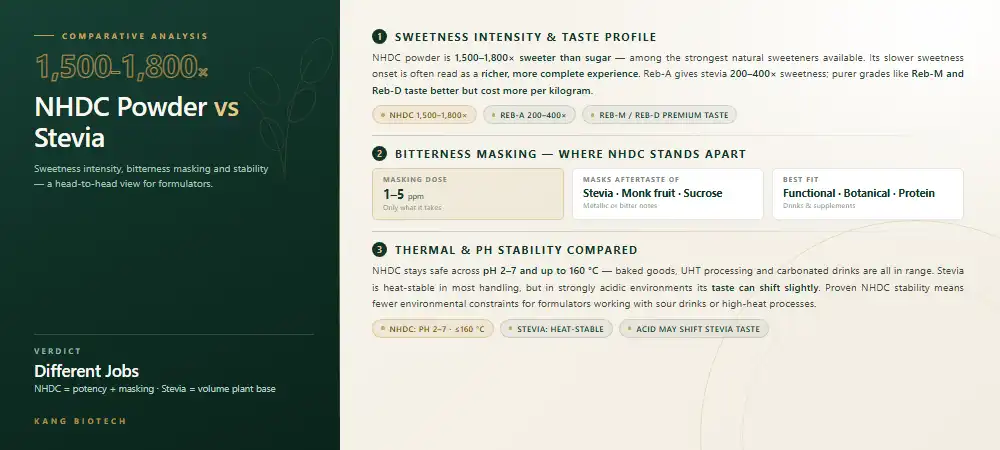
Neohesperidin dihydrochalcone powder is 1,500 to 1,800 times sweeter than sugar. It is now one of the strongest natural sweeteners you can find because of this. People often think that the longer time it takes for the sweetness to kick in means that the experience is better and more complete. Most of the time, Reb-A makes stevia taste 200–400 times sweeter than sugar. More pure grades, like Reb-M and Reb-D, taste better but cost more per kilogram.
Bitterness Masking: Where NHDC Stands Apart
One way that NHDC is different from stevia in real life is that it can cover up bitter tastes. At amounts as low as 1–5 ppm, neohesperidin dihydrochalcone powder can prevent the metallic or bitter aftertaste that results from using stevia, monk fruit extract, or sucrose. This makes it very useful in functional drinks, botanical supplements, and protein drinks where the active ingredients can make the drinks taste funny in ways that regular sweeteners can't take care of.
Thermal and pH Stability Compared
Neohesperidin dihydrochalcone powder is safe at pH levels between 2 and 7 and temperatures up to 160°C. In other words, it can be used in baked goods, UHT cheese, and carbonated drinks. Stevia stays stable at high temperatures and in most handling situations. However, if you put it somewhere with a lot of acid, the taste might change a little. NHDC has been shown to be stable, which helps formulators who work with sour drinks or high temperatures because they don't have to deal with as many environmental factors.
Procurement Insights for B2B Buyers
Certifications That Matter for Global Trade
When you export any flavour overseas it's crucial that the certifications match. Make sure that neohesperidin dihydrochalcone powder for sale in the EU is E959 compliant. Make sure it fulfils FEMA 3811 guidelines for purchasers in the US. If it's for buyers in South East Asia and Middle East, ensure it's Halal/Kosher compliant. When a corporation has analytical data from third party laboratories like SGS or Eurofins, there is greater confidence in the company.
Buying teams should ensure these key certification elements before placing a test order:
- EU market entry: E959 approval documents, European Pharmacopoeia (EP) compliant and complete COA with HPLC purity ≥98%
- US Market Entry: FEMA 3811 Designation, GRAS-basis Documentation, referencing GRN 902, FCC/USP-grade Specification Sheets.
- Southeast Asia and Middle East: Valid Halal certificate, Kosher certification and HS code documents for seamless customs clearance.
To market a medicine in the EU, the drug must be E959 approved, comply with the European Pharmacopoeia (EP), and have a complete COA stating that the drug is at least 98% pure by HPLC. To sell in the US market, you must have GRAS documentation that references GRN 902 and a FEMA 3811 designation. You will also want FCC/USP grade specification documents. In Southeast Asia and the Middle East you will go through customs fast, you only need a legitimate Halal certificate, a Kosher certificate and papers with an HS number.
MOQ, Sampling, and Lead Times
Kang Biotech's minimum order quantity is 1 kg, making it suitable for R&D assessment and formulation testing before commercial-scale purchasing. Samples can be sent for laboratory evaluation, with 1 kg trial orders typically shipped by FedEx within a few business days. Standard commercial packaging is available in 25 kg fibre drums with plastic lining, while larger quantities can be shipped by air or ocean freight according to the buyer's delivery requirements. Buyers should review the COA and relevant certification documents before sampling to help prevent delays during factory audits and regulatory review. For larger commercial orders, buyers should confirm production and shipping schedules with the supplier before placing the order.
Batch Consistency and Quality Documentation
High-intensity sweeteners used in regulated meals should be uniform from batch to batch. Manufacturer: Kang Biotech Purity: 98% by HPLC. Control of heavy metals (Lead < 3 mg/kg, Arsenic < 2 mg/kg), bacteria (Total Plate Count < 1,000 cfu/g) and drying loss < 12%. Each item comes with a complete COA and the factory is ISO 9001, ISO 22000, HACCP, Halal, Kosher and FAMI-QS certified.
How to Choose the Best Natural Sweetener for Your Business
Match the Sweetener to Your Application
Neohesperidin dihydrochalcone powder is found in a lot of different foods and drinks, such as sodas, yogurts, hard candies, gum, oral care products, and medicine syrups. This is mostly because it is stable and can make things less bitter. When the flavor of stevia can be controlled by picking the right purity or mixing it with other things, it works well. It works well and doesn't cost much for formulators who are making complicated products with lots of ingredients to start with NHDC as an anchor to hide the bitterness and then add stevia or other high-intensity sweeteners on top.
Consider the Regulatory Label on Your Target Market
Brands are switching to sweeteners that don't contain sugar because of laws in the EU, UK, and Mexico that tax sugar. Neohesperidin dihydrochalcone powder does not increase the sugar tax thresholds, and it can be used in products with clean labels because it is derived from citrus fruits. Because NHDC is E959 in the EU and is identified as FEMA 3811 in the US, brands that sell in more than one market can prepare technical dossiers for different jurisdictions while accounting for the specific regulatory requirements of each market.
Evaluate the Total Formulation Cost
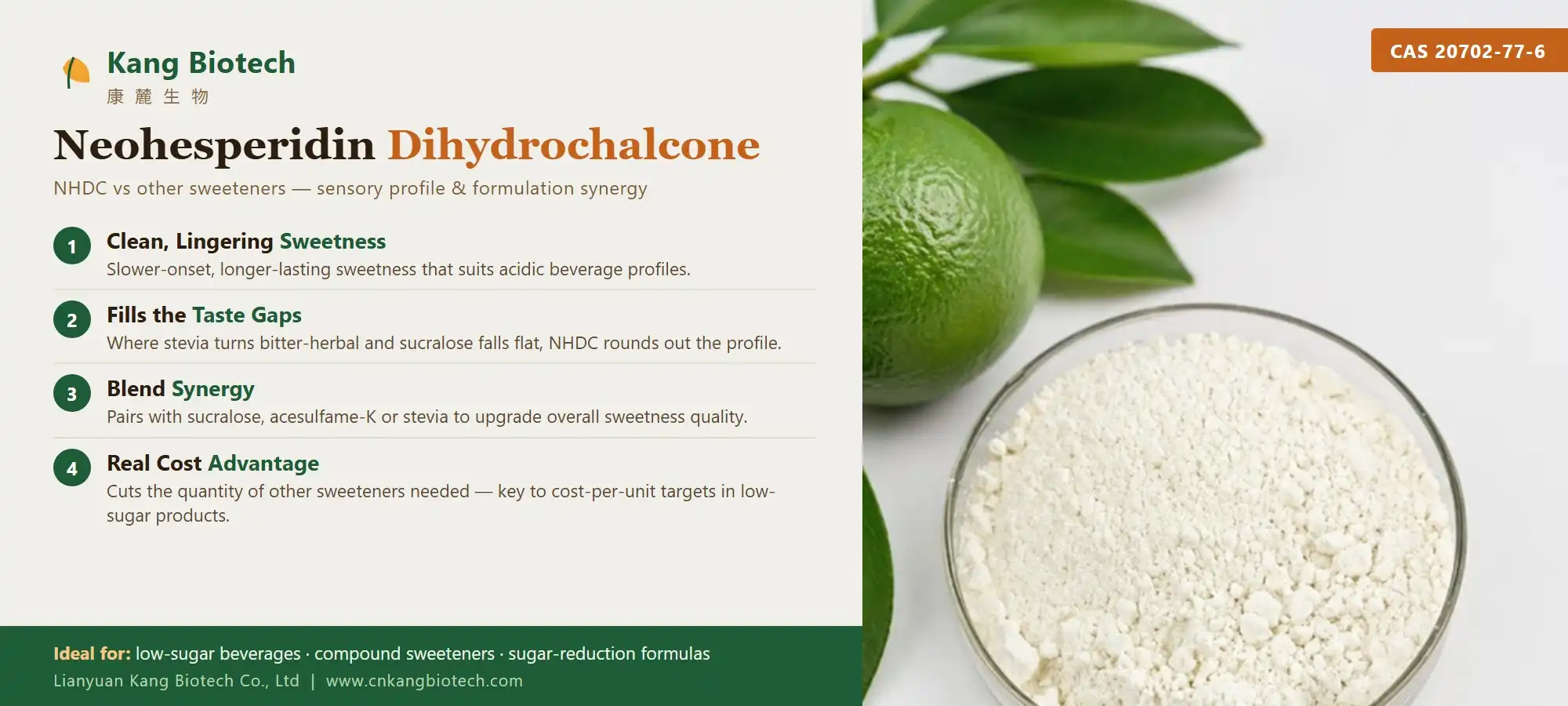
Formulation data from mixed sweetener systems show that if you mix neohesperidin dihydrochalcone powder with stevia or acesulfame-K, you can use up to 40% less sweetener overall. Since NHDC works at very low ratios, the price per unit of sweetness is reasonable, even though it seems like the price per kilogram is higher than that of other sweets. When buying teams are choosing a sweetener, they should look at more than just the price per kilogram. They should also look at the cost per ppm of sweetness provided.
Conclusion
Both stevia and neohesperidin dihydrochalcone powder are natural sweets that are legal and well-regulated. Because it has a higher sweetness strength, better bitterness masking, and a greater processing stability, NHDC is a good choice for complicated formulas and product lines for more than one market. People know what stevia is and like that it has a clean label. A lot of well-known sugar-free foods use both of these ingredients together. NHDC fills in the gaps in taste and smell that stevia alone leaves. It depends on what you want to use it for, who you want to sell it to, and how your R&D team decides between cost and taste.
FAQ
1. Is neohesperidin dihydrochalcone powder safe for diabetic consumers?
Yes. NHDC has little effect on blood sugar and no real calories at normal levels of usage. It is non-cariogenic and has no effect on insulin response, allowing for the creation of diabetic friendly and keto-oriented products.
2. Can NHDC and stevia be used together in the same formula?
Yes, and this is a default strategy. Neohesperidin dihydrochalcone powder conceals the bitter aftertaste that stevia occasionally carries, while stevia adds body and main sweetness. This combination may frequently be used to lower the overall quantity of each sweetener.
3. What is the recommended use level for bitterness masking?
A level of 1–5 ppm is often enough to reduce bitterness. Formulators often operate in the 10-50 ppm range for direct sweetening applications, depending on product matrix and intended sweetness level.
4. How long does NHDC stay stable in a finished product?
Neohesperidin dihydrochalcone powder should be stored in original unopened packing in a cool dry place and is good for 24-36 months. The stability of aqueous formulations is pH dependent and heat during processing.
5. Does NHDC dissolve easily in water?
NHDC is sparingly soluble in cold water (about 0.5 g/L) but easily soluble in hot water or combinations of ethanol and water. In industry normally a concentrated masterbatch is prepared first and then added to the final product.
Request a Sample of Kang Biotech's Neohesperidin Dihydrochalcone Powder
For more than 11 years, Kang Biotech has been making neohesperidin dihydrochalcone powder. They also have 20,000,000 m² of bitter orange farms. Also, ISO 9001, ISO 22000, Halal, Kosher, HACCP, and FAMI-QS have all given them their seal of approval. We have Neohesperidin dihydrochalcone powder in stock, and we can send 1 kg samples via FedEx within days. Email our expert team at sales02@kangbiotech.com or visit cnkangbiotech.com to get a sample, a COA, or help with formulating.
References
-
Borrego, F., & Montijano, H. (2001). Neohesperidin dihydrochalcone: Applications in food and beverage technology. Food Technology and Biotechnology.
-
European Food Safety Authority (EFSA). (2011). Scientific opinion on the safety of neohesperidin dihydrochalcone (E 959) as a food additive. EFSA Journal.
-
Geuns, J. M. C. (2003). Stevioside. Phytochemistry.
-
Schiffman, S. S., & Gatlin, C. A. (1993). Sweeteners: State of knowledge review. Neuroscience & Biobehavioral Reviews.
-
Joint FAO/WHO Expert Committee on Food Additives (JECFA). (2009). Steviol glycosides: Safety evaluation. WHO Technical Report Series.
-
Nabors, L. O. (Ed.). (2012). Alternative Sweeteners (4th ed.). CRC Press.

Send Inquiry
Related Industry Knowledge
- How Sweet Is Neohesperidin Dihydrochalcone Powder?
- Neohesperidin Dihydrochalcone Powder vs Stevia: Which Natural Sweetener Wins?
- The Power of Naringin
- Naringin Dihydrochalcone: Advances in Applications and Research
- How Naringin Dihydrochalcone Supports Sugar Reduction
- Naringenin Powder vs Naringin: Key Differences Explained
- Nobiletin Benefits for Brain Health and Metabolism
- Exploring Hesperetin Powder for Modern Cosmetic Formulation
- What Is Naringenin Powder and How Is It Used?
- Evidence for the Health Effects of Hesperidin