
How to Use Neohesperidin Dihydrochalcone Powder in Beverages for a Low-Calorie Boost?
October 22, 2026
If you're developing a reduced-sugar beverage line and searching for a reliable high-intensity sweetener, neohesperidin dihydrochalcone powder (NHDC) deserves serious attention. Derived from citrus flavonoids through water or ethanol extraction, this white crystalline powder (CAS No. 20702-77-6) delivers sweetness approximately 1,500–1,800 times that of sucrose at dosage levels measured in parts per million. Because such minute quantities are needed, its caloric contribution is effectively negligible, making it a practical tool for clean-label, low-calorie beverage formulations without sacrificing taste quality.
Understanding Neohesperidin Dihydrochalcone Powder
What Is NHDC and Where Does It Come From?
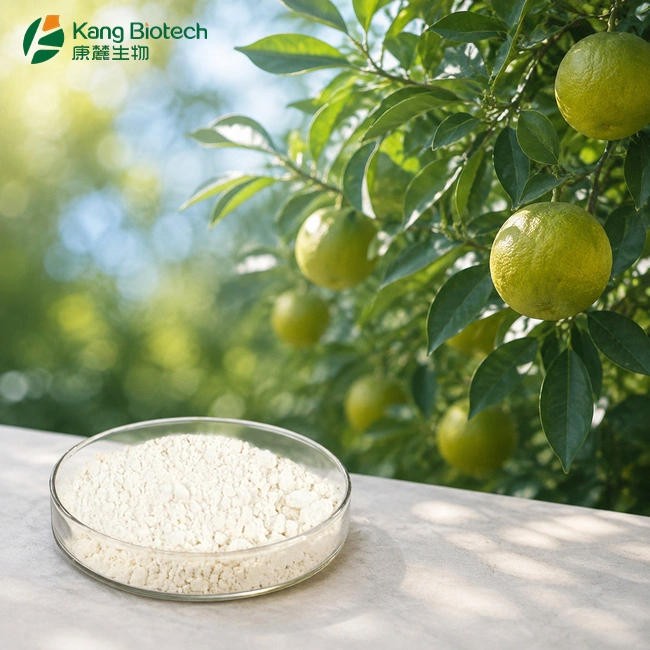
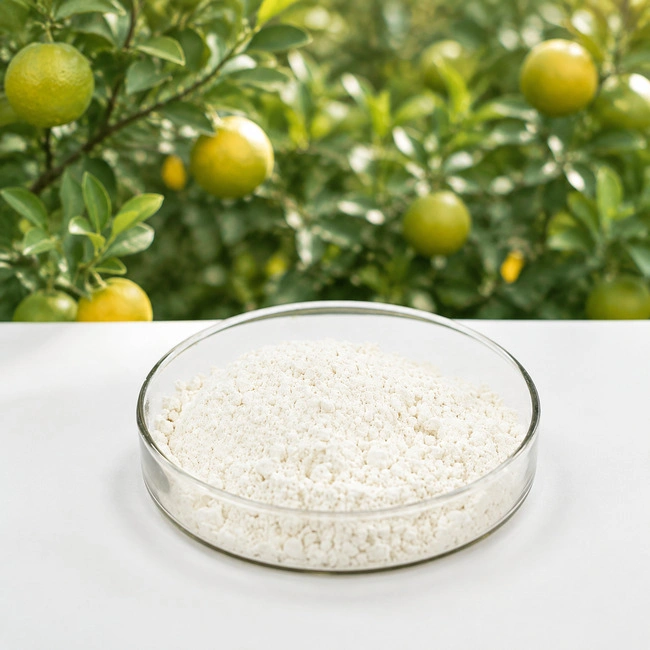
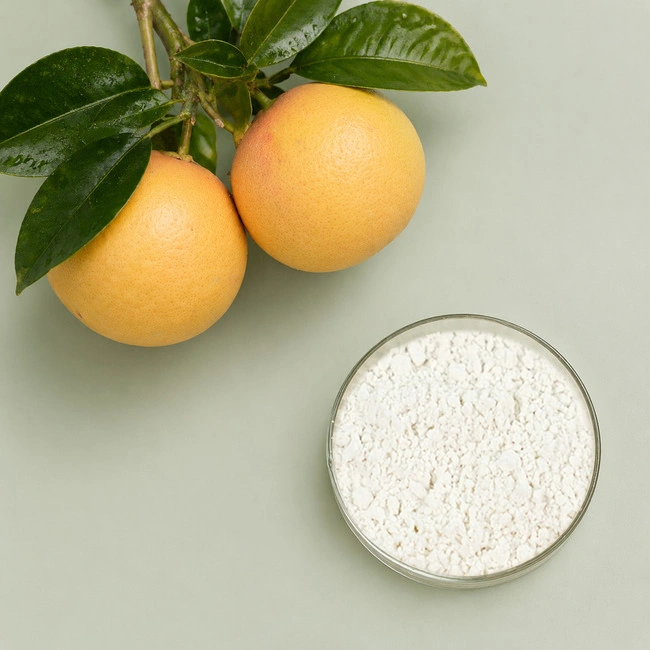
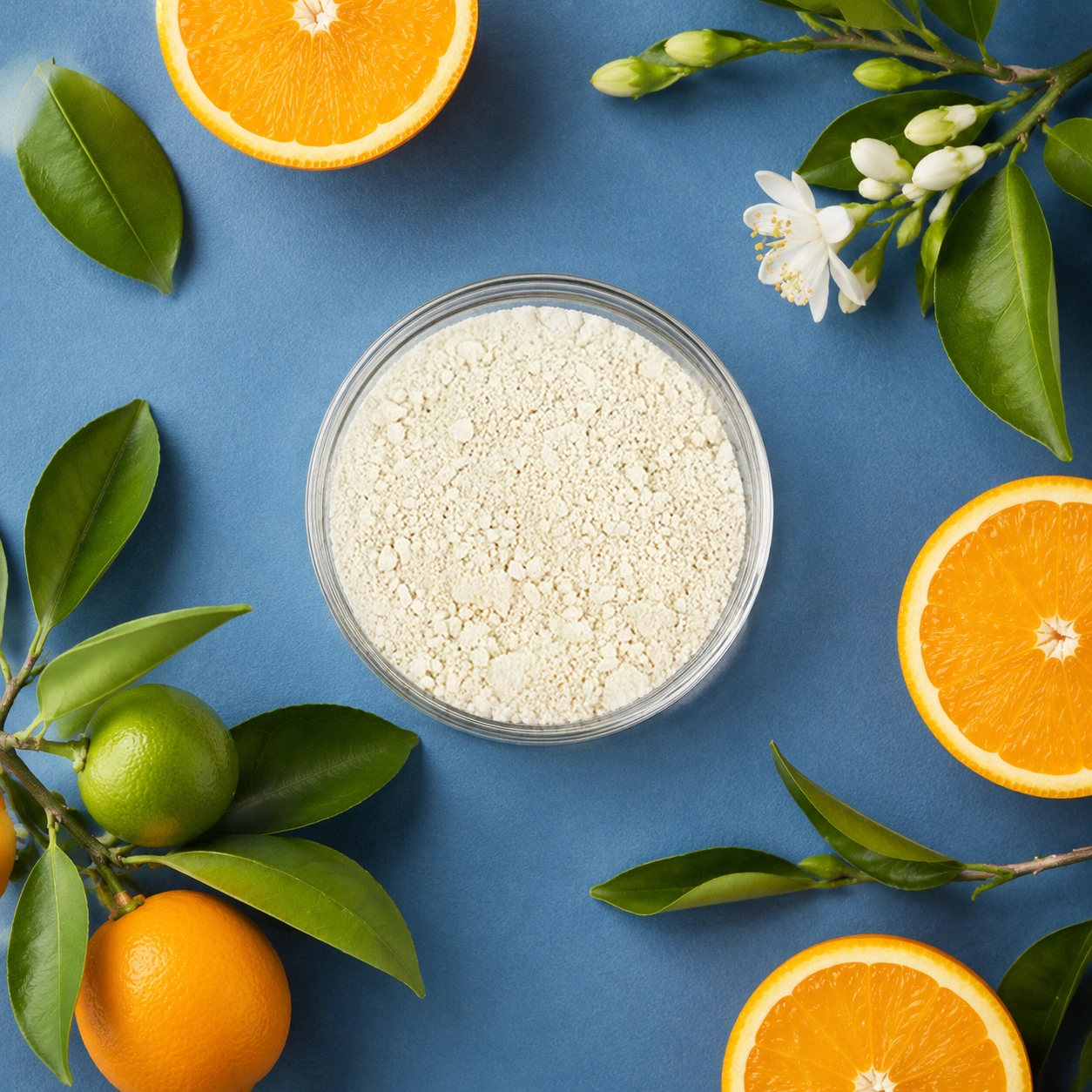
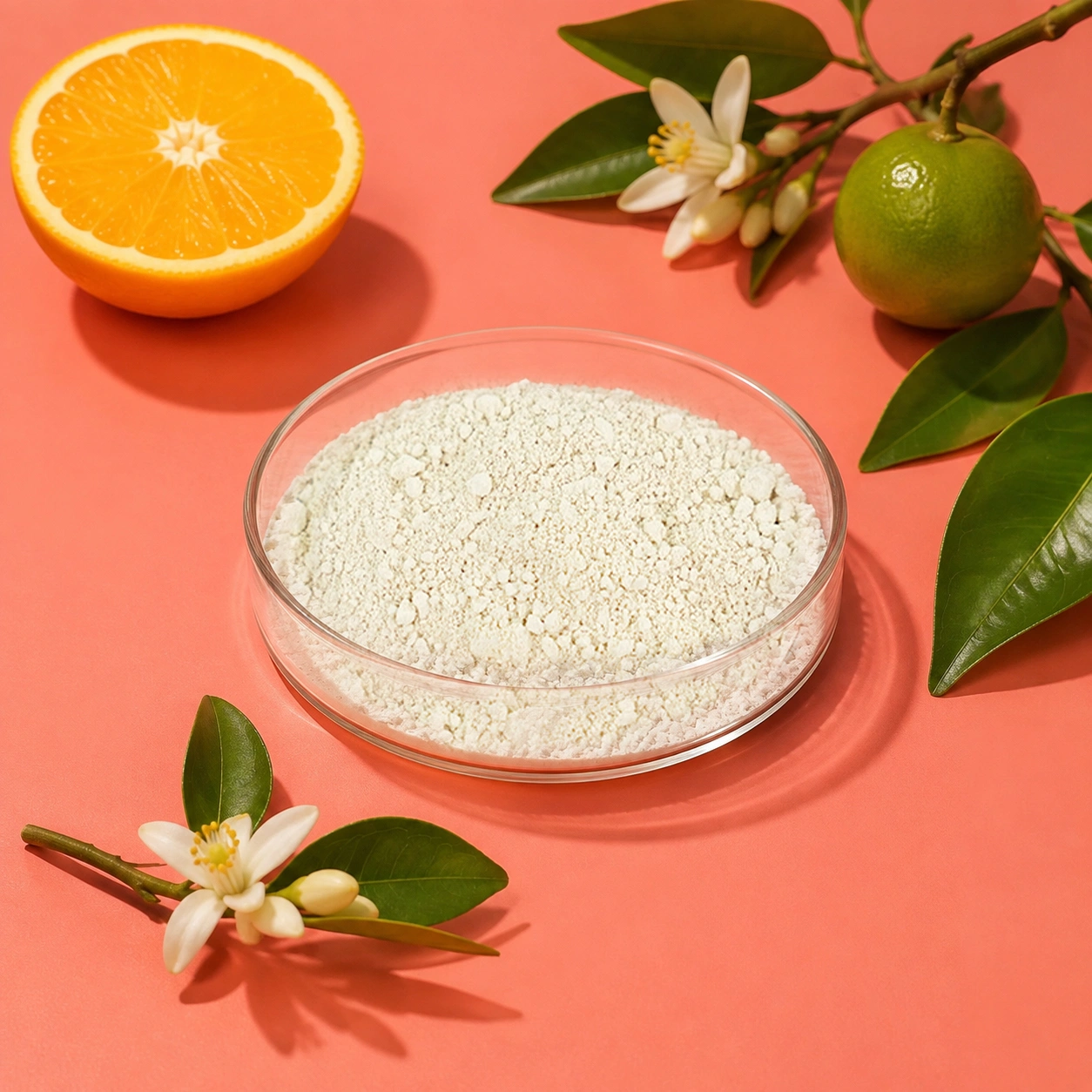
Neohesperidin dihydrochalcone powder comes from neohesperidin, a natural flavonoid that is found in large amounts in bitter orange (Citrus aurantium). Neohesperidin changes into NHDC through catalytic hydrogenation. NHDC is a food-safe white powder with the formula C₂₈H₃₆O₁₅ and the EINECS number 243-978-6. It has been approved by regulators under E959 (EU), FEMA 3811 (US), and China GB2760. This gives international procurement teams a clear path to follow for compliance in all major markets.
Why It Fits Clean-Label Beverage Trends
More and more, health-conscious consumers read ingredient labels very carefully. The fact that neohesperidin dihydrochalcone powder comes from citrus fruits fits well with the natural-sourcing stories that companies use to show their commitment to openness. Because it has a low glucose index, it fits well into the groups of diabetic-friendly and ketogenic beverages, which are two fast-growing market segments in the US. Notably, NHDC's molecular stability across pH 2–7 means that it keeps its sweetness even after being pasteurized and processed at ultrahigh temperatures (UHT), which is hard for sweeteners that aren't as stable.
Effective Usage of NHDC Powder in Beverage Formulations
When working with neohesperidin dihydrochalcone powder, the most important practical choice is how much to use. Its active use range in drinks is usually between 1 and 10 parts per million (ppm), because it is so sweet. When used too much, it gives off a strong licorice or cooling aftertaste that is very different from the character of sugar. This is something that formulators try to avoid in products that they want to appeal to a wide range of people.
Dissolution and Mixing Technique
NHDC doesn't dissolve very well in cold water (about 0.5 g/L), so adding it directly to cold drink bases doesn't work well. Professionals first dissolve the powder in hot water (above 60°C) or a water-ethanol matrix to make a concentrated masterbatch. This masterbatch is then mixed evenly into the finished beverage. This step also makes dosing more accurate from batch to batch, which is very important when working with ppm concentrations.
Application Across Beverage Categories
Neohesperidin dihydrochalcone powder works well in a number of different types of drinks. Here are the main use cases that beverage R&D teams should keep in mind:
- Carbonated soft drinks: While NHDC is present in small amounts (2–5 ppm), it smooths out the sweetness curve of drinks made with sucralose and gives artificial-only blends a fuller mouthfeel. Because it doesn't change much in high-acid environments (pH 2.5–3.5), it works well in cola and citrus-flavored drinks.
- Flavored waters and sports drinks: NHDC, at 1–3 ppm, makes the sweetness last longer, so you don't need as much of the main sugars like stevia or acesulfame-K. This pair works well together to lower the total cost per unit of sugar.
- Functional and botanical beverages: NHDC stops bitterness when mixed with hydrolyzed proteins or bitter plant extracts, hiding harsh off-notes without adding sugar or too much sweetness.
These use cases show that neohesperidin dihydrochalcone powder does more than just add sweetness; it also improves the taste design of a wide range of drinks.
Comparing NHDC Powder with Other Sweeteners in the Market
Sensory Profile Versus Common Alternatives
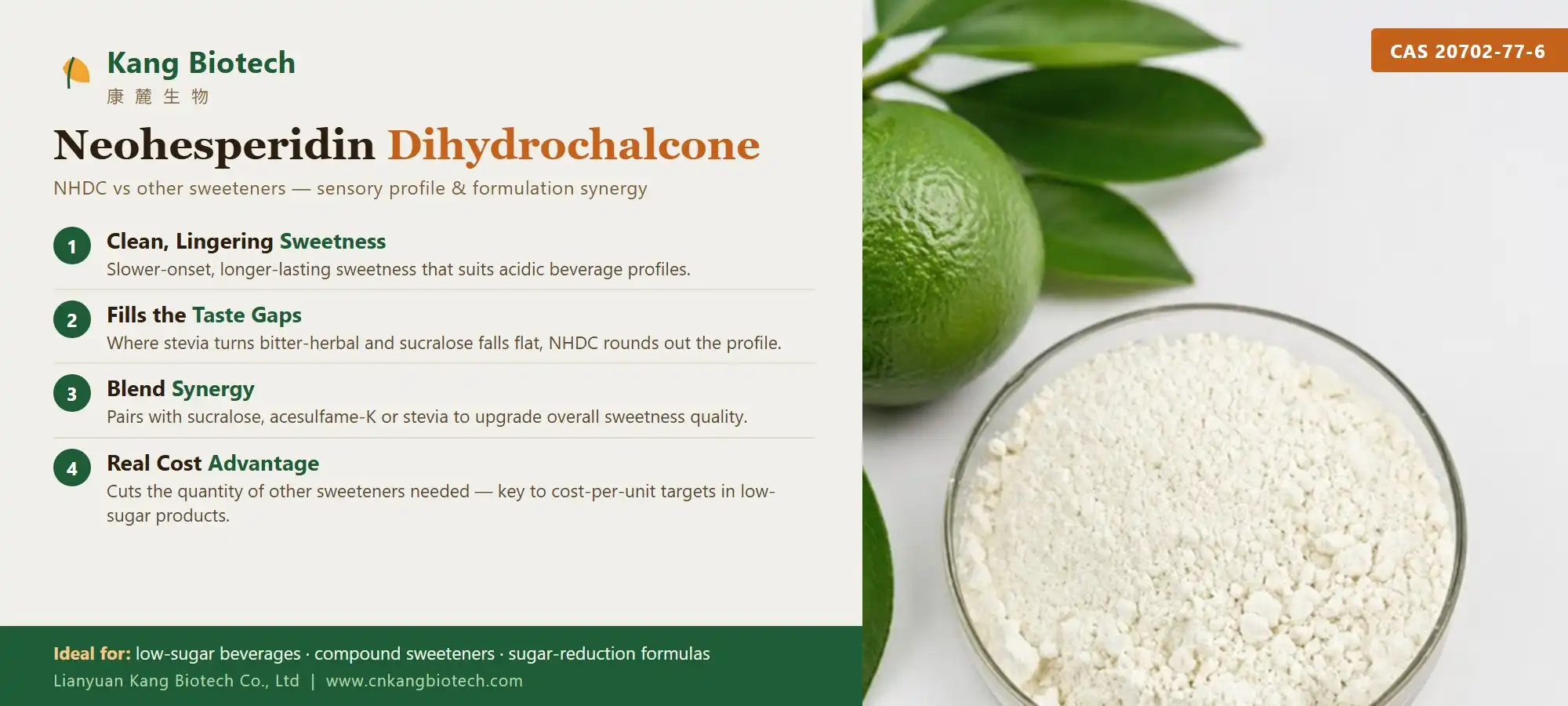
When purchasing teams compare NHDC to stevia, monk fruit, or sucralose, they should look at more than just the sweetness level. At higher amounts, stevia has a well-known bitter-herbal aftertaste. Monk fruit extract can be expensive and hard to get. Sucralose is clean but doesn't have much of a flavor. Neohesperidin dihydrochalcone powder adds a slower-onset, longer-lasting sweetness that goes well with acidic beverage profiles and fills in the taste gaps left by the others.
What really sets NHDC apart in a mixture is how it works with other chemicals. When mixed with sucralose, acesulfame-K, or stevia, NHDC makes the general sweetness better and can lower the quantity of the other sweetener needed by a large amount, which has a direct effect on the cost of formulation. For companies that have to meet strict cost-per-unit targets for low-sugar products, this synergy is not just an idea; it's important for business.
Procurement Insights: Sourcing Neohesperidin Dihydrochalcone Powder
Key Criteria When Evaluating a Supplier
To get neohesperidin dihydrochalcone powder, you need more than a price that is competitive per unit. For formulation stability, batch-to-batch HPLC purity consistency at least 98% is a must. Regulatory paperwork, like a full COA, E959/FEMA 3811 compliance files, Kosher and Halal licenses, and REACH paperwork, needs to be made available right away. When suppliers can't quickly provide this paperwork, it creates a compliance risk for markets that are regulated by the EU.
During the evaluation process, the ability to change the minimum order number is also important. R&D teams can test lab applications on 1 kg trial samples before committing to commercial volumes. This is a smart step that most experienced formulators include in their sourcing process.
Logistics and Lead Time Expectations
Neohesperidin dihydrochalcone powder comes in 25 kg drums and can be shipped by FedEx for small orders or by air or sea freight for large orders. When a maker has enough in stock instead of making things to order, lead times shorten by a lot. This makes planning less risky for brands that don't have enough ingredients on hand.
Ensuring Quality and Compliance in NHDC Powder Usage
Regulatory Standing and Testing Standards
Neohesperidin dihydrochalcone powder is approved as a food ingredient by EU Regulation (E959). In the US, it is considered GRAS under FEMA 3811, and it is on the list of sweeteners in China's GB2760 standard. As a quality manager, you should check each arriving batch using an HPLC test (target ≥98%), confirm the melting point (152–156°C), and compare the taste and smell to a reference standard. These checks make sure that the strength doesn't change between production batches, which is the main worry that experienced buyers have when working with any high-intensity sweetener provider.
Storage and Handling Best Practices
Neohesperidin dihydrochalcone powder should be kept in tightly closed cases out of the way of direct sunlight and moisture. Because NHDC is not hydrophilic, it does pretty well in normal warehouse conditions. However, being exposed to high humidity for long periods of time can change how the powder flows and dissolves. To keep full tracking, rotate stock so that the first items that come in are the ones that go out, and write down storing temperatures in quality records.
Conclusion
Neohesperidin dihydrochalcone powder is a flexible ingredient that helps solve real recipe problems in the creation of low-sugar drinks. Its high level of sweetness, stable pH, ability to work well with other sweeteners, and ability to hide bitter tastes make it a good choice for R&D teams making low-calorie, clean-label drinks. The set of rules (E959, FEMA 3811, and GB2760) makes it easy for international product launches to be legal. For procurement pros, the key to getting the most out of it is choosing a seller that can show consistent purity, full paperwork, and a steady flow of supplies.
FAQ
1.Is neohesperidin dihydrochalcone powder safe to use across all beverage types?
In the EU, NHDC is approved as food additive E959. In the US, it is known as GRAS (FEMA 3811). It doesn't change much in pH between 2 and 7, works well when pasteurized or heated under high heat, is safe, and breaks down quickly. It can be used for fizzy drinks, flavored waters, functional drinks, and dairy-based drinks that fall into certain groups of allowed uses.
2.How effectively does NHDC replace sugar without compromising taste?
Neohesperidin dihydrochalcone powder, when used at 1–10 ppm, provides clean, long-lasting sweetness while actively reducing bitterness. It's important to mix it with a main sugar instead of using it by itself. This combination creates a balanced character that is more like sucrose while lowering the total sugar level by a large amount.
3.What are typical lead times for bulk orders?
Small items (1–25 kg) can be sent by FedEx within a few business days if the supplier has enough in stock. Standard international logistics timelines are usually followed for large shipments by air or sea freight. It is always a good idea to make sure that stock is available before finalizing purchase orders.
4.Can NHDC cause any off-notes at standard beverage dosages?
When NHDC is mixed with sweets that go well with it, off-notes are very low when the concentration is within the suggested range (1–10 ppm). Going over the recommended concentrations can add a cooling or licorice aftertaste, so accurate dosing and pre-dissolution in hot water are very important steps.
Partner with Kang Biotech for Certified Neohesperidin Dihydrochalcone Powder
Since 2011, Kang Biotech has been making ingredients from citrus fruits. They do this from over 20,000,000 m² of bitter orange farms and a 33,000 m² building that is ISO 9001, ISO 22000, HACCP, Kosher, and Halal approved. We are a direct manufacturer of neohesperidin dihydrochalcone powder and our product is 98% HPLC-verified. We also offer full regulatory paperwork, a minimum order quantity of 1 kg, and ready stock for quick delivery. Contact our technical team at sales02@kangbiotech.com to get a sample or talk about your formulation needs right away.
References
1. Borrego, F., & Montijano, H. (2001). Neohesperidin dihydrochalcone: properties and applications. Sweeteners and Sugar Alternatives in Food Technology, Blackwell Publishing.
2. European Food Safety Authority (EFSA). (2011). Scientific Opinion on the re-evaluation of neohesperidin dihydrochalcone (E 959) as a food additive. EFSA Journal.
3. Kinghorn, A. D., & Compadre, C. M. (2001). Less common high-potency sweeteners. Alternative Sweeteners (3rd ed.), Marcel Dekker.
4. Nabors, L. O. B. (Ed.). (2012). Alternative Sweeteners (4th ed.). CRC Press.
5. Jiang, H., & Broering, J. (2018). Sweetener synergy and formulation cost reduction in reduced-sugar beverages. Food Technology Magazine.
6. Wölwer-Rieck, U. (2012). The leaves of Stevia rebaudiana and comparative sweetener evaluation in beverage matrices. Journal of Agricultural and Food Chemistry.

Send Inquiry
Related Industry Knowledge
- How to Select a Bulk Naringenin Powder Supplier
- Apigenin for Sleep: What This Chamomile Compound Does
- How Sweet Is Neohesperidin Dihydrochalcone Powder?
- Hesperidin: The Citrus Bioflavonoid that Supports the Brain & Heart
- Apigenin: Health Benefits, Sources, and Safety
- Nobiletin Uses, Benefits & Dosage
- Naringenin Powder in Dietary Supplements: Formulation Guide
- Exploring Hesperetin Powder for Modern Cosmetic Formulation
- Evidence for the Health Effects of Hesperidin
- What Is Apigenin Powder and Why Is It Gaining Popularity in Supplements?