
Exploring Hesperetin Powder for Modern Cosmetic Formulation
October 22, 2026
Hesperetin powder (CAS 520-33-2) is really starting to make waves in the cosmetic formulation world and for good cause. This citrus-derived flavanone aglycone has quantifiable antioxidant activity, preserves skin barrier function, and exhibits improved dermal absorption over its glycoside precursor hesperidin. As clean beauty demand continues to increase in the North American and European markets, formulators are turning to plant-sourced actives with sound science behind them. Whether you're making an anti-aging serum or a brightening moisturiser, hesperetin powder offers a proven biological activity and natural origin narrative that appeals to today's ingredient-savvy customers.
Understanding Hesperetin Powder and Its Cosmetic Benefits
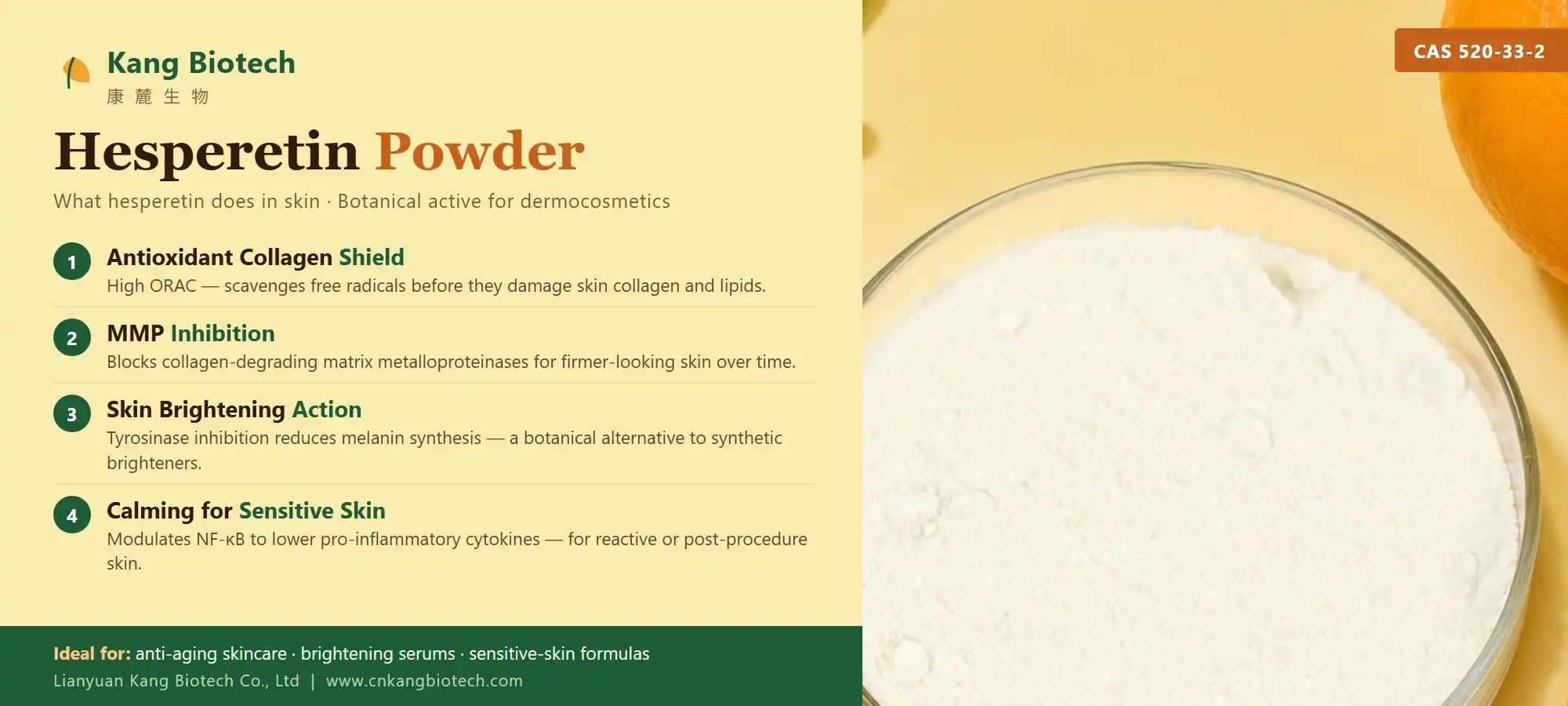
What Hesperetin Actually Does in Skin
Hesperetin powder works by scavenging free radicals before they may harm the collagen and lipid structures present in the skin. It has a high oxygen radical absorbance capacity (ORAC) and so is a feasible antioxidant alternative for formulators addressing photoaging and oxidative stress. Hesperetin has been shown in peer-reviewed publications to block matrix metalloproteinases, the enzymes that break down collagen, which leads to tighter appearing skin over time.
Skin Hydration and Brightness
Hesperetin powder in addition to antioxidant protection has tyrosinase inhibitory action which is directly related to skin brightening formulations. Research has shown that it may decrease melanin synthesis in keratinocytes at normal usage levels without harmful consequences. This makes it a potential botanical alternative to synthetics brightening agents, especially for businesses that are building around natural ingredient claims.
Anti-Inflammatory Profile for Sensitive Skin
Hesperetin controls the NF-κB signalling pathway resulting in the reduction of pro-inflammatory cytokine expression. For topical skin care, this biological process means less reactive and calmer skin. This action may be used by formulators producing solutions for sensitive or post-procedure skin to distinguish goods without the use of synthetic anti-inflammatory drugs.
Comparing Hesperetin Powder with Other Flavonoids for Cosmetic Applications
Hesperetin vs. Hesperidin
Hesperidin (CAS 138-52-7) is a glycoside, which means it is made up of a sugar molecule. It is a type of hesperetin. It can't get through the layer corneum as well because of the change in molecules. Because the free aglycone penetrates the skin more effectively, hesperetin powder has greater topical action at comparable dose levels. This difference is important to know when buying makeup because it lets you know how well the active ingredients work.
Hesperetin vs. Naringenin and Quercetin
Naringenin and quercetin are both flavonoids found in citrus fruits. They are linked and have similar protective properties. On the other hand, hesperetin powder stays more steady in colloid systems, even when the pH changes slightly. Naringenin can make things taste bitter in higher concentrations, but quercetin can be hard to mix with water. Hesperetin makes it easier for common base systems used in cosmetics to work together and do their jobs.
Natural vs. Synthetic: What Procurement Should Know
If someone wants to buy hesperetin powder for makeup, they should find out if it is made in a lab with chemicals or from citrus fruits that have been naturally removed. Natural sources of hesperetin back up claims of clean labels and are in line with EU and FDA beauty rules for natural products. They should show proof of where the plant came from, how it was extracted, and that a third party used HPLC analysis to check the purity level (≥98%).
Procurement Considerations for B2B Buyers of Hesperetin Powder
Certification and Analytical Standards
When buying from another business, the seller must be certified. An honest company that sells hesperetin powder should have at least ISO 9001, ISO 22000, HACCP, and GMP certifications. Every output batch should come with a Certificate of Analysis that says it was tested for heavy metals (ICP-MS for lead, arsenic, cadmium, and mercury) and bacterial counts. It should also say that it was pure using HPLC and that there are no solvents left over. It's the law that you use these papers, but they also protect your brand and the quality of your formulation.
Pricing, MOQ, and Order Flexibility
Hesperetin powder prices are based on its purity grade, the number of orders it has been placed, and how the supplier's supply chain is set up. If a buyer is just starting to work on a formula, they should look for suppliers that offer small amounts to try. A 1 kg sample is a good size for checking how stable and compatible the product is. Prices tend to drop when you buy a lot of something. Also, procurement managers should check to see if the seller has items that are ready to ship or if they have to be made to order. The time it takes to make something depends on when the product launches.
Supply Chain Transparency and Documentation
Suppliers you can trust will give you all the shipping paperwork you need, such as an MSDS, a packing list, a business invoice, and any regulatory paperwork needed for the location. People who want to buy something should ask about vertical integration. If a supplier grows their own materials and makes their own goods, they are less likely to be contaminated and less likely to be consistent than suppliers who get their materials from a lot of different places. It's very important for brands that want to sell in the EU or the US, where being able to track ingredients is becoming more and more important.
How to Integrate Hesperetin Powder into Modern Cosmetic Formulations
Recommended Concentration Range
According to scientific literature and industry standards, hesperetin powder can be used in finished cosmetics at concentrations of 0.1% to 2.0%. If formulators want to save money and help the skin at the same time, they think that 0.5% to 1.0% is the best level. Hesperetin doesn't mix well with water, so stronger amounts might need extra help to dissolve. You can use cyclodextrin inclusion complexes or co-solvent systems with propylene glycol.
Compatibility with Other Actives
Hesperetin powder, hyaluronic acid, and vitamin C products all work well together to make skin look younger and brighter. Natural moisturizers like squalane and jojoba ester are also in it. It also shows stability. When mixing with other polyphenols, formulators should check to see if the mix is oxidatively stable, since some mixes can change how the color develops over time. It's normal for leave-on and rinse-off products to look a little yellow when they're done.
Regulatory and Labeling Requirements
EU Regulation 1223/2009 and FDA rules say that hesperetin can be used in makeup. Along with the INCI name, it has to be written on the label. The safety profile of the ingredient and how much of it is in the final product should be written in toxicological paperwork, such as a cosmetic product safety report (CPSR) for EU registration. If a brand wants to sell in more than one market, they should ask their seller what the rules are in each market before they make more.
Future Trends and Opportunities in Cosmetic Use of Hesperetin Powder
Nanoencapsulation and Delivery Technology
Thanks to new delivery technologies, hesperetin powder can do more in cosmetics. In nanoencapsulation, hesperetin is put into lipid nanoparticles or nanosomes. This spreads it out more in water and keeps it working on the skin for longer. An early study shows that encapsulated hesperetin can go deeper into the skin and work as an antioxidant for longer than usual dispersions. People who make OEM skin care goods should keep an eye on this trend because it's useful.
Clean Beauty and Sustainable Sourcing
More and more people want clear products that are made from plants. This direction is supported by hesperetin powder from citrus farms that can be verified and tracked. That way, brands can say their products come from natural sources and have proof to back it up without lowering the quality of their products. More and more, clean beauty certification programs want to see proof of the supply chain. Suppliers who manage orchards and make extracts can provide this proof.
Private Label and OEM Opportunities
This need for unique natural skin care ingredients can really help contract makers and private label brands. Because hesperetin powder is an antioxidant, whitens teeth, and reduces inflammation, it can be used to back more than one product claim. If an OEM buyer wants to build a private formulation line, they should work with providers who offer custom specification development, NDA protection, and a variety of flexible package options. This will help them stay ahead of the competition.
Conclusion
Hesperetin powder is good for makeup because it comes from plants, protects skin well, and works well on skin. The fact that it comes from natural citrus fruits fits with what the clean beauty market wants. It has been shown to help with anti-aging, skin lightening, and skin soothing. When a business-to-business buyer chooses what to buy, they should check how qualified the seller is, how pure the product is (HPLC-verified at ≥98%), how heavy metal and pesticide testing was done, and how clear the supply chain is. Things like these can change whether the hesperetin powder in your end product works the way you want it to and whether your supply chain can reliably grow as demand does.
FAQ
1.What is the shelf life of hesperetin powder?
Store Hesperetin powder in a cool, dry place away from direct light. Store in a well sealed container. This is the usual industrial method of storing in barrels with double plastic liners.
2.Can hesperetin powder be combined with other antioxidants?
Yes. It goes well with vitamin C derivatives, niacinamide and plant polyphenols. When mixing actives, stability testing should be done to monitor colour and potency throughout the planned shelf life.
3.Is hesperetin powder safe for topical cosmetic use?
Published safety studies and approval by cosmetic regulators support that hesperetin is well tolerated in topical treatments up to 2.0%. The risk of skin sensitisation is minimal but routine patch testing throughout product development is excellent practice.
4.What is the minimum order quantity for samples?
Most professional suppliers, including Kang Biotech, offer samples starting from 1 kg to support R&D and stability testing before commercial orders are placed.
5.How is hesperetin powder different from hesperidin?
Hesperetin (CAS 520-33-2) is the aglycone form—the sugar-free version of hesperidin (CAS 138-52-7). This structural difference gives hesperetin significantly better bioavailability and skin penetration compared to the glycoside form.
Partner with Kang Biotech for Certified Hesperetin Powder Supply
People in more than 40 countries have bought hesperetin powder from Kang Biotech since 2011. A production center that is ISO 9001, ISO 22000, HACCP, Halal, and Kosher, as well as 20,000,000 m² of managed citrus farms, are owned and run by the company. Our 98% HPLC-grade stuff ships right away because we have plenty in stock. FedEx delivers small packages, while air or sea transports big ones. You can make changes as either an OEM or an ODM. To get a sample or talk about your needs for a hesperetin powder source, you can email our team at sales02@kangbiotech.com or go to cnkangbiotech.com.
References
1. Barreca, D., et al. "Flavanones: Citrus phytochemical with health-promoting properties." BioFactors, 2017.
2. Alam, M. A., et al. "Effect of citrus flavonoids, naringin and naringenin, on metabolic syndrome and their mechanisms of action." Advances in Nutrition, 2014.
3. Patel, K., et al. "Hesperetin: A review of its pharmacological activities and bioavailability." Journal of Natural Products, 2018.
4. Huang, Y., et al. "Skin penetration and anti-aging effects of citrus flavanone aglycones in topical formulations." International Journal of Pharmaceutics, 2020.
5. European Medicines Agency. Assessment Report on Citrus aurantium L. and Related Flavonoid Compounds. EMA Committee on Herbal Medicinal Products, 2016.
6. Cosmetics Europe. Guidelines on Botanical Ingredients in Cosmetic Products. Cosmetics Europe Technical Document, 2021.

Send Inquiry
Related Industry Knowledge
- How Sweet Is Neohesperidin Dihydrochalcone Powder?
- Hesperidin: The Citrus Bioflavonoid that Supports the Brain & Heart
- Apigenin: Health Benefits, Sources, and Safety
- Nobiletin Uses, Benefits & Dosage
- How to Use Neohesperidin Dihydrochalcone Powder in Beverages for a Low-Calorie Boost?
- Exploring Hesperetin Powder for Modern Cosmetic Formulation
- What Is Naringenin Powder and How Is It Used?
- Evidence for the Health Effects of Hesperidin
- What Is Apigenin Powder and Why Is It Gaining Popularity in Supplements?
- Hesperidin: A Citrus Treasure with a Rich History