
How Glucosyl Hesperidin Fits Modern Skincare Formulas
November 12, 2026
When added to water-based skin care products, glucosyl hesperidin is a good choice because it adds a citrus flavonoid without the spreading problems that native hesperidin has. We make it with enzymes that add sugar to sugar. It goes from about 0.01 g per 100 mL to more than 50 g per 100 mL when it goes through this process at room temperature. In other words, it dissolves right away in water-based serums, essences, gels, and eye care products. It stays stable between pH 3.5 and 8.0, and it doesn't break down below 80°C. It tells you where to use it, how to test it, and how to choose a supplier.
Why Glucosyl Hesperidin Is Gaining Attention in Modern Skincare
The Solubility Problem With Native Hesperidin
A well-known flavonoid found in citrus fruits is native hesperidin. However, it doesn't mix well with water and only takes up about 0.01 g per 100 mL. In a clear serum, that limit is simple to see. After being stored for a few weeks, the powder will either float on top of the liquid, cloud it, or settle down. After that, solvents or dispersion aids are added. These change how the skin feels and make it harder to work with the formula. A lot of teams just drop the thing they need to do and keep going. It's interesting to many people who work on skin care products, but they can't get a clean, stable base. A shape that breaks down in water does away with a lot of that friction at the start of development.
What Water Solubility Changes for Formulators
Epsteins connect hesperidin to glucose units, and the new form breaks down about 5,000 times better than the old one. In real life, all you have to do is add glucosyl hesperidin to the water phase and mix it up until it's clear. It's easy to spread out, and it doesn't have any of the grit that makes a light essence bad. It's not a problem that the skin care products used are much less than 50 g per 100 mL. The next things that matter are color, pH, and compatibility since they are easier to check. Without having to fight the rain, your team can now work on sensory profile and claims instead of sitting around all day.
Where Glucosyl Hesperidin Sits in Current Skincare Trends
When people in the US buy skin care products, they always want ones that are light, water-based, and full of antioxidants and shine. You can use clear serums, hydrating essences, sheet masks, and eye care gels at that level. All of them need ingredients that don't break down quickly. Glucosyl hesperidin fits those formats because it is water-soluble and comes from citrus. A powder that is used in both functional foods and supplements is also liked by brands that want to link skin care with beauty-from-within lines. These claims can be the same for ingredients that are used in more than one category, as long as they follow the rules of their own market.
What Is Glucosyl Hesperidin?
How We Make Glucosyl Hesperidin
We start by mixing dextrin with hesperidin, which comes from Citrus sinensis L. The hesperidin molecule is then made bigger by adding glucose units by an enzyme. In this case, the process is called enzymatic glycosylation. The main part is α-glucosyl hesperidin, which is made up of the chemicals C₃₄H₄₄O₂₀ and has the CAS number 161713-86-6. Kang Biotech has been in business since 2011 and now takes care of more than 20,000,000 m² of bitter orange plantations in Lianyuan, Hunan. We also have a 33,000-square-meter plant with nine production lines. Growing, extracting, and checking the quality are all linked in a chain, so we can be sure that each batch is the same from one order to the next.

Product Specifications at a Glance
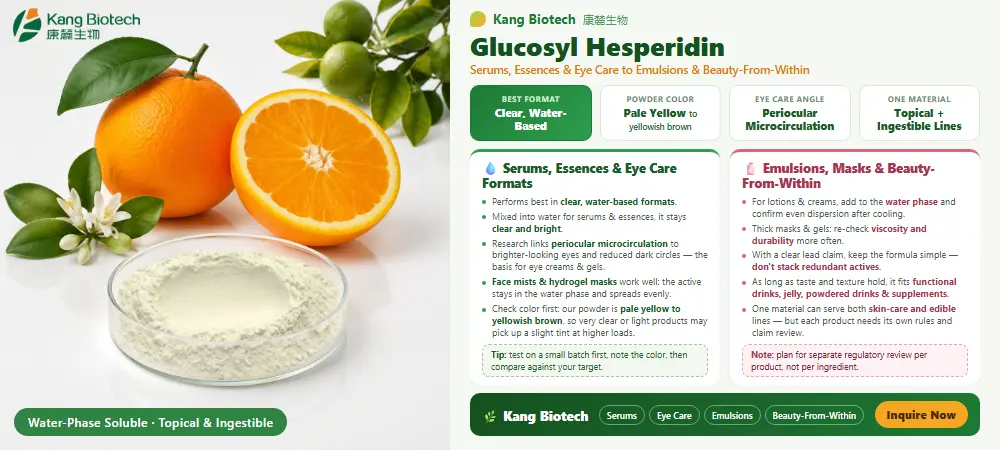
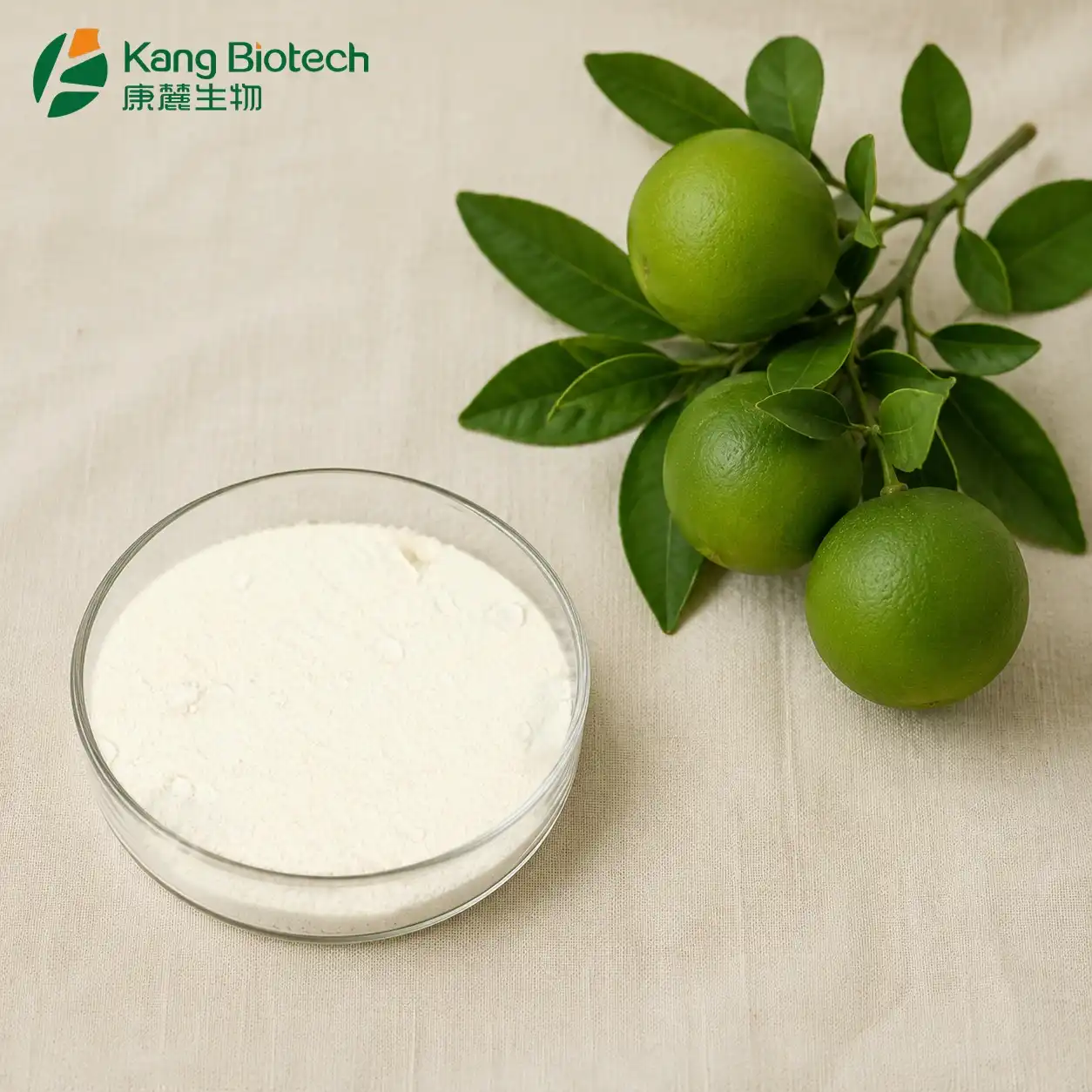
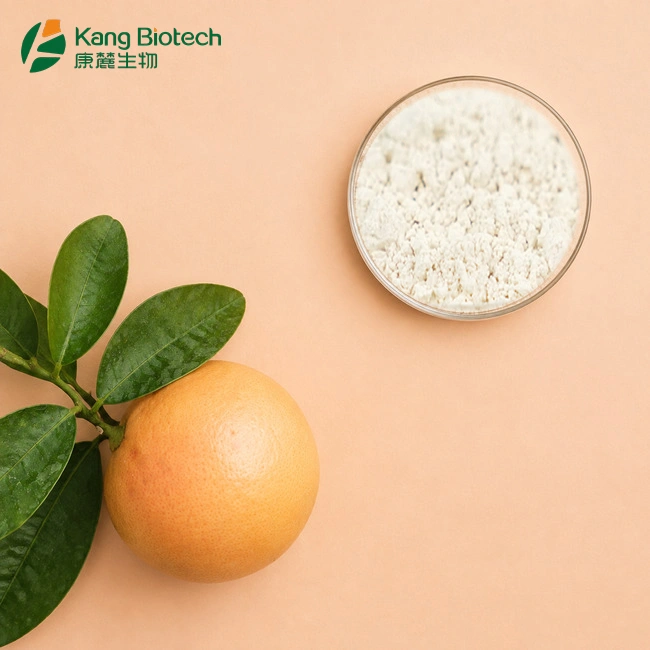
This is a picture of our normal α-glucosyl hesperidin powder. The HPLC level for food-grade is 75%, and the powder is a light yellow to yellowish brown color. For every 100 mL of water, more than 50 grams of powder can dissolve. The powder doesn't break down below 80°C and stays stable between 3.5 and 8.0 on the pH scale. You can order as little as 1 kg or as much as 25 kg at a time. You can also get free stuff. We also have a cosmetic grade that is 90% HPLC or higher and has stricter heavy metal limits. This grade can be used for skin care. We'll match the grade if you tell us what you want.
Why Grade and COA Details Matter
In two powders that are sold under the same name, the amount of hesperidin left, the purity, and the way they are stored may be different. Please pay close attention to the hesperidin that is still present because any native hesperidin that is left over can settle in water. We make sure that each batch is pure using HPLC, that it dissolves well, and that the total plate count is less than 1,000 CFU/g. There is a COA with every batch, and MSDS and spec sheets can be sent if asked. If you want to compare suppliers, don't just ask for one polished sample of a COA. Ask for a number of recent ones. When you compare one batch to the next, you can learn more than just one result.
How Glucosyl Hesperidin Works and Where to Use It
What Research Says About the Hesperidin Family
Hesperidin and its derivatives may help with inflammation and free radicals, according to studies that have been written about them. Because of this, glucosyl hesperidin has an ORAC value of around 12,000 µmol TE/g. In 2012, Experimental Dermatology published a study that showed that putting hesperidin on normal mouse skin improved the function of the epidermal permeability barrier. According to other studies, the compound can stop tyrosinase and make the blood flow better around the eyes. Be careful as you read these. The fact that something breaks down in water doesn't mean it can pass through skin or do anything medical. Don't say anything big. Make your claims based on your own tests and the laws in your area instead.
Serums, Essences, and Eye Care Formats
This powder does best in clear formats that are based on water. When the ingredient is mixed with water to make serums and essences, it stays clear and bright. Researchers have found that periocular microcirculation can help make eyes look brighter and hide dark circles. It is used in eye creams and gels to do this. Face mists and hydrogel masks also work because the active stays in the water phase and spreads out evenly. Look at the color first. Our powder is pale yellow to yellowish brown, so a very clear or light product may get a little tinted at higher loads. Test it first on a small area. Note the color, and then check it against your goal.
Emulsions, Masks, and Beauty-From-Within Lines
When making lotions and creams, mix glucosyl hesperidin into the water phase and make sure it stays spread out evenly after it cools down. How thick masks and gels are and how long they last need to be checked more often. When there is a clear main claim, the formula stays simple. Don't load too many actives that do the same thing. As long as it doesn't change the taste or texture, this ingredient works well in functional drinks, jello, powdered drinks, and supplements. This means that companies that make products that you put on your skin and products that you eat can use the same material for both. Still, each product needs its own line of rules and review of claims.
Glucosyl Hesperidin Formulation Development, Stability, and Safety
From Bench Sample to Pilot Batch
First, establish format, audience, pH, sensory profile, and assertions that may be made. Once you know what dosage to use, run some tiny tests to make sure it works with your formula . run as we suggest . Mix part of the powder with the water phase before adding the water phase. Next, add the powder immediately away. Record the temperature, mixing time, sequence of addition and holding duration. Monitor consistency, colour, odour, pH, viscosity, microbiological quality, and active content during stability investigations. At pilot scale, watch for things like foaming, filter loss and batch variances. At this stage our tech team is able to advise you on next steps for the application.
pH, Heat, and Compatibility
Glucosyl hesperidin is stable in the pH range of 3.5 to 8.0, therefore it is compatible with most skin-safe formulations. It doesn't break down below 80°C so you may add it as long as you maintain the heated water phase within the limit. Even if you have data on the raw ingredients, they cannot substitute your own testing since light, air, metal ions and preservatives may still modify a completed product. Test immediately, over time, with freeze-thaw, light, and packing. Ensure it is compatible with humectants, polymers, preservatives, peptides, ceramide systems and vitamin C derivatives. Test it beforehand. The length of time a clear formula remains clear is frequently dictated by the preservative it is mixed with.
Safety and US Regulatory Points
In the US, the FDA already approves certain cosmetic compounds, such as colourants. Brands still have to demonstrate their goods are safe, the Modernisation of Cosmetics Regulation Act of 2022 notes. To achieve this, you will need to ask suppliers for information such as microbiological data, heavy metal data, COAs and SDSs. Our powder has the China new food approval and is in the Catalogue of Used Cosmetic Ingredients of China (No. 04725). Maximum daily intake should be 500 mg. Just make sure the status is correct for what you want to use it for . They are not the same as a US review . Claims of using it as a cosmetic on the skin are distinguished from claims of using it as a medication or for eating.
Glucosyl Hesperidin vs. Other Ingredients and How to Choose a Supplier
Comparing With Hesperidin and Other Flavonoids
It's easier to work with glucosyl hesperidin in clear, water-based mixtures than native hesperidin, but that doesn't mean it works better on the skin. If you want to use vitamin C or one of its forms, you should test them together instead of assuming you can switch them. Rutin and diosmin can be broken down and sold in different ways. It's a good idea to put the two bases next to each other and compare how clear, colored, stable, and comfortable they feel. With such a small test, the product won't need to be changed after launch, which would cost a lot of money.
Supplier Checks Before You Buy
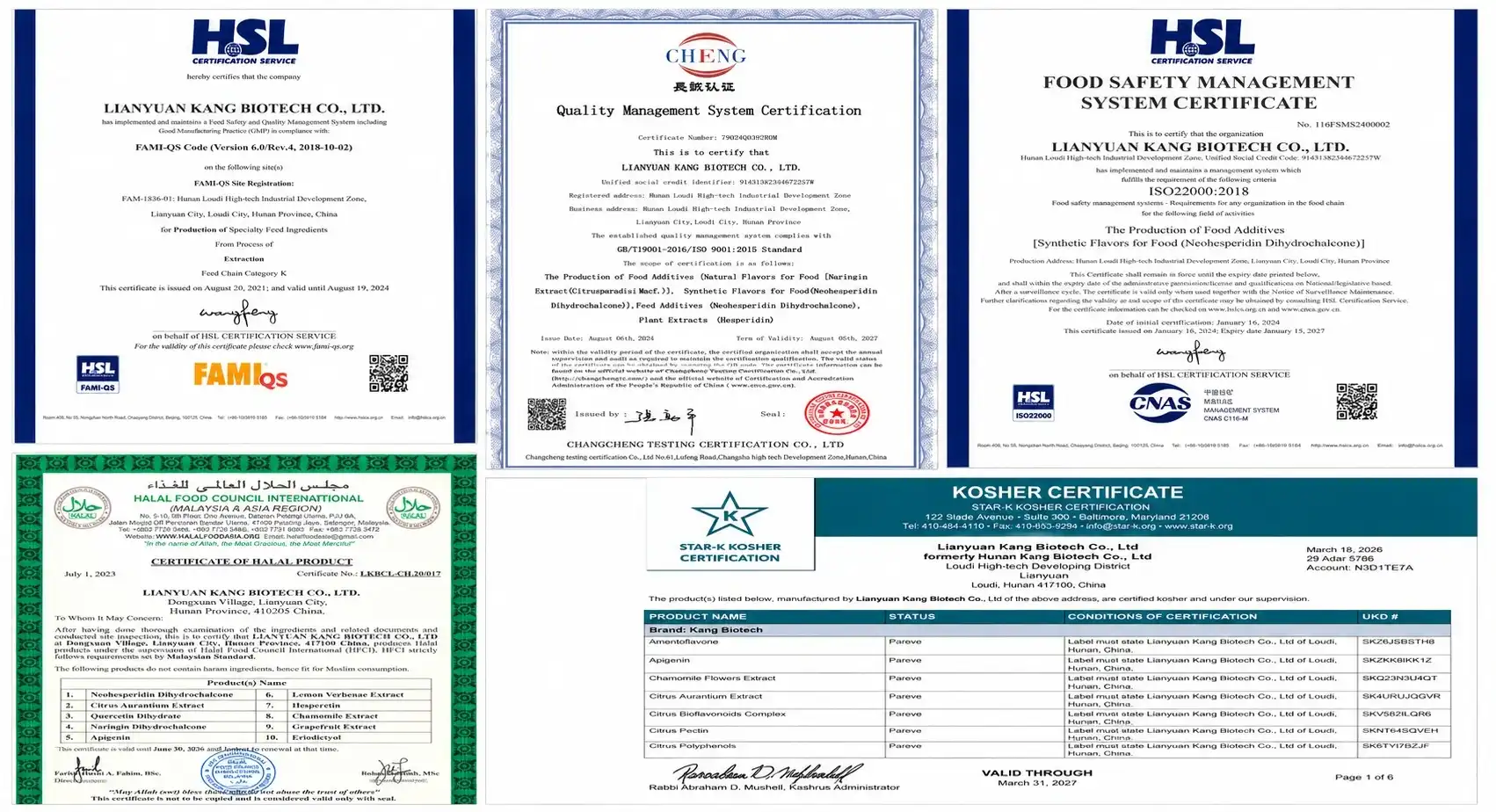
To begin, choose what stage you are in: private label, bulk supply, pilot batches, samples, or bulk supply. Then, find out if the company makes the goods, sells them, or is an authorized dealer. Kang Biotech is a direct manufacturer that has ISO 9001, ISO 22000, HACCP, FAMI-QS, Halal, and Kosher certifications. It also has a research center that works with the Hunan Institute of Quality Safety and Plant Processing. Find out how much they can make, how long it takes to get it to you, how they package it, how much experience they have with exporting, and how they deal with changes. We always have stock on hand, and FedEx delivers small orders. Items that are bigger are sent by air or sea. It usually takes two to three weeks for large orders.
A Simple Scorecard for Procurement Teams
It is fair to compare suppliers when you use a weighted scorecard. You should give each candidate a score based on their quality documents, formulation performance, stability data, price, lead time, communicating, and their ability to make the product. For early research projects, tests and quick technical answers should be very important. They should think about things like capacity, supply continuity, quality agreements, and export paperwork before they go commercial. You need to know about emulsions for creams and extra weight on solubility, transparency, and color for clear serums. QA will want the same COA items, so give them the scorecard right away. You can get custom drum specs, packaging, and labels through our OEM and ODM service if the ones we have don't work with your plan.
Conclusion
Glucosyl hesperidin is a water-soluble form of a citrus flavonoid used in skin care, in contrast to native hesperidin. Glycosylation by enzymes makes it more soluble, going from about 0.01 g per 100 mL to more than 50 g per 100 mL. It doesn't break down below 80°C and stays stable between pH 3.5 and 8.0, so it can be used in most processing steps. The antioxidant position is supported by research on the hesperidin family. But the fact that an ingredient dissolves in water doesn't mean it can work or get into the skin; claims need to be tested on a finished product. The grade, the amount of hesperidin that is still present, compatibility, stability studies, and US safety substantiation all affect the outcome. It is easier to choose what to buy when you compare it to hesperidin, vitamin C, and rutin. You can also rate suppliers based on how well they keep their paperwork and how consistent they are.
FAQ
1. What makes glucosyl hesperidin different from native hesperidin?
When enzymes add glycosylation, more than 50 g of water can dissolve in 100 mL. This is up from about 0.01 g per 100 mL before. So the powder dissolves completely in water, with no help from anything else.
2. Can I combine it with vitamin C?
You can test the two, but you need to show that they work well together and won't break down in the final mix. Once the recipe is stable, you should check the pH, color, and packaging before you decide to use it.
3. Which grades and order sizes do you offer?
At least 90% of our cosmetic grade is HPLC, and at least 75% of our food grade is HPLC. Orders over 25 kg are packed in drums, and orders under 1 kg are packed in bags. You can get work done by OEM and ODM.
4. How do I get samples and documents?
It takes 3–5 business days to send out 10–50 g free samples. For each batch, there is a COA. We can also send you an MSDS and spec sheet if you ask. It takes two to three weeks for large orders to arrive.
5. Is there a standard cosmetic dosage?
We don't have a level for everyone. First, we should ask our supplier for advice. Next, before you put your own formula on the market, make sure it is safe, stable, and works.
Request Glucosyl Hesperidin Samples from Kang Biotech
Are you ready to put glucosyl hesperidin in your next serum or eye cream? There are samples of glucosyl hesperidin in stock at Kang Biotech, which makes it itself. We send out samples in 3–5 business days, and we welcome OEM and ODM projects. Write to sales02@kangbiotech.com and tell them what format, market, and volume you want. After that, our group will give you a grade and a COA. Another thing you can look at on cnkangbiotech.com is a list of the citrus ingredients we use.
References
1. Bioscience, Biotechnology, and Biochemistry, 2006: Bioavailability of glucosyl hesperidin in rats.
2. Phytotherapy Research, 2001: Chemistry and pharmacology of the citrus bioflavonoid hesperidin.
3. Phytotherapy Research, 2015: Antioxidant and anti-inflammatory properties of the citrus flavonoids hesperidin and hesperetin.
4. Experimental Dermatology, 2012: Topical hesperidin improves epidermal permeability barrier function and epidermal differentiation in normal murine skin.
5. Journal of Nutritional Science and Vitaminology, 2002: Effects of long-term administration of hesperidin and glucosyl hesperidin on blood pressure in spontaneously hypertensive rats.
6. Critical Reviews in Food Science and Nutrition, 2017: Health-promoting effects of the citrus flavanone hesperidin.

Send Inquiry
 powder.webp "Polymethoxylated Flavones (PMFs) powder")
Related Industry Knowledge
- How Sweet Is Neohesperidin Dihydrochalcone Powder?
- Hesperetin Powder: From Citrus Sources to Commercial Applications
- How Hesperetin Powder Can Help Refine Citrus Flavor Profiles
- Horny Goat Weed: How Long Until You Feel the Effects?
- Neohesperidin Powder: Uses, Benefits and Applications
- 4 Benefits of Naringin For Your Health
- Neohesperidin Dihydrochalcone Powder vs Stevia: Which Natural Sweetener Wins?
- Naringenin Powder vs Naringin: Key Differences Explained
- What Is Naringenin Powder and How Is It Used?
- Evidence for the Health Effects of Hesperidin