Naringenin Powder vs Naringin: Key Differences Explained
October 28, 2026
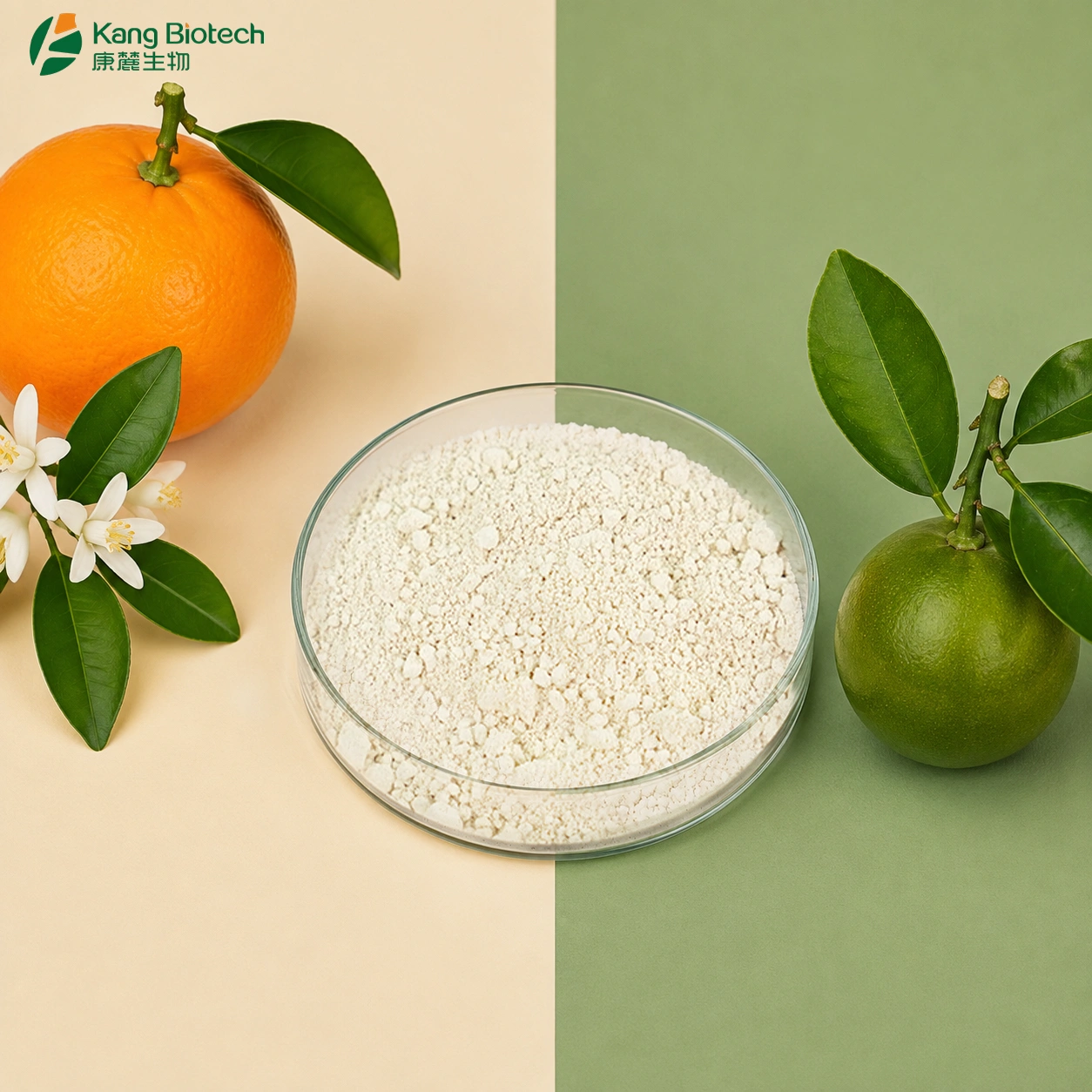
Procurement teams asking about naringenin powder vs naringin get the answer in one structural difference with big practical implications. Naringenin powder (CAS 480-41-1) is the aglycone version of the citrus flavanone — without its sugar molecule — while naringin has the disaccharide neohesperidose linked at the 7-position. That one little variation impacts bioavailability, taste behaviour, regulatory status and formulation compatibility in ways that relate directly to your product development pipeline and sourcing choices.
Understanding Naringenin Powder and Naringin: Chemical and Functional Overview
What Separates Them Structurally
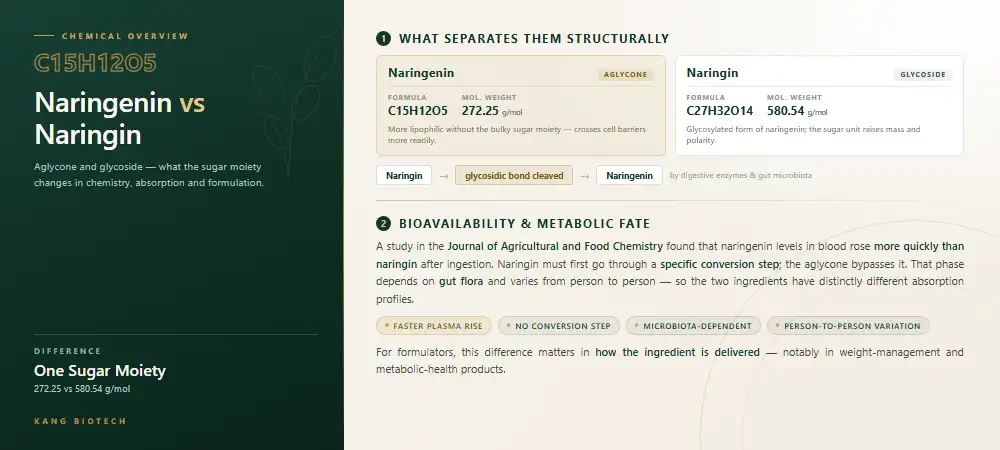
The chemical formula of naringenin powder is C15H12O5 and the molecular weight is 272.25 g/mol. Naringin is its glycosylated form. Its formula is C27H32O14 and it has a molecular weight of 580.54 grams per mole. The aglycone version is more lipophilic, as it does not contain the bulky sugar moiety. This implies that it can cross cell barriers more readily. Digestive enzymes and gut microbiota can break down the glycosidic bond in naringin, allowing the body to metabolize the resulting naringenin.
Bioavailability and Metabolic Fate
A research study in the Journal of Agricultural and Food Chemistry discovered that naringenin levels in the blood rose more quickly than naringin after eating. Naringin has to go through a particular conversion process, but the aglycone bypasses this step. This phase depends on the gut flora and varies from person to person. Naringenin powder has a different absorption profile from naringin, which is relevant for formulators who need to consider how an ingredient is delivered, notably for weight reduction or metabolic health products.
Taste and Sensory Profile
The bitterness of grapefruit comes from a substance called naringin that interacts strongly with TAS2R bitter taste receptors. Kang Biotech has manufactured naringenin powder with a substantially different flavour profile and exceptionally high purity (98% HPLC). So companies working on next-generation low-sugar systems may consider the aglycone form when evaluating citrus flavanones. It does not contain the sugar moiety found in naringin, but its sensory properties and suitability should still be confirmed through formulation testing.
Key Differences in Health Benefits and Applications
Where Naringenin Powder Leads
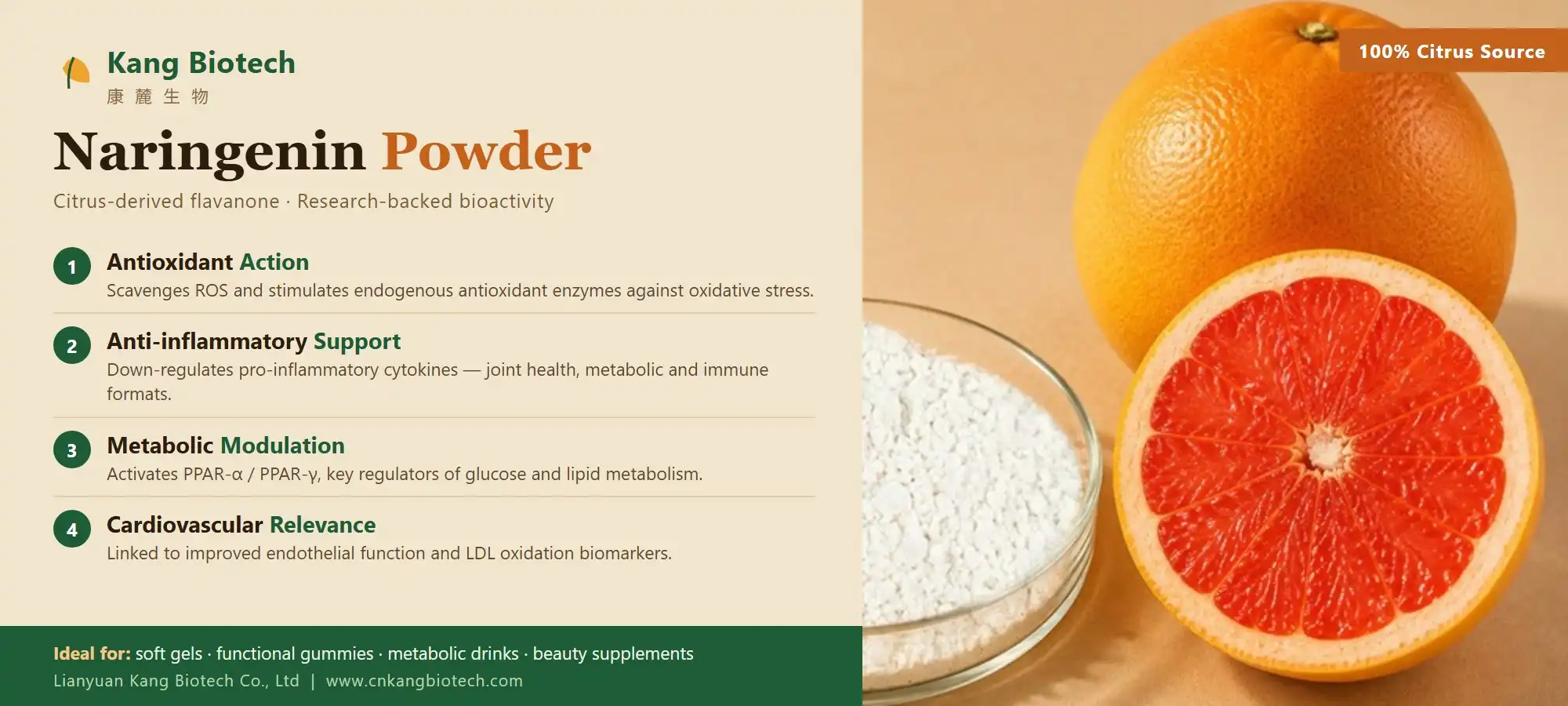
The aglycone form is very interesting to researchers because it may be relevant to metabolic health. It activates PPARα and PPARγ nuclear receptors, which may affect insulin sensitivity and lipid metabolism, according to research. As it stays solid at temperatures up to 200°C, it can be used in many food processing settings. It has been shown to scavenge free radicals in experimental studies. It may also affect tyrosinase activity in cosmetic research, which supports further investigation into skin-brightening applications.
Where Naringin Has Its Strengths
Naringin has been looked at for a longer time in terms of how it can help support brain and heart health. Its glycoside structure gives it different water-solubility and formulation properties from naringenin. Naringin has been linked to protecting the liver and supporting bone health in some published studies. There are times when naringin may be the best choice for formulators who need the specific properties of the glycoside form in a formulation.
Application Matching for B2B Buyers
You have to employ the proper compound for the product that you are manufacturing. Most of the time these two compounds work well with business groups:
- Taste modification and reduced sugar beverage systems: Naringenin powder may be considered when formulators are evaluating citrus flavanones for reduced-sugar systems. In the EU Food Flavouring Regulation, Commission Regulation (EU) 2025/1112 (published June 4, 2025) officially added naringenin to the Flavouring List (FL No 16.132), laying the legislative groundwork for flavour system firms to produce products for the EU market.
- Naringenin powder 98% standardised HPLC. Standard for weight management, antioxidant complexes and body composition products. Dietary supplements for metabolic and liver health.
- Cardiovascular nutraceuticals with water delivery: In some liquid supplement formulations the inherent water solubility of naringin is a benefit.
- Cosmetic anti-aging and brightening serums: The aglycone version of Naringenin powder has a better skin penetration profile and a greater tyrosinase inhibition, making it the better technical option.
Since they are different, purchasing teams don't have to make incorrect buying decisions before they even begin to develop plans.
Safety, Dosage, and Side Effects: What B2B Buyers Should Know
Established Safety Profiles
Both compounds have been investigated for their safety and biological effects in scientific studies. Naringenin has also been evaluated for food-flavouring use, while naringin has been studied in various food and nutraceutical contexts. Amounts of naringenin used in human studies range from 50 mg to 200 mg per day, depending on the goal. Naringin has also been studied at different amounts depending on the research objective.
Drug Interaction Considerations
Naringenin powder acts on CYP450 enzymes, namely CYP3A4 and CYP1A2. This pharmacokinetic interaction may result in increased plasma concentrations of coadministered drugs. This may be relevant in certain pharmaceutical and nutraceutical applications, but formulators need to make sure this information is noted in the product paperwork. Once it has been metabolized, naringin may also interact with other molecules through related metabolic pathways. If a procurement team wishes to acquire either of the goods to add to supplements, they need to make sure the documentation from the supplier supports what the clear label indicates.
Certification Requirements for Regulated Markets
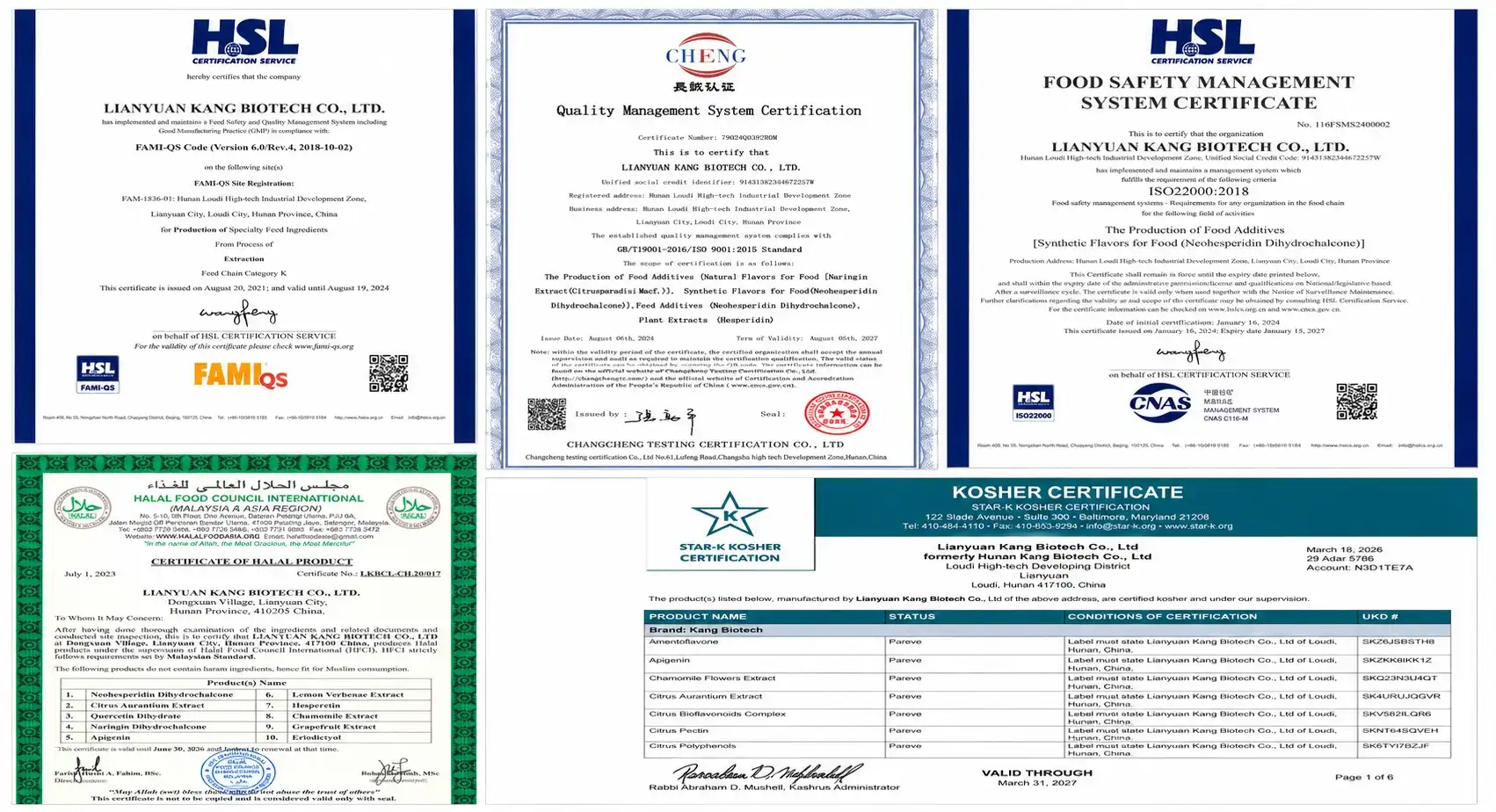
Kang Biotech's naringenin powder meets ISO 9001, ISO 22000, HACCP, Halal, Kosher and FAMI-QS certification. Each batch is HPLC purity tested, with residual solvent testing to USP and EP standards, as well as heavy metals screening and microbiological analysis. Each package includes a complete COA, MSDS and other legal documents. Buyers should confirm that the available documentation meets the requirements of the specific US, EU, or other target market.
Procurement Considerations: Choosing Between Naringenin Powder and Naringin
Supply Chain Depth and Price Stability
Kang Biotech runs farms in Lianyuan, Hunan Province, that are more than 20,000,000 m² in size. This is one of China's largest upstream citrus growing sites. This direct link between the raw material and the finished extract means that both the farming and processing steps are checked to make sure that each batch is consistent. Buyers may pay more or less depending on the sourcing model and market conditions, but the goods are produced according to the supplier's stated quality standards.
Practical Sourcing Parameters
Kang Biotech offers naringin and naringenin powder as two different products that have been tested and specified separately. There needs to be tight control over the aglycone-to-glycoside ratio in systems that change the taste of products, so this is important for those companies. The following are important parts of the procurement process:
- Specification: 98% HPLC, food grade and pharmaceutical grade available
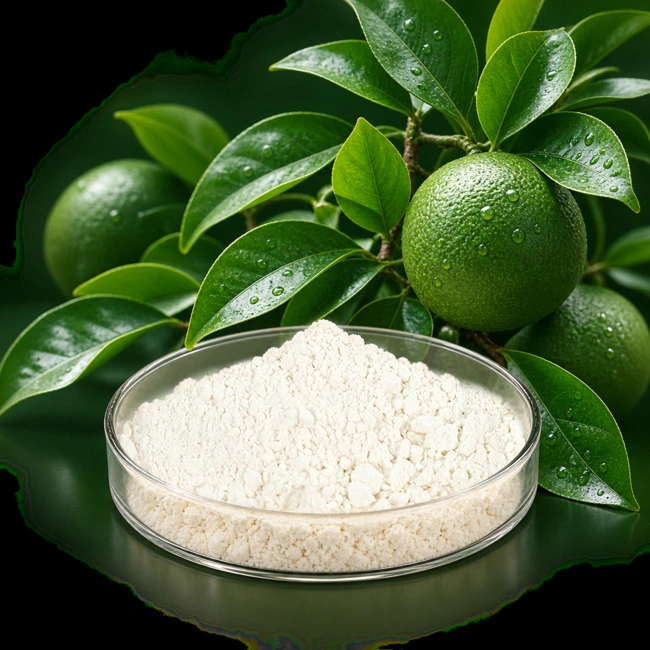
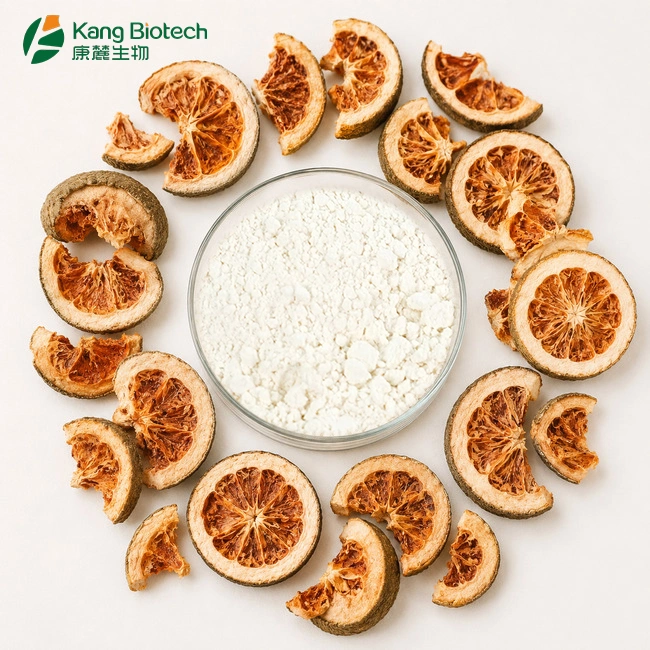
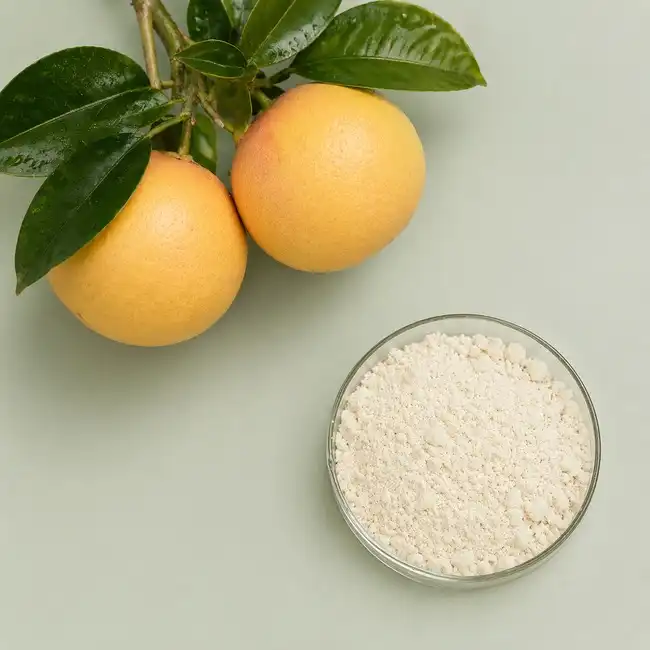
- Appearance: White to off-white fine powder
- Package: 25 kg/drum standard; custom packaging available
- MOQ: 1 kg; samples available before order confirmation
- Lead time: 3–5 business days for standard stock; 2–3 weeks for custom specifications
- Shipping: FedEx for small orders; air or sea freight for commercial volumes
Making the Right Choice: Strategic Recommendations for B2B Buyers
Align Ingredient Selection with Regulatory Timing
In 2025, the EU approved naringenin as a flavoring. This is a competitive signal that needs to be considered when planning products for the EU market. Companies that are working on controlling flavors for the next generation of low-sugar systems should test their products and confirm the applicable regulatory requirements before commercialization. Now is the time that HTBA and other European players have been working for years to get the rules they want. Being able to quickly bring an ingredient to market depends in part on whether it has all the paperwork that the EU needs.
Consider the Total Formulation Cost
Naringenin powder doesn't mix well with water, so it may need help to disperse in systems with a lot of water. Most of the time, cyclodextrin or nano-emulsions are used to do this. This costs more to make. Naringin has different water-solubility properties, so that's not as much of a problem in some aqueous formulations. It's not enough to just look at the price per kilogram of an item; you should also think about how much it costs to process.
Build in Documentation from Day One
In order to be sold in the EU and the US, products must first show proof of where their ingredients came from, that they are pure, and that they are safe. You can buy from a business that sends COA, MSDS, Halal, Kosher, and ISO certifications without you having to ask for them. This saves a lot of time.
Conclusion
One is not universally better than the other, so you don't have to pick between them based on a single characteristic. Your formulation goal, distribution method, regulatory market, and sensory needs will all play a role in the end. Naringenin powder may be suitable for applications where the aglycone form is preferred, while naringin is still useful because of its glycoside structure and formulation properties. Naringenin powder that is 98% pure by HPLC can be considered for projects involving food, dietary supplements, or flavor-related applications, subject to the applicable market requirements.
FAQ
1. Can naringenin powder and naringin be used together in the same formulation?
Yes. Some formulators may use both compounds to explore differences in formulation behavior and functional properties. The ratio depends on your delivery system and target application.
2. What certifications should I request when sourcing either compound?
At minimum, request ISO 9001, ISO 22000, HACCP, Halal, Kosher, and a full batch COA with HPLC purity data, heavy metal results, and residual solvent testing. For EU markets, confirm compliance with the applicable requirements for naringenin used as a flavoring substance.
3. How long does bulk order fulfillment take?
Standard naringenin powder specifications held in stock ship within 3–5 business days. Custom purity grades or private-label packaging typically require 2–3 weeks.
4. Is naringenin powder stable in functional food processing?
Naringenin has been studied for its thermal stability and can be evaluated for use in food processing. Actual suitability depends on the processing temperature, time, formulation matrix, and intended application.
5. What is the minimum order quantity for trial purposes?
The MOQ is 1 kg. Samples are available prior to order placement to support formulation testing and internal approval processes.
Partner with Kang Biotech — Your Trusted Naringenin Powder Supplier
Kang Biotech has offered useful ingredients made from citrus, including naringenin powder, to people in over 40 countries for more than 11 years. It is made in a factory that is certified by ISO 9001, ISO 22000, HACCP, Halal, and Kosher, and it meets the standards of 98% HPLC. It also has a supply chain that works well from the farm to the production site. We get it to you on time and with all the paperwork you need, whether you need a sample of 1 kg or a large order for a business. You can email us at sales02@kangbiotech.com or visit cnkangbiotech.com to get a quote or a sample.
References
1. Kanaze, F. I., et al. "Pharmacokinetics of the citrus flavanone aglycones hesperetin and naringenin after single oral administration in human subjects." European Journal of Clinical Nutrition, 2007.
2. Mulvihill, E. E., et al. "Naringenin prevents dyslipidemia, apolipoprotein B overproduction, and hyperinsulinemia in LDL receptor-null mice with diet-induced insulin resistance." Diabetes, 2009.
3. EFSA Panel on Food Additives and Flavourings. "Scientific opinion on the safety evaluation of naringenin (FL No 16.132) as a flavouring substance." EFSA Journal, 2024.
4. Arul, D., and Subramanian, P. "Inhibitory effect of naringenin on lipid peroxidation, antioxidant status and hepatoprotective activity." Chemico-Biological Interactions, 2013.
5. European Commission. Commission Regulation (EU) 2025/1112 of 4 June 2025 amending Regulation (EC) No 1334/2008 as regards naringenin (FL No 16.132). Official Journal of the European Union, 2025.
6. JECFA (Joint FAO/WHO Expert Committee on Food Additives). "Evaluation of certain food additives: naringenin." WHO Technical Report Series, 2022.

Send Inquiry
Related Industry Knowledge
- Apigenin for Sleep: What This Chamomile Compound Does
- NHDC Sweetener Guide: How Neohesperidin Dihydrochalcone Is Changing Low-Calorie Foods
- Naringin Dihydrochalcone: Advances in Applications and Research
- How Naringin Dihydrochalcone Supports Sugar Reduction
- Nobiletin Benefits for Brain Health and Metabolism
- Glucosyl Hesperidin Bulk Supplier: What Buyers Should Check
- Apigenin: Health Benefits, Sources, and Safety
- Naringenin Powder in Dietary Supplements: Formulation Guide
- Evidence for the Health Effects of Hesperidin
- What Is Apigenin Powder and Why Is It Gaining Popularity in Supplements?