
Neohesperidin Powder: Uses, Benefits and Applications
November 2, 2026
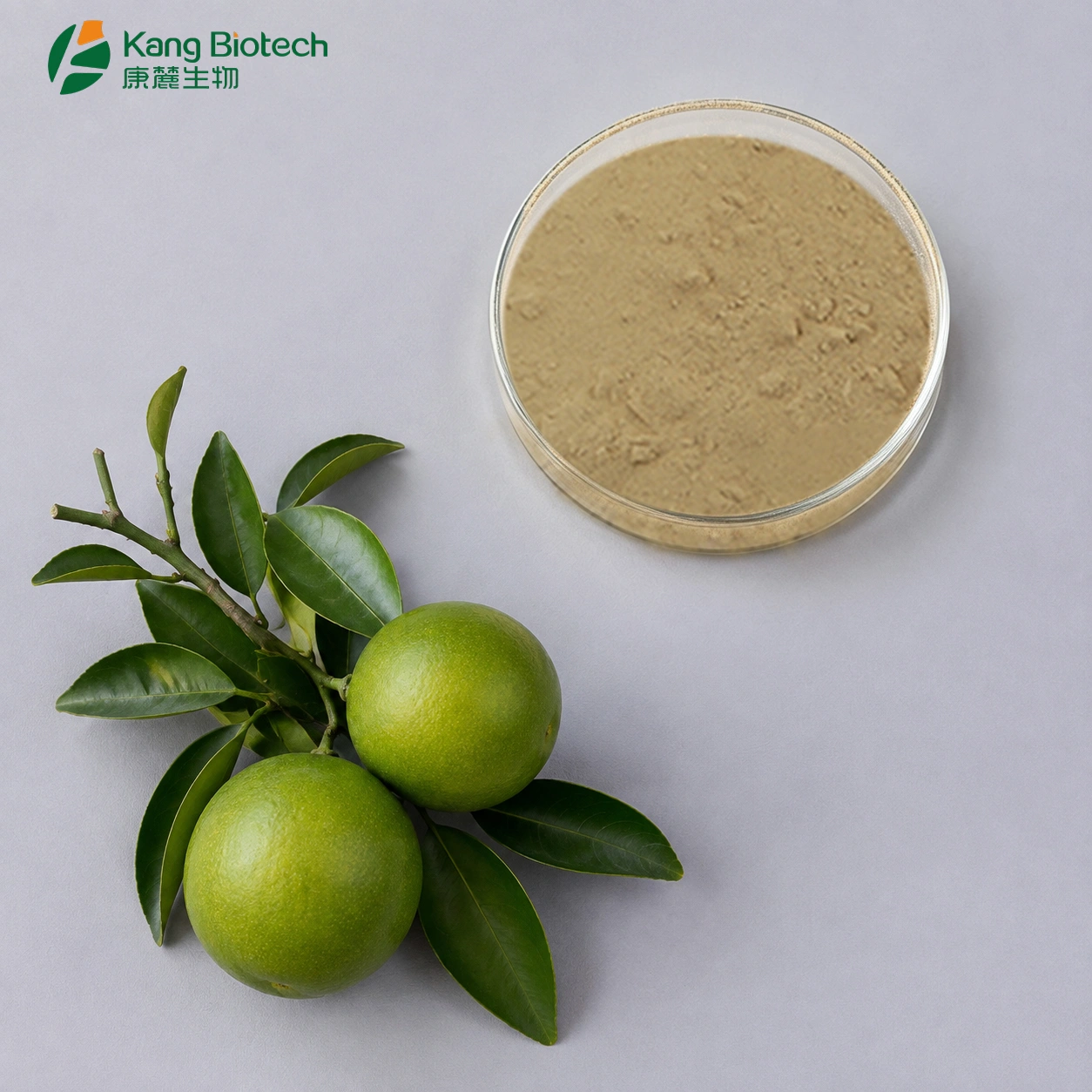
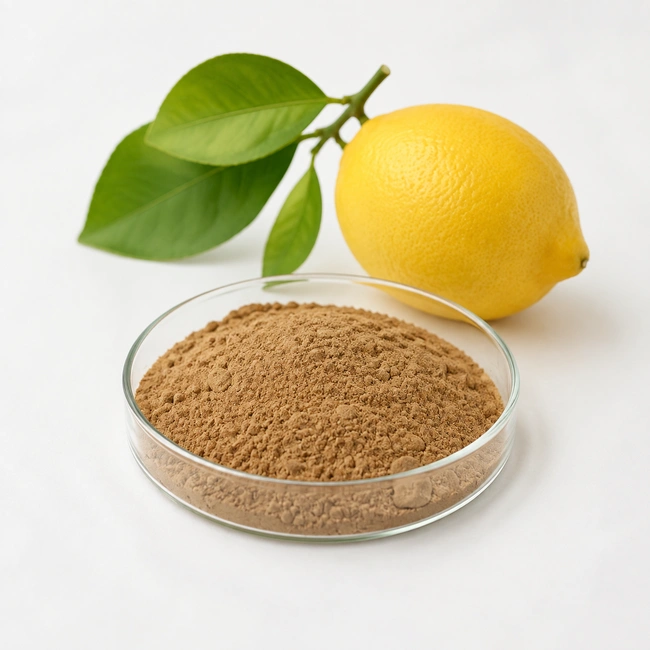
Neohesperidin powder (CAS 13241-33-3) is a natural citrus flavonoid glycoside derived from the peel of bitter orange (Citrus aurantium) by water or ethanol extraction. HPLC, 98% standardised, this white to off-white powder is used in B2B markets for medicines, nutraceuticals, functional foods and personal care. Neohesperidin powder is a solid player in the global ingredient procurement strategy, because of being a direct bioactive ingredient and an important precursor for the synthesis of neohesperidin dihydrochalcone (NHDC). Its zero glycaemic index and low necessary dose make it a feasible alternative to traditional sweeteners in controlled formulations.
What Is Neohesperidin Powder? – Understanding the Basics
Neohesperidin powder is a flavanone glycoside, which means it is related to orange bioflavonoids. Its EINECS number is 236-216-9, and its molecular formula is C₂₈H₃₄O₁₅. We get it from the peel of the bitter orange fruit Citrus aurantium. The peel can be extracted with water or ethanol. Either way, the nutritional properties of the chemical are kept and the quality standards for food are met.
Chemical Identity and Natural Origin
Hesperidin and naringin are physically distinct from neohesperidin powder. All three are citrus flavonoids, but neohesperidin can be changed directly into NHDC through catalytic hydrogenation because it has a neohesperidose sugar group. It can't be used instead as a manufactured precursor because of this. There are 20,000,000 m² of bitter orange farms owned by Kang Biotech in Lianyuan, Hunan Province. Each batch is 98% pure by HPLC.

How It Differs from Related Citrus Flavonoids
Hesperidin and naringin are both found in citrus fruits, but they are used for different things and bind to sugars in other ways. Neohesperidin powder has a certain disaccharide called neohesperidose that hesperidin does not have. Because of this, it is used as a starting material to make NHDC instead of hesperidin. There is a different aglycone in naringin that comes from grapefruit. Instead of making sugars, it is mostly used to change how bitter foods are.
Safety Profile and Industrial Dosing
Neohesperidin powder made for food is thought to be safe as long as it is put in the right way. It can be used instead of sugar or to control how salty something is without having an effect on the metabolism because it doesn't need to be added in large amounts to recipes. Many times, formulators use amounts in the milligram range to add antioxidants and the ppm range to change the taste.
Key Benefits and Health Applications of Neohesperidin Powder
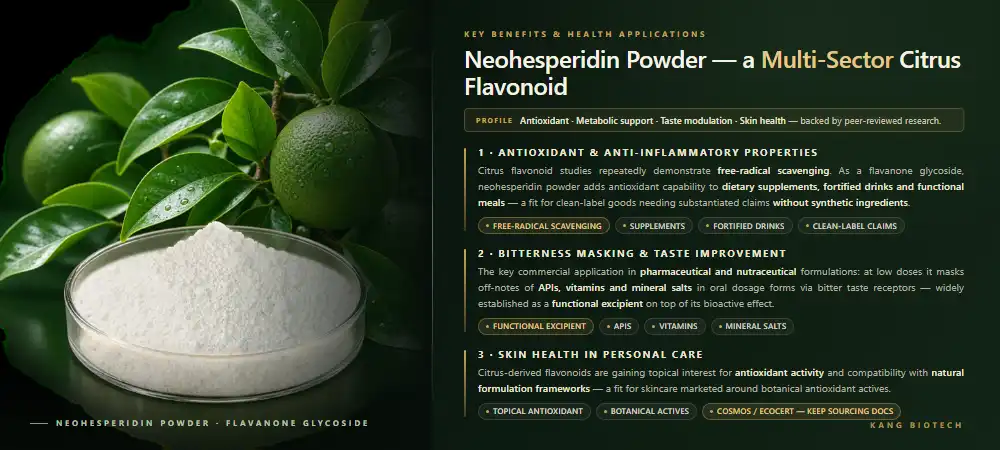
Neohesperidin powder has a functional profile that includes antioxidant action, metabolic support, taste modulation and skin health. Citrus flavonoids are a multi-sector substance with peer reviewed research backing their qualities.
Antioxidant and Anti-Inflammatory Properties
Studies of citrus flavonoids repeatedly demonstrate the ability to scavenge free radicals . As a flavanone glycoside, neohesperidin powder adds antioxidant capability to dietary supplement formulae, fortified drinks and functional meals. This makes it a suitable choice for clean label goods that require scientifically substantiated antioxidant claims without synthetic ingredients.
Bitterness Masking and Taste Profile Improvement
One of the most important commercial applications of neohesperidin powder in pharmaceutical and nutraceutical formulations is bitterness masking. At low doses, it masks the unpleasant off-notes of APIs, vitamins and mineral salts in oral dosage forms via its effect on bitter taste receptors. It is widely established and functions as a functional excipient in addition to its bioactive effect.
Skin Health in Personal Care Formulations
The citrus-derived flavonoids have received interest in topical applications for their contribution to antioxidant activity and compatibility with natural formulational frameworks. Neohesperidin powder may be used into skin care products marketed around botanical antioxidant actives. If you are a brand looking for COSMOS or ECOCERT certification, make sure you have sourcing paperwork to back up any natural-origin claims.
Comparing Neohesperidin Powder with Other Citrus Flavonoids
Choosing the appropriate citrus flavonoid for a particular application needs a comprehensive grasp of the structural and functional distinctions within the family.
Neohesperidin vs. Hesperidin
Hesperidin (sweet orange peel) and neohesperidin powder are two members of the flavanone glycoside group however they are not equivalent. The sugar moiety of hesperidin is rutinose whereas that of neohesperidin is neohesperidose . Only neohesperidin may be the direct precursor for NHDC production. For NHDC makers, replacement of neohesperidin with hesperidin is a production mistake, not a cost-saving option.
Neohesperidin vs. Naringin
Naringin is a flavanone glycoside isolated from grapefruit (Citrus paradisi) with significant bitterness-modifying action. Naringin and neohesperidin powder have some overlapping activities in taste alteration, but its chemical structure, aglycone, and downstream synthesis process are different. Naringin cannot replace neohesperidin in the synthesis of NHDC. Procurement teams should indicate compound identification by CAS number to prevent misunderstanding in supply.
Natural Extraction vs. Synthetic Routes
Neohesperidin powder extracted from plants (water or ethanol extraction of bitter orange peel) has obvious traceability benefits compared to any chemically synthesised equivalent. Natural extraction provides clean-label positioning, regulatory approval across food and pharmaceutical categories and verified supply chain transparency — all aspects that matter in qualified vendor audits and regulatory submissions.
Sourcing Neohesperidin Powder – A B2B Procurement Guide
If you are looking to purchase a restricted drug such as neohesperidin powder, comparing pricing alone is not sufficient. Each batch is documented and the status of the certifications and length of the supply chain all add to the overall risk of sourcing.
Supplier Qualification Criteria
When purchasing teams consider neohesperidin powder suppliers, they should ask for a complete COA for each batch (identity, purity, heavy metals, microbiological limits, etc.) and any applicable certifications. The COA should state the powder is at least 98% pure by HPLC and provide evidence of the extraction procedure. Kang Biotech is ISO 9001, ISO 22000, HACCP, Halal, Kosher and FAMI-QS certified therefore they are able to cover the demands of firms producing food and medications. whether you are purchasing pharmaceutical grade products, you need to make sure that you have the USP/EP grade records and know whether you have 3.1 or 3.2 batch certifications. Third party SGS clearance may be added if necessary.

Logistics and Order Fulfillment
Our warehouse always has Neohesperidin powder in 25 kg drums on hand. FedEx takes 3–5 business days to ship small test orders (at least 1 kg; samples are available). Freight by air or sea is used for large business orders, and wait times are made clear when the order is approved. Private-label paperwork, custom specifications, purity grades, and different kinds of packaging are some of the things that OEM and ODM services offer.
Pricing and Supply Continuity
Kang Biotech takes care of 20,000,000 m² of bitter orange farms and makes finished extracts, so the business doesn't need to get its raw materials from other places. Prices stay stable over time and from batch to batch with this mix. This is very important for procurement teams that handle yearly contracts worth $10M or more in ingredient spending.
Practical Industry Applications and Case Studies
There are several uses of neohesperidin powder. It is primarily employed at the following occasions when it provides demonstrable design value:
- Dietary Supplements Neohesperidin powder is made into capsules, tablets and dry-blend powders for antioxidant support and metabolic health. Its stability at normal processing circumstances guarantees finished-product potency on label claims during shelf life.
- Functional Foods and Beverages: Nutrition bars, fortified beverages and wellness shots benefit from its antioxidant content and compliance with clean-label positioning. It is stable across the pH ranges seen in beverage manufacturing.
- NHDC Synthesis (Downstream Sweetener Production) Neohesperidin powder at ≥98% HPLC is the beginning material needed for NHDC generating citrus processing firms. In this case, there are two sourcing requirements that cannot be negotiable: supply chain continuity and confirmed Citrus aurantium provenance.
- Flavour & Fragrance: Neohesperidin powder at low dose imparts natural bitter citrus notes that are beneficial for flavour blending and compliment other botanical flavour compounds in beverage and confectionery applications.
Sometimes pills, tablets and dry-blend powders are mixed with neohesperidin powder to aid digestion and combat free radicals. Normal processing does not affect the strength of the finished product, which remains unchanged for as long as it is stored.
Conclusion
Neohesperidin powder is effective in several business to business (B2B) sectors. Its significance relies on its purity and origin, either as a direct bioactive in antioxidant formulations, as an excipient to mask bitterness in oral treatments or as the major ingredient in NHDC manufacturing. Procurement professionals should put greater focus on suppliers who can provide comprehensive batch documentation, verified quality systems and integrated raw material sourcing. Kang Biotech’s neohesperidin powder (98% pure HPLC) is derived from legally farmed bitter oranges and has received several certifications. It satisfies the restricted sourcing requirements of the worldwide regions.
FAQ
1.What purity grade does Kang Biotech's neohesperidin powder offer?
We supply neohesperidin powder from 10% to 98% HPLC. Our standard commercial grade is 98% HPLC. Custom purity specifications are available on request for specific formulation needs.
2.Is food-grade neohesperidin powder acceptable for pharmaceutical applications?
Food grade and pharmaceutical grade are not equivalent. If your application requires USP or EP compliance — for example, in oral dosage forms or as a pharmaceutical excipient — please contact us directly to discuss grade-specific documentation, including batch certificates and any additional pharmacopeial testing.
3.What documentation comes with each shipment?
Standard shipments include a full COA, MSDS, and applicable certification copies (Halal, Kosher, ISO 9001, ISO 22000). Additional regulatory documents for customs clearance or pharmaceutical filing are available on request.
4.Can I order a sample before committing to bulk volume?
Yes. Our minimum order quantity is 1 kg, and samples are available for evaluation. Small orders ship via FedEx with a 3–5 business day lead time.
5.Is neohesperidin powder the same as NHDC?
No. Neohesperidin powder (CAS 13241-33-3) is the natural flavonoid precursor. NHDC (neohesperidin dihydrochalcone) is a separate compound produced by hydrogenating neohesperidin. They are chemically distinct and serve different functions.
Request Neohesperidin Powder Samples from Kang Biotech
More than 40 countries have bought neohesperidin powder from Kang Biotech since 2011. The company has control over the raw materials at the farm level and uses production methods that are allowed by more than one standard. If you need a trial sample, a bulk quote, or detailed information to back up your regulatory filing, our team gets back to you quickly. You can email us at sales02@kangbiotech.com or visit cnkangbiotech.com to talk to an expert. Since we are the only ones who make neohesperidin powder, we can guaranty quality, provide sources that can be tracked, and offer reliable shipping around the world.
References
1. Panche, A.N., Diwan, A.D., & Chandra, S.R. (2016). Flavonoids: An overview. Journal of Nutritional Science, 5, e47.
2. Erlund, I. (2004). Review of the flavonoids quercetin, hesperetin, and naringenin: Dietary sources, bioactivities, bioavailability, and epidemiology. Nutrition Research, 24(10), 851–874.
3. Benavente-García, O., & Castillo, J. (2008). Update on uses and properties of citrus flavonoids: New findings in anticancer, cardiovascular, and anti-inflammatory activity. Journal of Agricultural and Food Chemistry, 56(15), 6185–6205.
4. European Pharmacopoeia Commission. (2023). European Pharmacopoeia (11th ed.). Council of Europe.
5. United States Pharmacopeial Convention. (2023). United States Pharmacopeia and National Formulary (USP–NF). USP.
6. Tomas-Barberan, F.A., & Clifford, M.N. (2000). Flavanones, chalcones and dihydrochalcones: Nature, occurrence and dietary burden. Journal of the Science of Food and Agriculture, 80(7), 1073–1080.

Send Inquiry
Related Industry Knowledge
- Where Does Hesperetin Powder Fit in Nutraceutical Innovation?
- Neohesperidin Powder: Uses, Benefits and Applications
- NHDC Sweetener Guide: How Neohesperidin Dihydrochalcone Is Changing Low-Calorie Foods
- Neohesperidin Dihydrochalcone Powder vs Stevia: Which Natural Sweetener Wins?
- How Naringin Dihydrochalcone Supports Sugar Reduction
- Glucosyl Hesperidin Bulk Supplier: What Buyers Should Check
- Hesperidin: The Citrus Bioflavonoid that Supports the Brain & Heart
- Exploring Hesperetin Powder for Modern Cosmetic Formulation
- Evidence for the Health Effects of Hesperidin
- Hesperidin: A Citrus Treasure with a Rich History