
Hesperetin Powder: From Citrus Sources to Commercial Applications
November 10, 2026
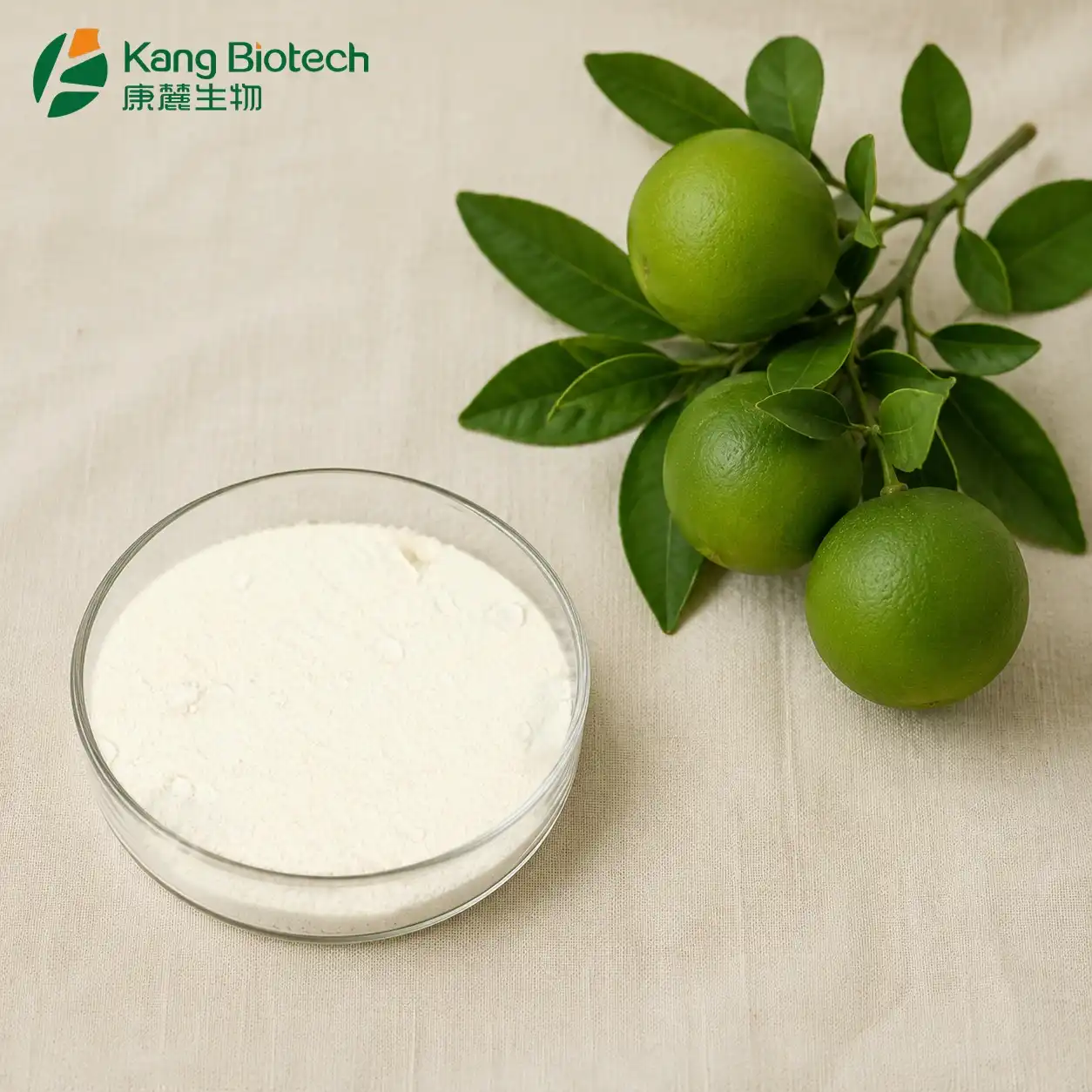
Flavonoids from citrus fruits, like hesperetin powder, are found in orange, lemon, and fingered citron. Before they are used in supplements, functional foods, and skin care products, these flavonoids are taken out and cleaned up. The market value of something is not just based on its purity number. Buyers should check the product's name, botanical source, HPLC results, solubility, packaging, minimum order quantity, and export documents to make sure they are getting the right thing. Kang Biotech sells hesperetin powder that is made in a single, integrated supply chain and is 98% HPLC. As little as 1 kg is needed. Your team can be sure when they tell a supplier about properties, sourcing, testing, and buying before they ask for samples or quotes. You can follow this guide to do all of these things.
Why Hesperetin Powder Matters for Global B2B Buyers
Who Buys Hesperetin Powder
For hesperetin powder, there are numerous buyer groups. It's used to make supplement capsules, tablets, and powder mixes. Bigger businesses keep it on hand for smaller ones, and OEM businesses buy it for brands that don't have their own plants. Skin care companies test it in their products, and labs order small amounts to study. Brands that deal with vein and vascular health in the US often ask about citrus flavonoids. Proof is just as important to these brands as assay. Each group cares about different things. A lab cares about price and small amounts. Records and batches that are the same are important to a brand. You can write a clear request if you know what group you belong to.
Pure Ingredient or Finished Formulation
It's not the same thing to buy a pure ingredient and a finished product. Hesperetin powder has a CAS number of 520-33-2, indicating that it is a single compound. It could be mixed with other flavonoids, vitamins, or fillers in a finished product. The label will print the exact mix that was used. I believe you should separate these two ideas at the start. It's important to describe the raw material, have a certificate of analysis, and have a clear test method. Labels need to be made for the finished product, doses need to be planned, and stability needs to be checked. You get vague quotes and slow sampling when you mix them. Before you place your order, it helps our team make sure it will work if you can describe what you want to make. Our standard grade is food grade.
Commercial Outlook for Citrus Flavonoids
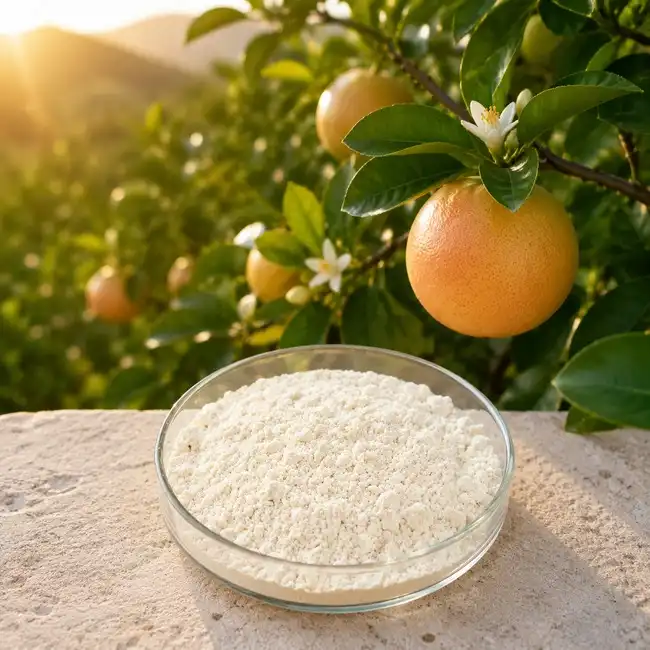
Some brands now look for plant-based actives, ingredients that can be tracked back to their sources, and labels that are easier to read. Back in 2000, Tomás-Barberán and Clifford wrote in the Journal of the Science of Food and Agriculture that when citrus peel is made into juice, it is thrown away in large amounts. A lot of flavanones, like hesperidin, can be found in it as well. Now, people who make products want hesperetin powder to be better dispersed, come in grades made for specific uses, and come with more detailed instructions. Also, people want each batch to have the same level of quality. The suppliers who grow, extract, and test the goods can answer these questions more quickly. Over 20,000,000 m² of bitter orange trees are cared for by Kang Biotech in Lianyuan, Hunan Province.

Hesperetin Powder Properties, Citrus Sources, and Extraction
Molecular Formula and Basic Specifications
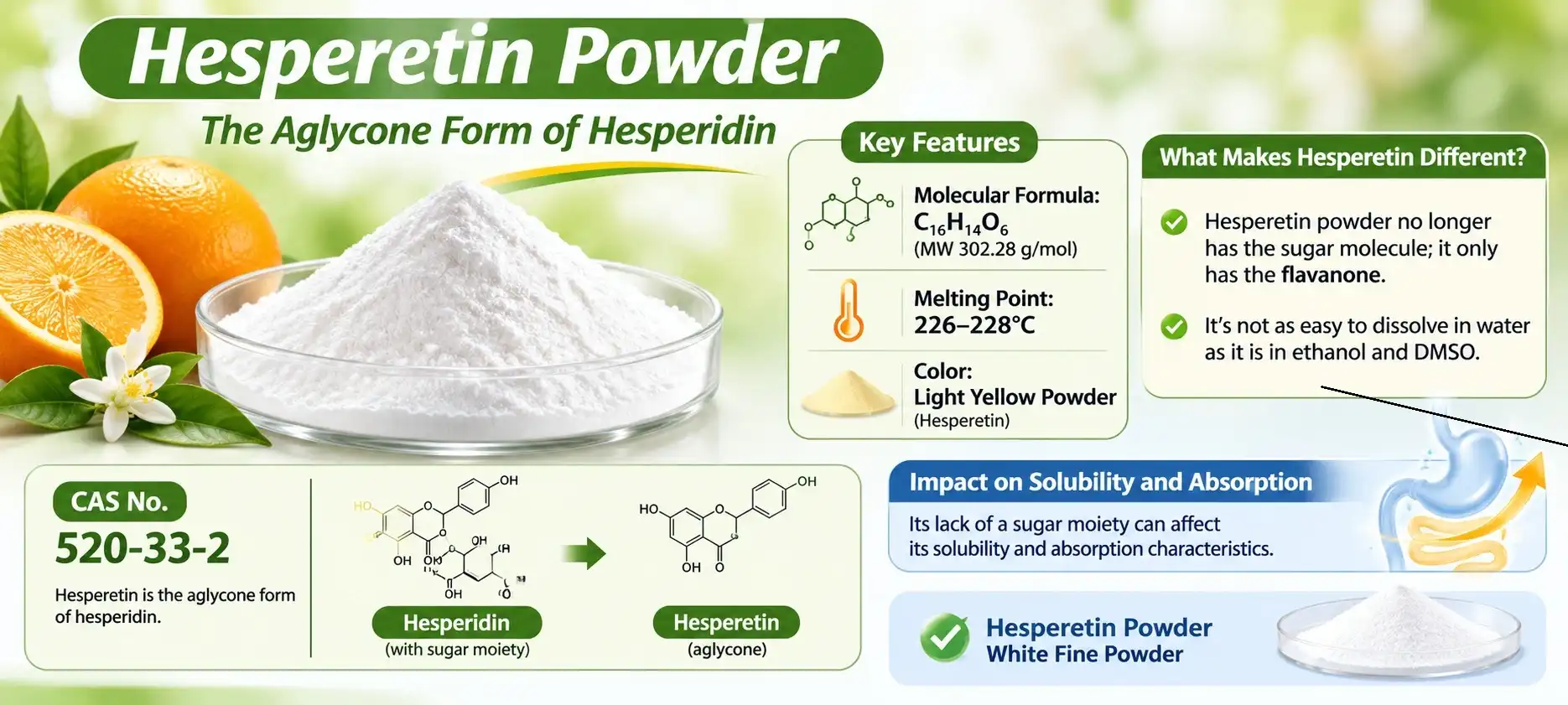
Hesperetin is made up of molecules that are C16H14O6 and have a mass of 302.28 million grams per mole. Its CAS number is 520-33-2 and its EINECS number is 236-216-9. We sell light yellow hesperetin powder that is safe for food. By HPLC, it meets the standard of 98%. We can also give you a range of 80% to 98% HPLC if the job needs a different test. Hesperetin is easy to dissolve in ethanol and DMSO, but not so much in water. Because of where it comes from and how it was processed, the batch COA and specification sheet should be used to make sure you get the right lot. These codes make it easy for your quality team to quickly look over a supplier's paperwork.
Hesperetin Versus Hesperidin
Hesperidin and hesperetin are often bought together, so I'd like to clear this up right away. Hesperidin (CAS 138-52-7), which is a glycoside, has a sugar group. It is the same molecule as the sugar but doesn't have the sugar attached to it. Their shape, how they dissolve, and how they act in a formula are all different. A review of 97 bioavailability studies came out in 2005 in the American Journal of Clinical Nutrition. From what the review found, flavanone glycosides usually need bacteria in the gut to take away the sugar before they can be eaten. A study from 2007 in the European Journal of Clinical Nutrition looked at hesperetin and naringenin aglycones in healthy people who had taken oral doses of the drugs. There should be a CAS number on every quote for hesperetin powder. You might get the wrong compound if you only order by name.
Citrus Sources and Extraction Methods
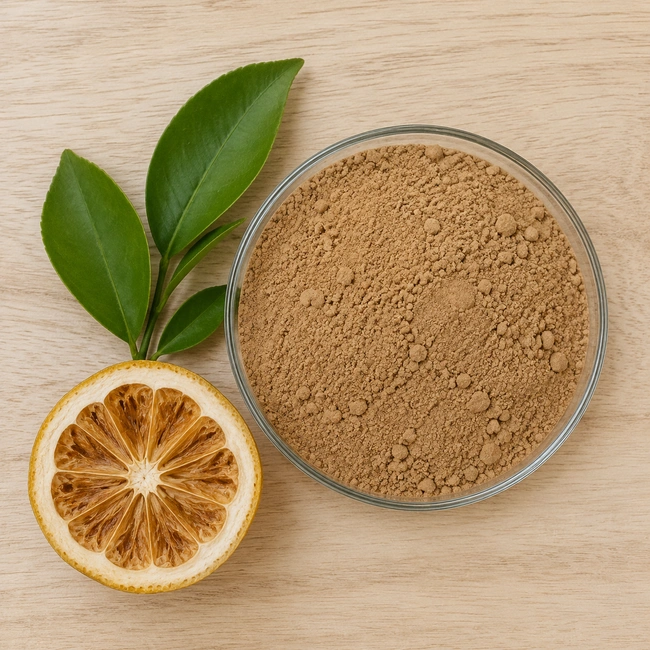
Hesperetin is a flavanone that comes from citrus fruits like oranges, lemons, and fingered citron (Citrus medica var. sarcodactylis). The process usually starts with picking the raw materials and getting them ready for use. Next come extraction, purification, concentration, drying, milling, and testing. Hesperidin is broken down by some companies to make hesperetin, while other companies make synthetic material. This means that forms and tracking can be different. Citrus fruits are used by Kang Biotech to make hesperetin powder, which is then extracted with water or ethanol. Our joint research center with the Hunan Institute of Agricultural Product Processing and Quality Safety works on quality and extraction in this area. The conditions of extraction can change the assay, color, particle size, and impurities. So, ask each supplier about the plants used, processing aids, and residual solvent controls.
Benefits, Uses, and Formulation of Hesperetin Powder
Research Areas and Claim Boundaries
Hesperetin is being looked into because it might help protect cells, speed up metabolism, reduce inflammation, and make the heart healthier. The review that came out in 2015 in Phytotherapy Research talks about how it works as an anti-inflammatory and an antioxidant. Hesperidin and hesperetin are used in research to help stop cancer and heart disease. A review published in 2015 in Life Sciences talks about this. A lot of that work is done on animals or cells, so in the end it doesn't help. Food labels in the US have to follow rules made by the Food and Drug Administration (FDA). For structure and function statements, there needs to be a disclaimer and a notice. Disease claims are not allowed. Skin care companies that use veins should have their clinical consultant and regulatory advisor help them write their claims. We do not make health claims; instead, we sell hesperetin powder and the paperwork that goes with it.
Commercial Applications
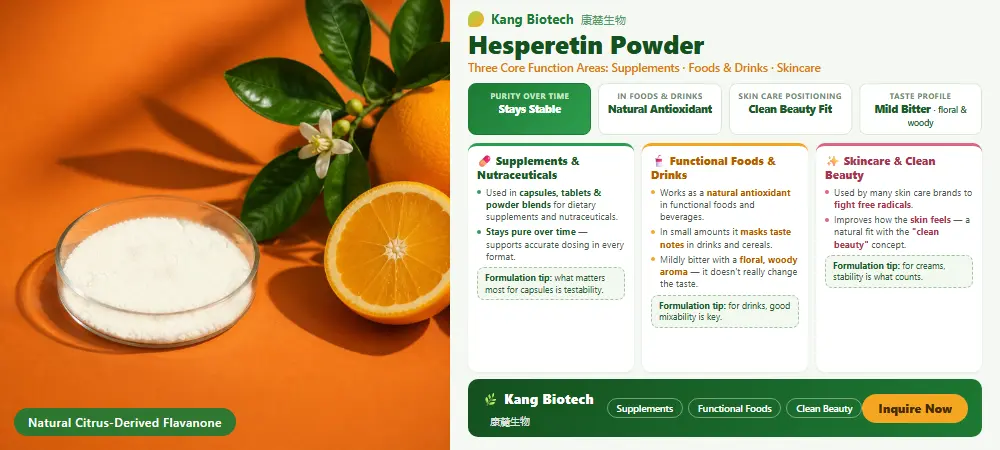
Hesperetin powder functions in three main areas. Because it stays pure over time, it is used to make capsules, tablets, and powder blends for dietary supplements and nutraceuticals. This helps with accurate dosing. In functional foods and drinks, it works as a natural antioxidant. In small amounts, it can change the taste of drinks and cereals by masking notes. Many skin care brands use it to fight free radicals and make the skin feel better, which fits with the idea of "clean beauty." It's important for capsules to be able to be tested, for drinks to be able to mix well, and for creams to stay stable. The powder tastes sort of bitter and smells like flowers and wood, so it doesn't really change the taste.
Solubility and Formulation Considerations
Hesperetin powder formulation testing is crucial for all forms because of its low water solubility. The way something dissolves and spreads can be changed by the pH, temperature, concentration, particle size, solvent system, and excipients. If you want to compare it to other flavonoids, make sure the test conditions and method are the same. This is because intrinsic solubility is not the same as real formulation performance. Some options that could be useful are micronization, emulsions, suspensions, encapsulation, cyclodextrin complexes, and lipid-based delivery systems. Propylene glycol and other co-solvents are another way to work with liquids. Before pills and capsules can be mixed, the particle sizes need to be checked. You can change the particle size and test needs with our OEM and ODM service. A 1 kg sample is enough for your lab to try out before placing a larger order.
Choosing, Testing, and Buying Hesperetin Powder
How to Choose the Right Material
Before you go any further, you should say what it will be used for: as a supplement, a functional food, a cosmetic, to be given out, or for research. Next, check out the test, the botanical source, the method of extraction, the particle size, the solubility, the amount of microbes that can be present, the contaminants, the packaging, and the shelf life. A claim like "98% hesperetin" only makes sense if you know how it was made, so ask for HPLC data that is specific to the batch. The language for grades also needs to be checked in the technical documents. We sell food-grade hesperetin powder. If your program needs it, raise the level of documentation when you first start. This way, we can tell you what we agree with. If you match the raw materials to your process early on, you're less likely to have to redo the recipe, have problems with quality, or have shipments get held up.
Quality Control, COA, and Storage
The assay, test methods, limits, and product and batch names are all listed on a useful COA for hesperetin powder. It also gives results for contaminants, microbes, and the physical world. HPLC proves identity and assay, and it also shows that the batch is always the same. At Kang Biotech, HPLC is used to check each production batch for active ingredients. Pesticide residues, heavy metals, and microbiological contaminants are also checked to make sure they are safe. With every order, there is a certificate of analysis, a specification sheet, an MSDS, and, if needed, paperwork for compliance in the country where the goods are going. Our building is certified by ISO 9001, ISO 22000, HACCP, Naz, Kosher, and FAMI-QS. Hold the powder in a cool, dry spot that isn't in direct sunlight and has a tight lid. That's how long it will last from the date it was made for 24 months.


Price, MOQ, and Supply Chain
Costs associated with hesperetin powder vary depending on the assay, source, extraction effort, testing, order volume, packaging, paperwork, and logistics. You should get separate quotes for samples, small amounts to test, and large amounts to sell. We need at least 1 kg of your order. The way we normally pack is in a 25 kg drum, but we can change that if you want. We have standard specs in stock. Small orders are sent by express couriers like FedEx. Big orders are sent by air or sea, depending on how fast they need to get there and how much it costs. As long as the terms are FOB, CIF, or DDP, we'll take care of all the shipping and customs paperwork. It's very clear from the quote what needs to be done. It also says if it comes with technical support, export files, and batch testing.
Evaluating Suppliers and Planning Your Procurement
Manufacturer, Trader, or Distributor
Of different types of suppliers. A direct manufacturer is in charge of making and testing the goods, a distributor gives you choices for your stock, and a trading company may put some distance between you and the factory. That being said, each model has its own traceability and technical answers, but they can all work. How is the hesperetin powder extracted? What grades are available? What is the minimum order? How long is the lead time? What is the packaging like? Can it be customized? Does it have any compliance statements? Find a business that has exported before, a steady supply of raw materials, and clean HPLC and COA records. This business, Kang Biotech, makes food itself. We began in 2011 and now have our own citrus groves and a factory that is 33,000 m² and has nine production lines. Lots of places, like North America, Europe, Japan, and South Korea, have hired us.
From Sample to Commercial Supply
A controlled workflow lowers the risk. First, choose the test, grade, use, particle size, paperwork, yearly volume, and delivery schedule that you want to use. Second, ask for a sample of hesperetin powder that can be tracked, along with a batch COA, a specification sheet, and an MSDS. Third, check to see if it works with your excipients and check the formula, identity, assay, physical properties, and solubility. The fourth step is to place a test order to make sure everything is correct with the paperwork, shipping, and packaging. Fifth, make sure you always have samples on hand, COAs that are up to date, and batch monitoring. Often, regulated brands need more time to get approved by the government, so start early. Each time you place an order, our account managers will handle shipping, technical support, and any paperwork. People in our sales team answer questions on the web.
Common Mistakes to Avoid
People keep making the same mistakes. People only care about how clean the headline is when they decide what to buy. Plus, they mix up hesperetin and hesperidin and don't check how well it breaks down in their own form. Some people will take a COA that isn't complete or isn't dated, or they won't check how it was stored or moved. Just because the assay is high doesn't mean that the finished product will be stable, perform well, or have good dispersion. Check the chemical's name, formula, test method, assay basis, moisture, residual solvents, and contaminants. Write down what you need in order to be accepted before you place your order, and test the sample with your real formula. Don't ask for general records; instead, ask for records that are specific to the batch. The ones you get might not match. The hesperetin powder we sell comes with a COA. You can ask us anything about any line on the COA.
Conclusion
The aglycone of hesperidin, which is also called hesperetin powder, comes from oranges, lemons, and fingered citron. It is C16H14O5 and has the CAS number 520-33-2. It's only helpful to have batch-specific HPLC data, a full COA, and a clear grade along with a purity number. The test, color, and impurities are different depending on whether the extract is made with water or ethanol. For each format, formulation testing is needed because some products don't mix with water. Researchers have looked into how antioxidants can help heart health, but in the U.S., supplement claims have to follow FDA rules. Smart buyers look at the minimum order size, packaging, shipping terms, storage conditions, and type of supplier before they buy something. Their next step is to order a pilot batch, and then they move on to a commercial supply. By not doing things like mixing up hesperetin and hesperidin, the quality of the formulation and the delivery schedule are kept safe.
FAQ
1. What is the molecular formula of hesperetin powder?
It is C16H14O6 and has the CAS number 520-33-2. About 302.28 g/mol is how heavy it is. Most of the time, we need 98% by HPLC.
2. Is hesperetin the same as hesperidin?
The sugar group is hesperidin (CAS 138-52-7), and the aglycone that doesn't have a sugar group is hesperetin. There should be a CAS number on every quote.
3. What are the minimum order and shelf life?
You can try small amounts, and the smallest order you can make is 1 kg. Hesperetin powder will last for 24 months from the date of manufacture if it is kept sealed, cool, dry, and out of direct sunlight.
4. Which documents come with an order?
As part of every order, there is a certificate of analysis, a specification sheet, an MSDS, a packing list, a commercial invoice, and, if needed, paperwork for the destination's regulations. These files help you review the quality of your work and prepare it for import.
5. Can you adjust purity or particle size?
Yes. We can change the size of the particles, the level of purity, and the way they are tested so that they work for your needs. You can also get service from OEM and ODM.
Get Hesperetin Powder From Citrus Sources to Commercial Supply With Kang Biotech
We can help you find 98% HPLC hesperetin powder if you need it. They have ready-to-ship items, samples starting at 1 kg, and can help with OEM or ODM. To compare hesperetin powder manufacturers, send an email to sales02@kangbiotech.com with your application, the assay you want to use, the amount of powder you will need each year, and the address where the powder will be sent. We'll send you a quote, a sheet of specs, and information about the COA as soon as possible. Find out more at cnkangbiotech.com.
References
1. American Journal of Clinical Nutrition, 2005. Manach C, et al. "Bioavailability and bioefficacy of polyphenols in humans. I. Review of 97 bioavailability studies."
2. Life Sciences, 2015. Roohbakhsh A, et al. "Molecular mechanisms behind the biological effects of hesperidin and hesperetin for the prevention of cancer and cardiovascular diseases."
3. Phytotherapy Research, 2015. Parhiz H, et al. "Antioxidant and anti-inflammatory properties of the citrus flavonoids hesperidin and hesperetin: an updated review of their molecular mechanisms and experimental models."
4. Journal of the Science of Food and Agriculture, 2000. Tomás-Barberán FA, Clifford MN. "Flavanones, chalcones and dihydrochalcones – nature, occurrence and dietary burden."
5. European Journal of Clinical Nutrition, 2007. Kanaze FI, et al. "Pharmacokinetics of the citrus flavanone aglycones hesperetin and naringenin after single oral administration in human subjects."
6. Federal Register, 2007. "Current Good Manufacturing Practice in Manufacturing, Packaging, Labeling, or Holding Operations for Dietary Supplements."

Send Inquiry
Related Industry Knowledge
- How Hesperetin Powder Can Help Refine Citrus Flavor Profiles
- What Is Nobiletin Powder?
- Glucosyl Hesperidin as an Antioxidant: What Research Shows
- Premium Apigenin Extract Powder Superior Manufacturing in China for Global Partnership
- Exploring Antioxidant Applications of Polymethoxy Flavonoids Powder
- Where Does Hesperetin Powder Fit in Nutraceutical Innovation?
- 5 Potential Health Benefits of Apigenin
- Neohesperidin Dihydrochalcone Powder vs Stevia: Which Natural Sweetener Wins?
- Naringenin Powder vs Naringin: Key Differences Explained
- Exploring Hesperetin Powder for Modern Cosmetic Formulation