
Retaliating Properties of Naringin: A Mini-Review
November 17, 2026
Naringin powder is isolated from the major bitter flavanone glycoside present in the peel of pomelo and grapefruit. Since the term "retaliating properties" is not widely used in science, this brief study interprets it as functional and bioactive properties of naringin. To summarise, naringin powder is bitter, although this can be managed, is stable to heating and has antioxidant action found in lab research, but not much proof from people yet. I wanted to allow purchasers to put together their needs, evidence and conditions of supply before they placed an order.
What Is Naringin Powder and How Does It Behave?
Source and Identity
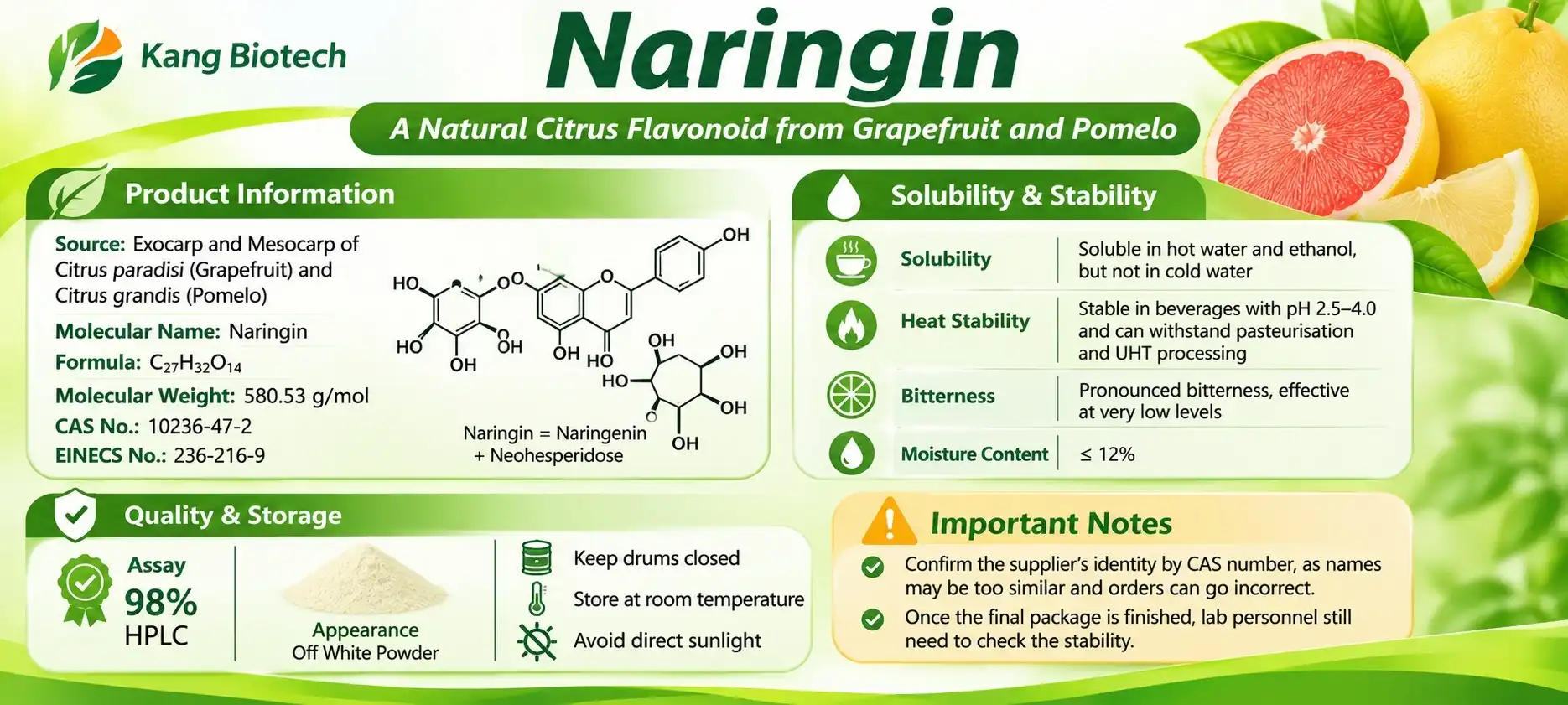
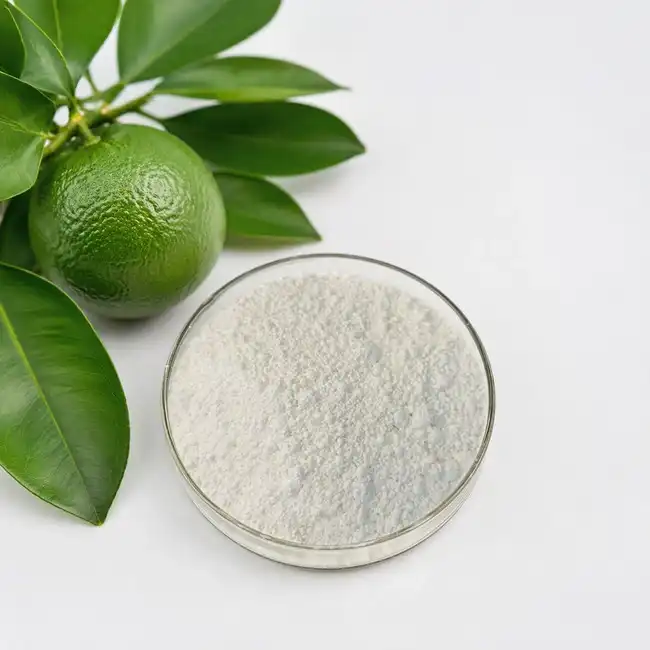
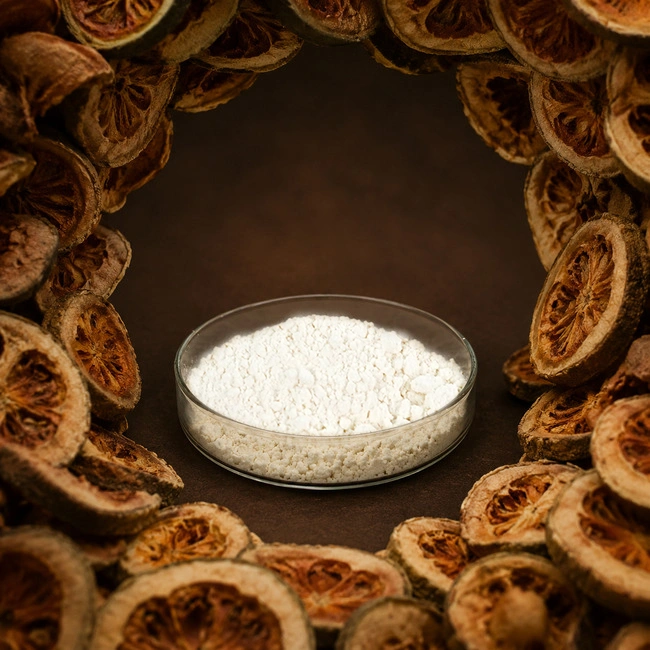
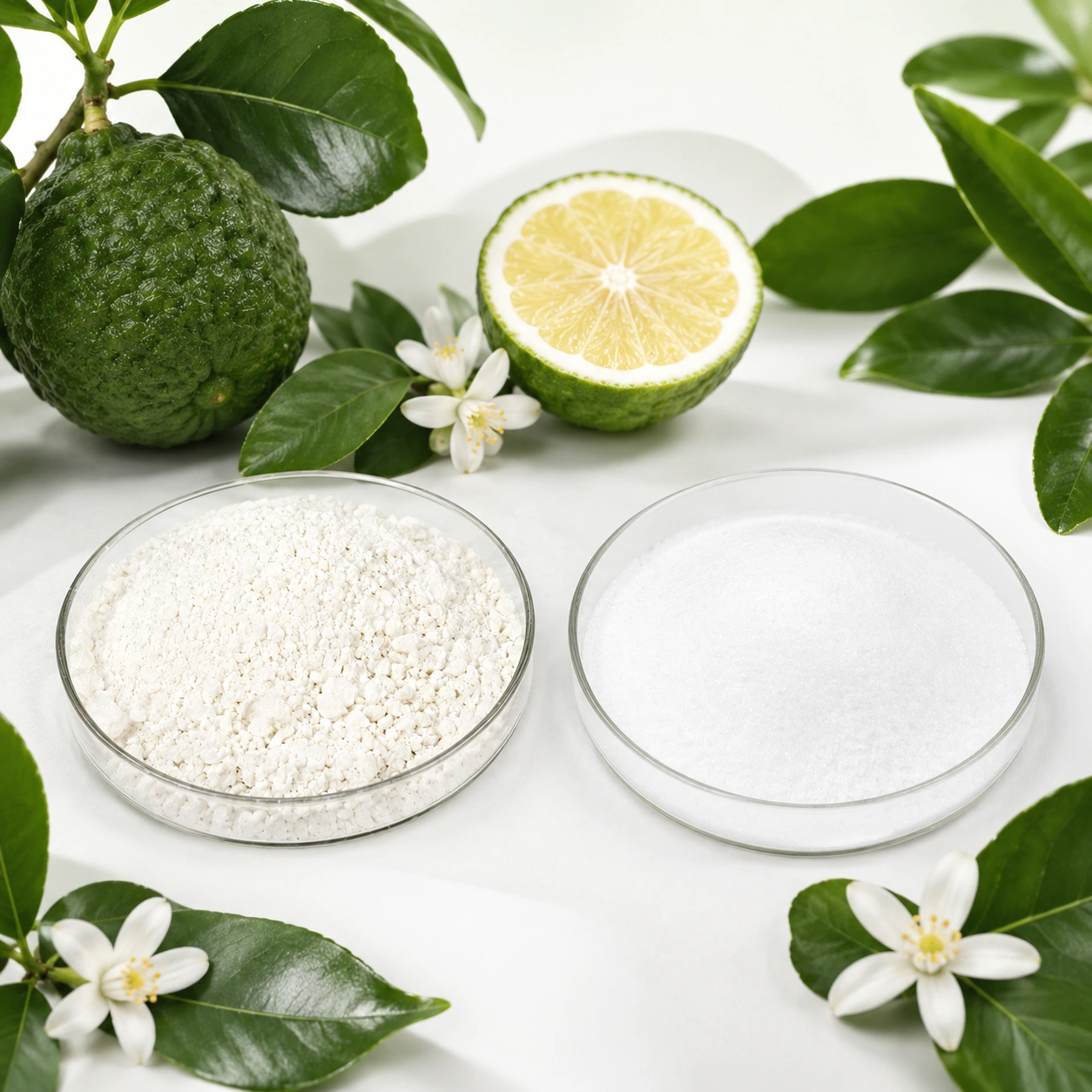
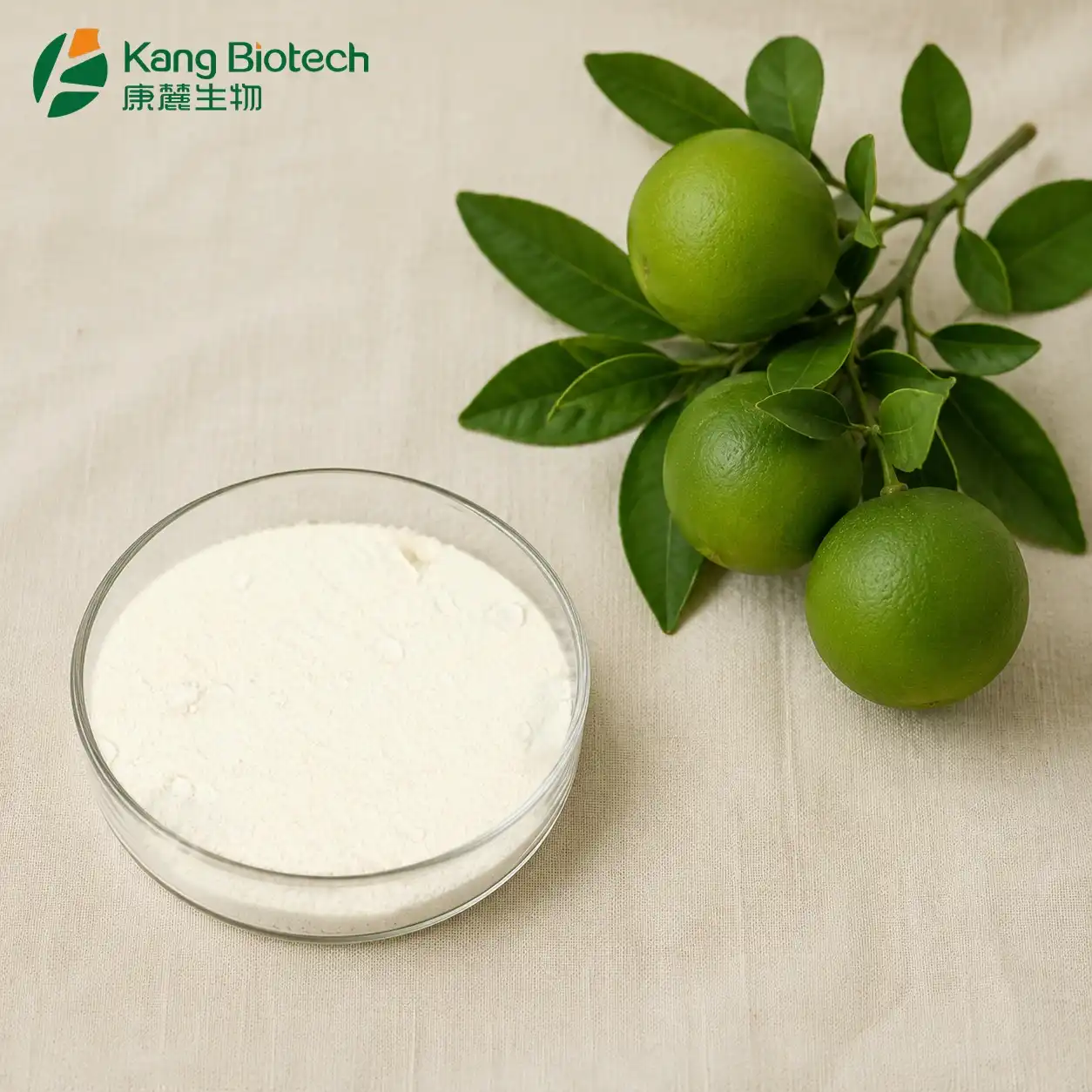
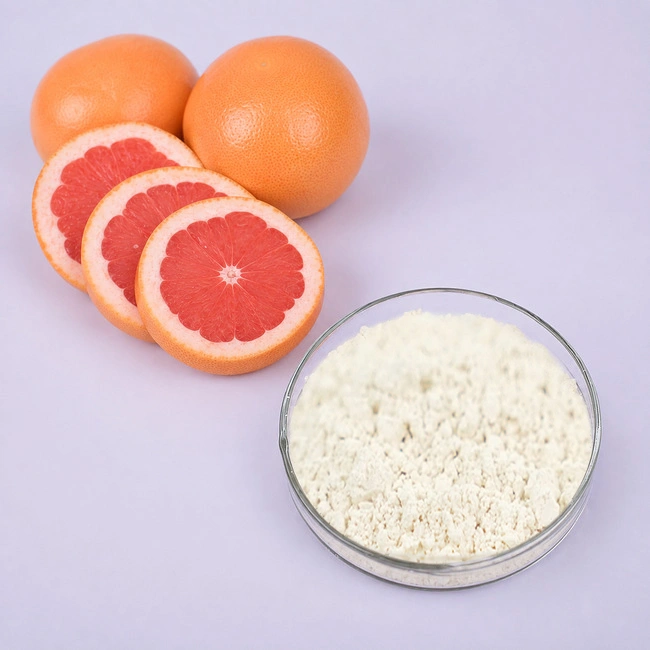
Naringin Powder from the exocarp and mesocarp of Citrus paradisi (grapefruit) and Citrus grandis (pomelo). Its molecular name is naringin and its formula is C27H32O14. Its molecular weight is 580.53 g/mol. It has a CAS number of 10236-47-2 and an EINECS number of 236-216-9. The molecule links the aglycone naringenin to the disaccharide neohesperidose. This is why it is heat resistant and bitter. Our naringin powder is off white powder, extracted with water or ethanol, then standardised to 98% HPLC. Buyers should confirm the identity of the supplier by CAS number since orders go incorrect when names are too close.
Solubility, Bitterness, and Heat Stability
naringin powder is soluble in hot water and ethanol but not in cold water. That's why heated premixes or concentrates based on ethanol are required for liquid applications. It has a pronounced bitterness detectable at extremely low levels, allowing formulators to dial in flavour at reduced dosage rates. The sugar-linked structure can survive pasteurisation and UHT processing, while the component is stable in beverages with a pH of 2.5 to 4.0. Moisture content not more than 12%. We recommend that drums be kept closed, at room temperature and away from direct sunlight since water entering the drum might affect the flow of the material. Once the final package is finished, lab personnel still have to check its stability.
Naringin, Naringenin, NHDC, and Citrus Extract
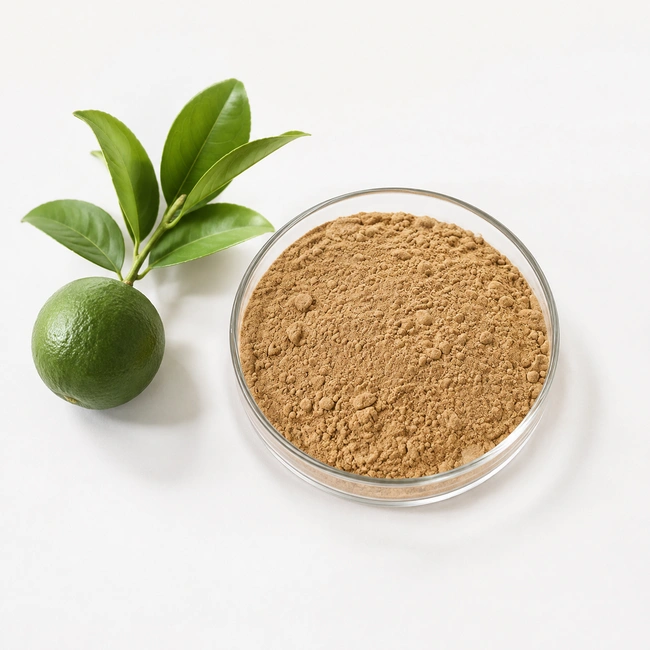
Four names make it hardest to buy things. Naringin (CAS 10236-47-2) is the name of the sugar. Naringenin is its aglycone. It is a different chemical with its own regulatory role, so the two can't be switched around on a list of specs. The CAS number for naringin dihydrochalcone is 18916-17-1. This is a different substance. We also make NHDC, which is a sweetener. Distributors who sell a lot of citrus flavonoids like naringin powder because it can be used as a starting material to make sweeteners. Assay levels and uses are different because a common citrus extract might only have 10% to 50% naringin and other flavonoids. The CAS number and HPLC assay should always match the SKU that is being looked for.
Bioactive Properties of Naringin: What Does the Research Suggest?
Antioxidant Activity in Laboratory Studies
Tests with chemicals show that naringin can get rid of free radicals. In 2010, the Journal of the Science of Food and Agriculture compared naringin and naringenin for their ability to protect biomolecules and remove free radicals. The two showed varying levels of activity. Because of this, you should treat them as two different ingredients. The effects seen in test tubes are not always the same in real life because metabolism and absorption change the results. Still, this activity gives formulators a reason to think about using naringin powder in functional food and supplement ideas, as long as the claims made in marketing materials follow the rules in their area. We suggest that product teams write down the test method and assay used to support any antioxidant claim.
Anti-Inflammatory and Metabolic Research
The 2016 and 2014 review papers in Pharmaceutical Biology and Advances in Nutrition summarize the work that has been done on naringin and naringenin in the areas of inflammation, lipid metabolism, and metabolic syndrome. A lot of this work is done in cell cultures and on animals, where researchers look at how things like AMPK and adiponectin signaling are affected. There are fewer and smaller tests on humans, and most of them use naringenin or whole-citrus products instead of purified naringin. Naringin powder should never be sold as a treatment because of this gap. In real life, brands use these studies to help them make new products, like weight-management blends, while making sure that their claims are legal in their market.
Safety, Dosage, and Grapefruit Interaction Questions
Different types of naringin, their purity, and the people they are meant for all affect the best dose. We see formulation loading, research dose, and consumer serving size as three separate things. Brands should work with qualified professionals to decide on serving sizes. Grapefruit juice and some medicines may not work well together. Furanocoumarins and other parts of the juice were linked to a lot of that effect in a 2013 review in the Canadian Medical Association Journal. It's not always true that purified naringin powder shares the same interactions as the juice. The regulatory and toxicology teams should look at each case individually. Some things that might worry you are stomach upset, strong bitterness, and personal sensitivity.
Naringin Powder Benefits and Uses by Industry
Beverages, Beer, and Confectionery
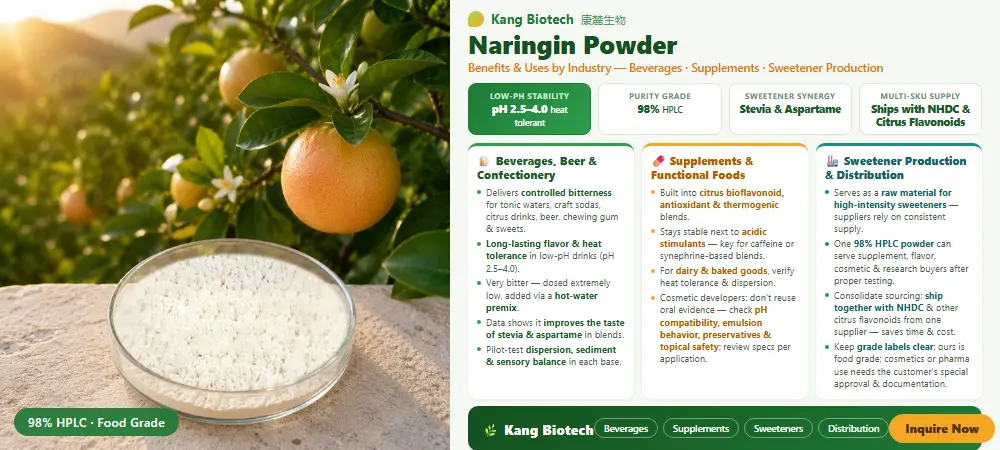
The main business benefit is that it makes people angry. Naringin is used to make bitterness that can be controlled in tonic waters, craft sodas, citrus drinks, beer, chewing gum, and sweets. In low-pH drinks (pH 2.5 to 4.0), naringin powder keeps its flavor for a long time and can withstand being heated. Formulators usually work with very low doses and add the powder through a hot water premix because it is so bitter. Our product data also shows that naringin can make stevia or aspartame taste better when mixed with them. In each base, dispersion, sediment, and sensory balance should be checked in pilot tests.
Dietary Supplements and Functional Foods
Citrus bioflavonoid, antioxidant, and thermogenic blends are made with naringin powder. Our research shows that the molecule stays stable when it's close to acidic stimulants, like coffee-based ingredients. This is important for blends that are based on caffeine or synephrine. Another area where heat tolerance and dispersion need to be checked is in dairy products and baked goods. Instead of directly applying evidence from oral use to skin products, cosmetic developers should look at pH compatibility, emulsion behavior, preservatives, and topical safety. For each use, the specifications need to be looked over again.
Sweetener Production and Multi-SKU Distribution
For distributors, an ingredient that works for a range of customers is valuable. High-intensity sweeteners can be made using naringin powder as a raw material, so suppliers depend on consistent supply. After the right tests are done, the same 98% HPLC powder can be sold to supplement and flavor companies, as well as to people who buy cosmetics or do research. It can be shipped with NHDC and other citrus flavonoids from the same supplier, which saves time and money. Labels for grades should be kept clear by distributors. Ours is food grade, and if you want to use it for cosmetics or medicine, you need to get special permission from the customer and show proof.
Extraction, Manufacturing, and Quality Standards
Water and Ethanol Extraction Steps
The first step in our process is to check and clean the raw materials. After that, it is extracted, filtered, concentrated, cleaned, dried, milled, sieved, packed, and finally tested. Depending on the goal, we either use water extraction or ethanol extraction. We change the settings for each batch because the quality and yield depend on the source of the raw materials, the solvent, the temperature, the time, the pH, and the drying conditions. We have better control over supply because Kang Biotech takes care of more than 20,000,000 m² of plantations in Lianyuan, Hunan. With a 33,000 m² facility and nine production lines, our team has more than 20 years of experience extracting citrus fruits and more than 11 years of experience making things.
Specifications and COA Checks
The assay figure is not the only useful comparison. The purity range we offer is from 10% to 98%, and our standard grade is 98% HPLC. Quality control checks for things like moisture, heavy metals by ICP-MS, microbial limits, and HPLC assays for solvents that are still present. People who want to buy something should ask for a batch-specific COA that has the lot number, test methods, limits, actual results, and date written on it. At the quote stage, they should also make sure they know what heavy metal and pesticide tests they need to do on the COA. A COA, MSDS, and allergen declaration are all sent with the shipment. Higher-purity naringin powder is better for precise formulation, while lower-assay grades are better for flavor work that needs to be done on a budget.
Certifications and US Regulatory Notes
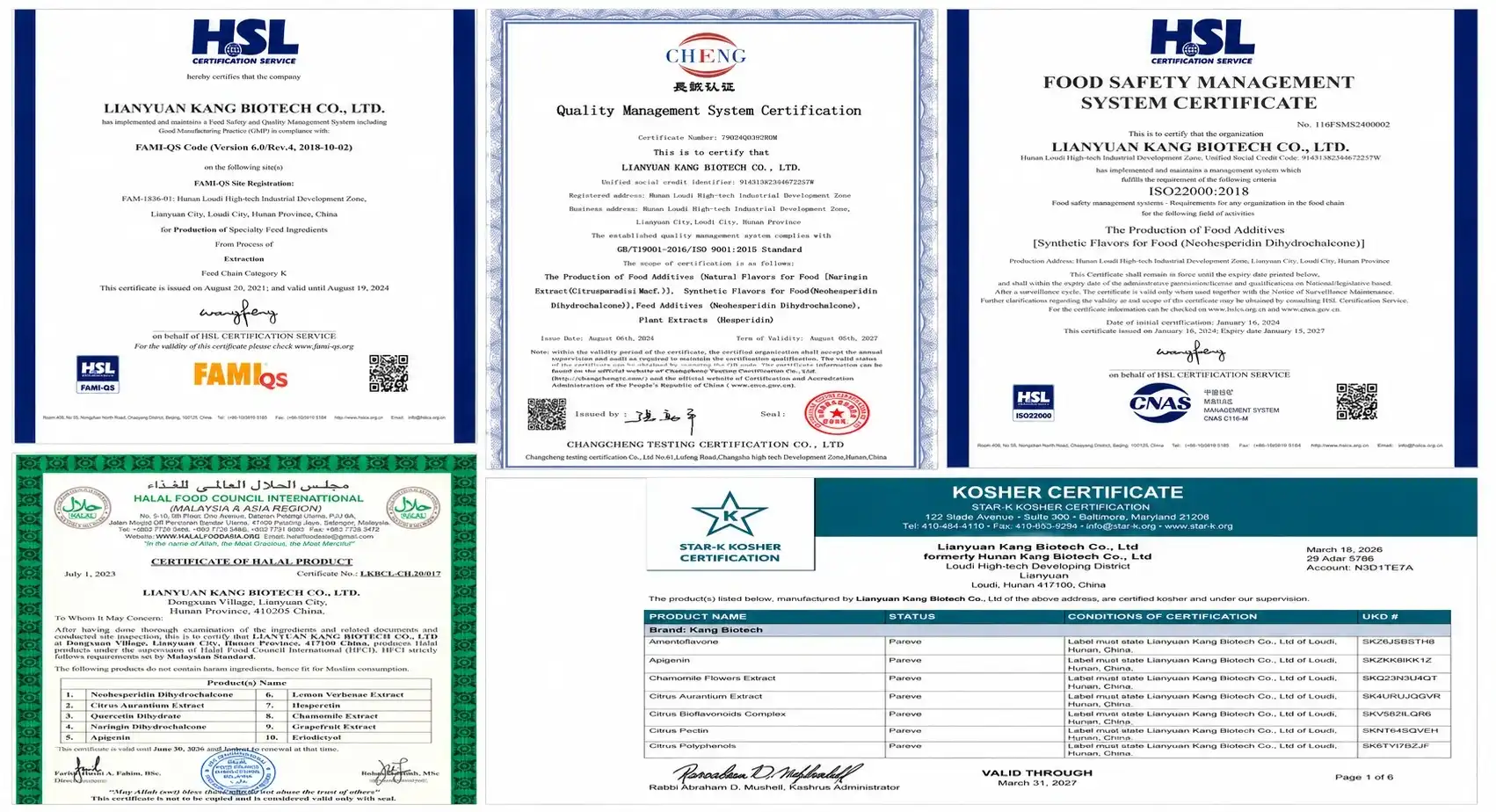
The systems we use to make things are certified by ISO 9001, ISO 22000, HACCP, FAMI-QS, Halal, Kosher, and SC. Our documentation packs help with work that has to do with FDA and CE compliance. US buyers often point to naringin's FEMA GRAS listing as proof that it is safe to use as a flavoring ingredient, and JECFA has also looked into it. Status still changes based on market and use, so the regulatory team of each buyer should confirm it. Naringin and naringenin have different roles when it comes to compliance, so they can't be switched out. We can make support packages that are tailored to each market, but we can't do the buyer's own legal review for them.
Choosing a Dependable Naringin Powder Supplier
Supplier Checks and Red Flags
Start by making a short procurement brief that includes the use, grade, quantity, packaging, destination, certificates, and date of delivery. Check the company's ability to make things, its ability to track raw materials, its lab controls, the consistency of its batches, its experience exporting, and its technical support. When you compare quotes, look at the total landed cost, not just the price per kilogram. This should include testing, packaging, freight, and documents. Generic COAs, CAS numbers that don't match, refusals to send samples, and vague answers about manufacturing are all red flags. This can be answered with batch data from a direct manufacturer that has its own farms and labs. This information also helps distributors explain to their own customers why prices are different.
From Sample to Contract
Teams can test a sample before they do a bigger test because we take orders as low as 1 kg. Before signing a long-term contract, many buyers in North America wait a few days to ask questions and look over the COA, a few weeks for a trial lot, and finally a few months. We recommend testing representative samples, running formulation trials, checking the condition of shipments, and approving a pilot lot before placing large orders within that time frame. Forecasting, having a safety stock, getting supplies from two places at once, and reserving batches protect continuity when citrus harvests change from one season to the next.
Stock, Shipping, and OEM/ODM Support
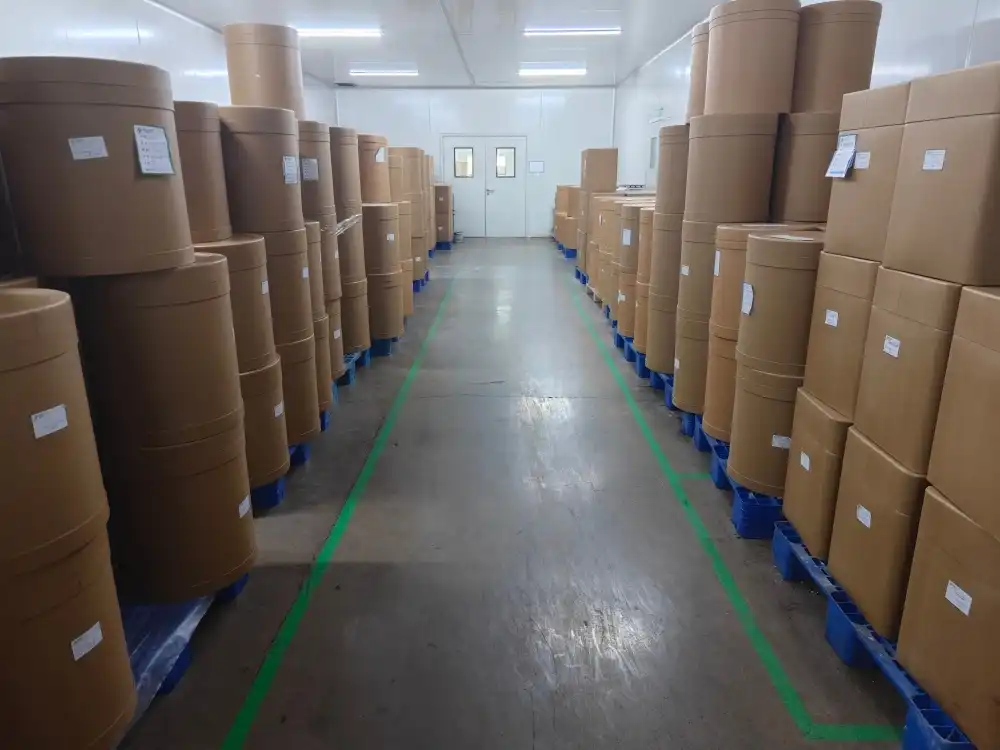
We always have 25 kg drums of naringin powder on hand. Small orders are sent by FedEx, while larger ones are sent by air or sea. Our OEM/ODM service takes care of packaging, labeling, formulation support, purity level, particle size, and private-label and distribution programs. Our technical team helps you choose the right product, ask questions about how it should be used, get documents, and follow up after the sale. Because seasonal citrus yields can change supply, we suggest that you share forecasts early and save batches for orders that will be placed again.
Conclusion
The value of naringin powder, a purified citrus flavanone glycoside (CAS 10236-47-2), is based on its ability to withstand heat and low pH conditions and to act as an antioxidant in lab tests. Since most of the research on inflammation and metabolism is still in the preclinical stages, brands should make sure their claims are legal in their own countries and handle questions about how grapefruit affects drugs as a separate review item. It can be used to make drinks, candy, beers, supplements, and sweeteners, among other things. Naringin, naringenin, and naringin dihydrochalcone are all different chemicals, so buyers should use the CAS number and HPLC assay to make sure they know what they're buying. Price is not the only thing that matters; the extraction method, a batch-specific COA, certifications, packaging, and supply terms are also important. Before buying in bulk, each team could test a sample and a pilot lot to make sure that their own formulation worked well.
FAQ
1. What is the difference between naringin powder and citrus extract?
There are standard amounts of naringin powder, and ours is 98% HPLC. Assay, bitterness, and uses can be different because a citrus extract may only have 10% to 50% naringin and other flavonoids.
2. Does naringin powder dissolve in cold water?
Not well. It can be mixed with warm water or an ethanol concentrate to make it dissolve, and then test the mixture in your own base.
3. What are the MOQ, packaging, and documents?
You can get samples, and the least you can order is 1 kg. Drums that hold 25 kg make up bulk packs. Shipments come with a COA, MSDS, and allergen declaration, and we can make support packages that are specific to the market.
4. Is naringin powder safe with medications?
Some medicines don't work well with grapefruit juice, but purified naringin doesn't always have the same effect. Safety should be talked over by brands with qualified professionals.
Request Naringin Powder Samples from Kang Biotech
Looking for a company that makes naringin powder for the US market? Kang Biotech has ready-to-ship 98% HPLC food grade naringin powder in 1 kg samples, 25 kg drums, and can help with OEM/ODM. Our team will send you a COA and quote after you email sales02@kangbiotech.com with your target assay, volume, and destination. For more information, go to cnkangbiotech.com.
References
1. Pharmaceutical Biology, 2016 – Therapeutic Potential of Naringin: An Overview
2. Advances in Nutrition, 2014 – Effect of Citrus Flavonoids, Naringin and Naringenin, on Metabolic Syndrome and Their Mechanisms of Action
3. Journal of the Science of Food and Agriculture, 2010 – Antioxidant Properties, Radical Scavenging Activity and Biomolecule Protection Capacity of Flavonoid Naringenin and Glycoside Naringin: A Comparative Study
4. Canadian Medical Association Journal, 2013 – Grapefruit–Medication Interactions: Forbidden Fruit or Avoidable Consequences?
5. Biomedicines, 2022 – Naringin and Naringenin: Their Mechanisms of Action and the Potential Anticancer Activities
6. Journal of Agricultural and Food Chemistry, 1969 – Taste and Structure in Phenolic Glycosides

Send Inquiry
Related Industry Knowledge
- Unlocking the Secrets of Horny Goat Weed
- Benefits of Naringin Supplement for Health and Wellness
- How Glucosyl Hesperidin Fits Modern Skincare Formulas
- Hesperetin Powder: From Citrus Sources to Commercial Applications
- Neohesperidin Powder vs Hesperidin: Key Differences Explained
- What Are the Benefits of Naringin?
- NDHC: an updated review on a naturally derived sweetener and flavor potentiator
- NHDC Sweetener Guide: How Neohesperidin Dihydrochalcone Is Changing Low-Calorie Foods
- Naringenin Powder vs Naringin: Key Differences Explained
- Hesperidin: The Citrus Bioflavonoid that Supports the Brain & Heart