
Where Does Hesperetin Powder Fit in Nutraceutical Innovation?
November 2, 2026
Hesperetin powder (CAS 520-33-2) is a citrus flavanone aglycone which has a well established function in the current nutraceutical research. This aglycone form is more readily absorbed in the digestive system than its glycoside precursor, hesperidin, making it a realistic choice for product managers developing vein health supplements, functional food lines and clean-label cosmetics. As the need for plant-derived actives with clinical evidence increases, hesperetin powder offers formulators with a scientifically studied, naturally derived option that bridges the gap between traditional phytotherapy and scientifically validated wellness products.
Understanding Hesperetin Powder: Key Properties and Health Benefits
What Hesperetin Actually Is
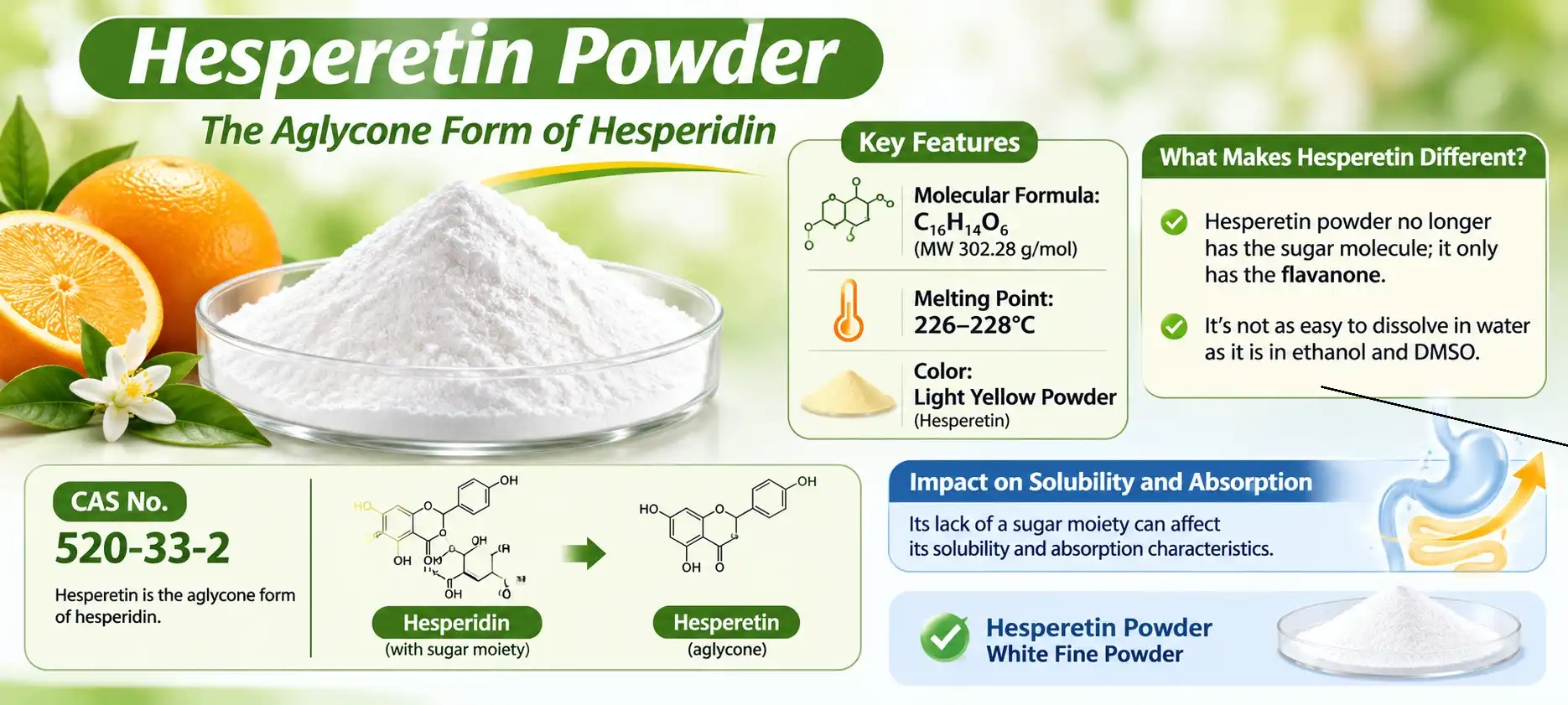
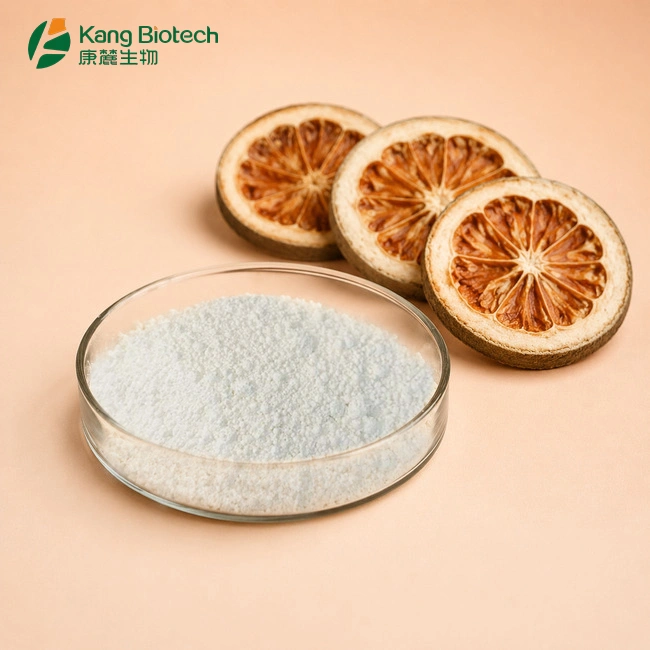
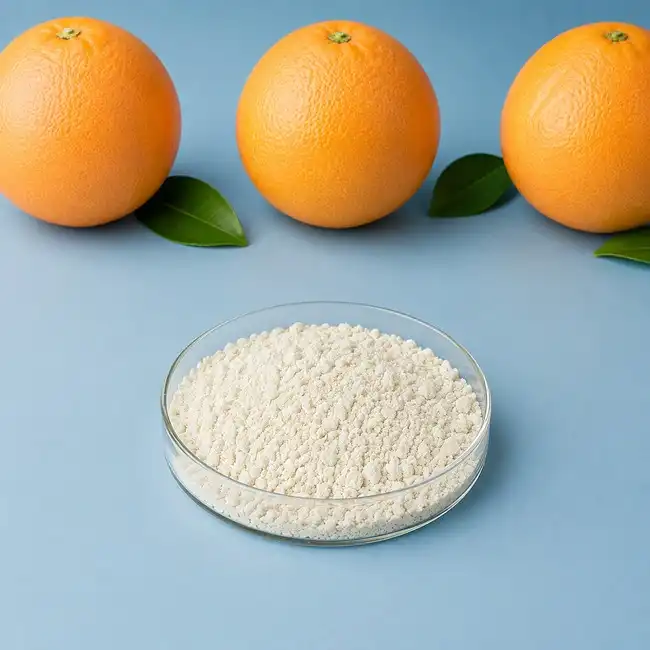
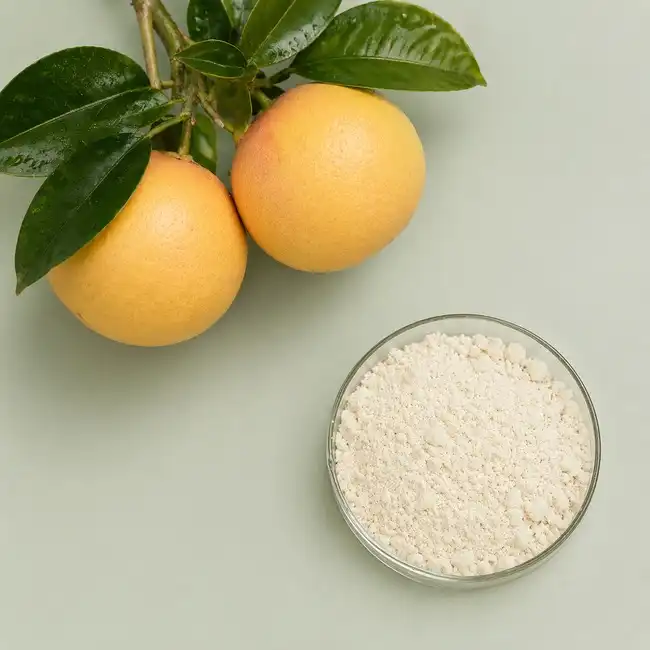
Hesperetin powder no longer has the sugar molecule; it only has the flavanone. It is a light yellow powder that melts at 226–228°C and is made up of molecules of C16H14O6 (MW 302.28 g/mol). It's not as easy to dissolve in water as it is in ethanol and DMSO. Hesperetin (CAS 520-33-2) is the aglycone form of hesperidin. Its lack of a sugar moiety can affect its solubility and absorption characteristics. Label claims are directly affected by bioavailability, so this difference is very important for B2B product choices.
Biological Activity and Cardiovascular Relevance
A lot of experts in the field have looked at the papers and found that hesperetin has an impact on more than one biological system. There is a change in how NF-κB messages, capillaries become less permeable, and the microcirculation stays healthy. This is why it works well in vein health supplements that help people with long-term vein problems. Note that the European Phlebotonics Guideline S2k discusses flavonoid-based phlebotonic treatments, including combinations containing diosmin and related citrus flavonoids. However, the guideline does not establish a universal requirement that hesperetin itself must make up 10% of such a mixture. Formulators should therefore follow the dosage and composition supported by the specific clinical evidence and applicable product requirements.
Safety Profile and Dosage Benchmarks
Hesperetin powder has been investigated in food, supplement, and pharmaceutical research, but a universal dietary dose of 50–500 mg per meal should not be presented as an established safety benchmark for hesperetin itself. Reported intake levels vary according to the study design, formulation, and intended application. For B2B formulation work, the appropriate dosage should therefore be determined from the relevant human or preclinical evidence and the requirements of the target market. The EP and USP grades are thought to be very clean when the ash level is less than 0.5% and the moisture level is less than 1%. You need to look for microbial contamination and heavy metals at this grade level. Any good supplier should document these requirements on a Certificate of Analysis.
Comparing Hesperetin Powder with Related Nutraceuticals
Hesperetin vs. Hesperidin: A Practical Distinction
You will find hesperetin and hesperidin in various supplier catalogues. This by itself changes nothing. The equivalent aglycone is hesperetin (CAS 520-33-2). Hesperidin (CAS 520-26-3) is the glycoside of hesperetin. Hesperetin is produced from hesperidin via hydrolysis that eliminates the sugar moiety. Hesperetin powder may be formulated when the aglycone form and various absorption properties are needed. Hesperidin remains a popular choice if a glycosylated citrus flavonoid is desired and the formulation is developed around its unique evidence and qualities. Which form to utilise for your purchase order will depend on what kind of clinical evidence you have.
Hesperetin vs. Naringenin and Nobiletin
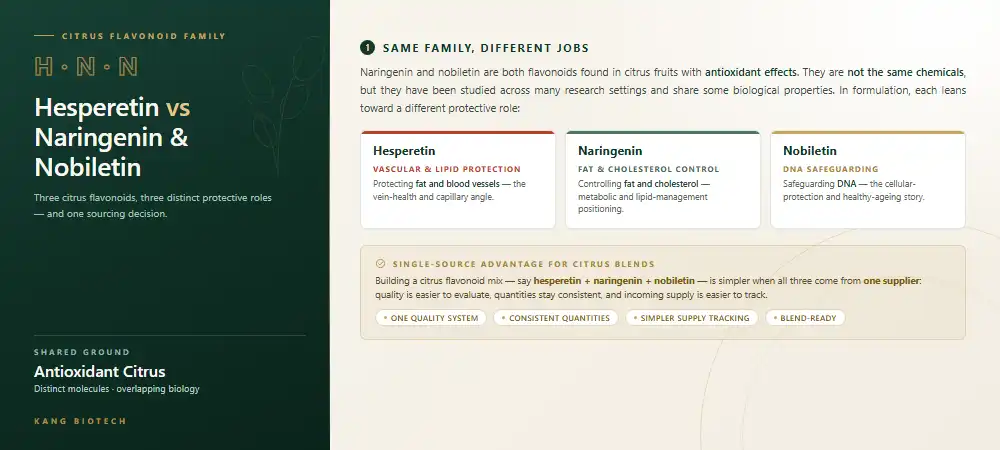
Naringenin and nobiletin are both flavonoids present in citrus fruits and possess antioxidant effects. They are not the same chemicals but have been researched in various research environments and may have some shared biological properties. If formulators want to create a citrus flavonoid mix, say a combination of hesperetin, naringenin and nobiletin, they may get all three from the same firm. This makes it simple to evaluate quality, keep quantities consistent and keep track of when new supplies come in. Hesperetin powder is more about protecting the fat and blood vessels, naringenin is more about controlling the fat and cholesterol, and nobiletin is more about safeguarding the DNA.
Natural vs. Synthetic Sourcing
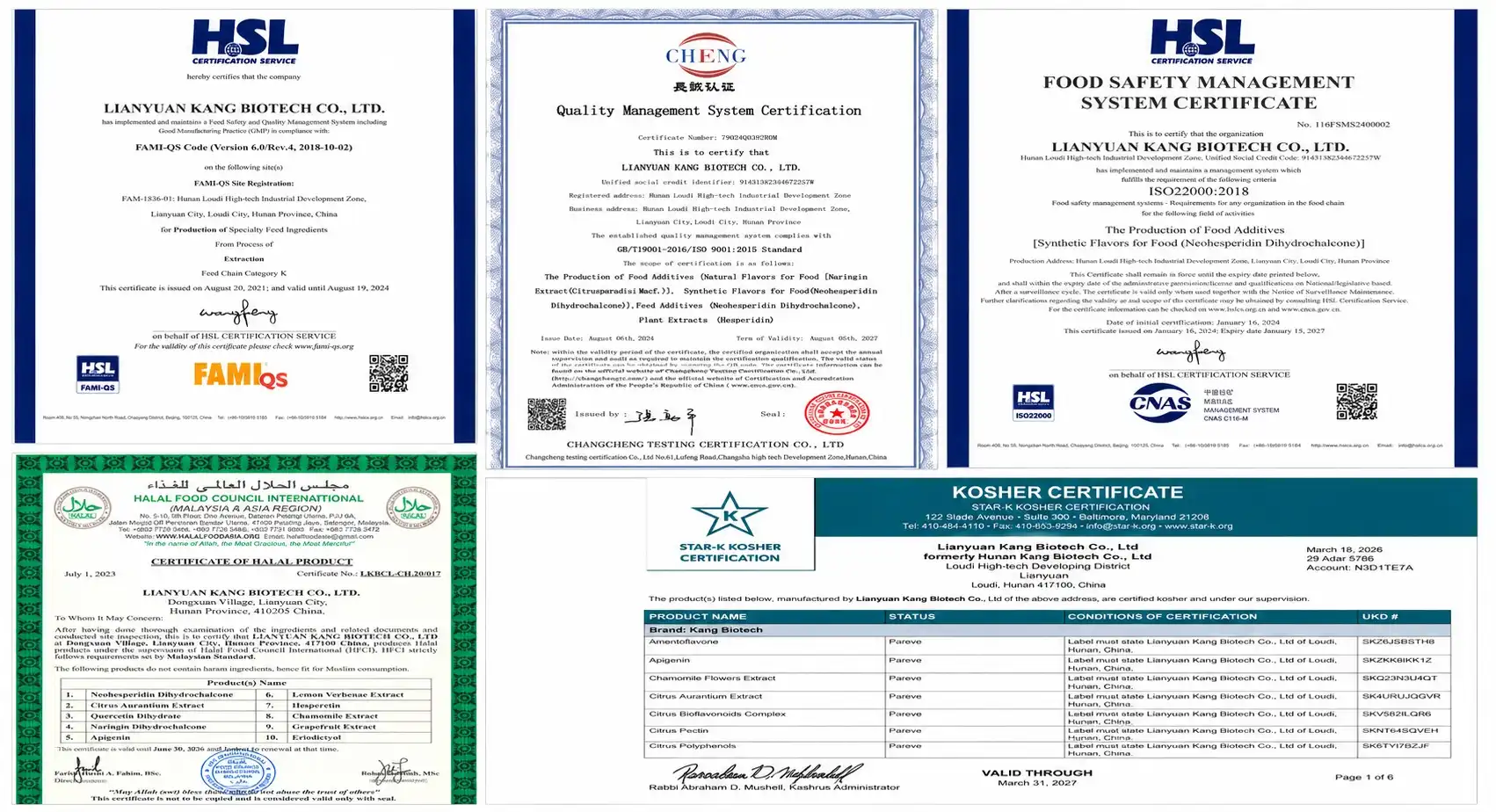
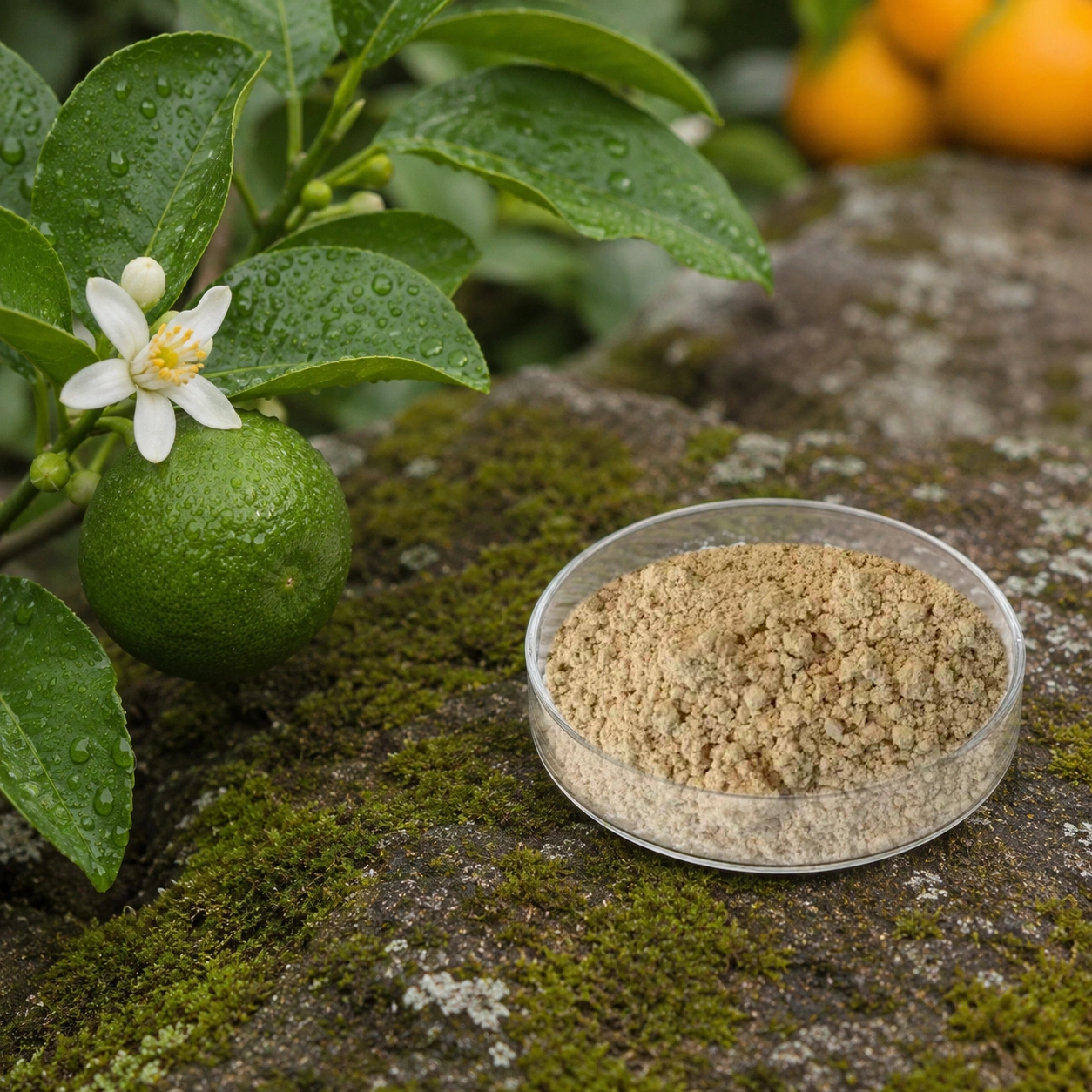
More is being learned about where goods come from by both people and the government. Hesperetin powder comes from citrus aurantium or a similar species and is naturally obtained. It can be extracted with water or ethanol. This powder comes with a clean label and can be used with "OTX natural narrative" techniques that are popular in the European over-the-counter vein health category. The claims on the sticker might not be true for copies made in a lab. Natural brands need to look at the paperwork from their suppliers to see where the plants came from and how they were extracted. The stack of certificates will tell you more about buying a lot of hesperetin powder than any sales pitch. If they have ISO 9001 and ISO 22000 for quality management, HACCP for food safety systems, Halal and Kosher for market access, and FAMI-QS for uses in animal feeding, you should ask providers to show proof of these things. To do a full COA, you need to use ICP-MS to check for heavy metals, GC-Headspace to check for residual solvents, count the number of bacteria, and check for pesticide residues. If a seller won't give you full paperwork for each batch, they should be taken off your short list right away.
Procurement Insights: How to Source High-Quality Hesperetin Powder
Certification Benchmarks to Require
If you are looking for hesperetin powder in bulk, the certification stack will tell you more than any sales presentation. Require the provider to offer ISO 9001 and ISO 22000 (quality management), HACCP (food safety systems), Halal and Kosher (for market access) and FAMI-QS (animal nutrition applications, if applicable). Full COA should contain HPLC test findings (≥98%), heavy metal screening by ICP-MS, residual solvent analysis (GC-Headspace), microbiological counts and pesticide residue panels. If a provider is not prepared to supply full batch specific documentation then you should eliminate them from your short list immediately.
Evaluating Supplier Infrastructure
The supplier's infrastructure is an indicator of the long-term dependability of supply. Instead of buying raw fruit at open marketplaces, the firm cultivates its own regulated citrus farms, which offers botanical uniformity from harvest to extraction. This lowers lot-to-lot variance via vertical management of supply and offers product managers the confidence to file regulatory dossiers that need traceable raw material provenance. Ask the provider whether they own the property where the crop is grown, have their own extraction plant, and have direct export authorisation. That's the difference between contract brokers and real manufacturers.
Logistics and Lead Time Realities
Procurement times for nutraceuticals for vein health are usually 60-120 days to qualify and 12-24 months to full commercial manufacturing. So plan your sourcing schedule appropriately. Minimum orders of 1 kilogram are available, with samples available for first R&D batches. For commercial quantities, be sure the provider dispatches small urgent orders via FedEx and bigger consignments by air or sea freight. Flexible Incoterms (FOB, CIF, DDP) and expert management of export papers help prevent customs delays that may interfere with production deadlines.
The Role of Hesperetin Powder in Nutraceutical Innovation and Product Development
Vein Health Formulations
Hesperetin powder is mostly used to help keep veins healthy in the food supplement business. When mixed with Diosmin in formulations supported by clinical evidence and applicable guidelines, it may be considered for products targeting capillary function and chronic venous health. Firms can put their goods in the OTX space, which is between prescription phlebotonics and general health products, thanks to this mix. They can still say that natural ingredients are used to make their goods. However, the efficacy and appropriate composition of such combinations should be supported by product-specific clinical evidence rather than assumed from the presence of the individual ingredients.
Functional Foods, Flavor Modification, and Skincare
Hesperetin powder is useful for more than just vitamins. It can change the taste of foods and drinks by hiding bitter notes when used in small amounts. It can be used in skin care items that make skin look younger and better because it may inhibit tyrosinase activity in experimental models. These applications across different product categories give people who buy ingredients more than one way to use the same material. This helps you buy things and keep track of them.
Emerging Research Directions
As per new research that has been looked over by experts, hesperetin could be used in more ways to change the gut microbiome, protect neurons, and improve metabolic health. These are still very early indicators of evidence, but they do suggest to ways a product may be manufactured, so keep your eyes peeled. The more evidence there is, the quicker those who build up supply chains and study approaches that have previously been attempted will be able to move. R&D teams may use modest test orders of 1 kg and upwards to check product stability and performance without immediate commitment to large-scale manufacturing.
Making the Smart Choice: Selecting the Right Hesperetin Powder for Your Business
Specification Alignment with Formulation Goals
If they want to find a source of hesperetin powder, they need to make sure that the specs are just right. 98% by HPLC is the standard level that can be used for most special supplements and adjuvants for drugs. To make sure that capsules or tablets are filled evenly, your recipe needs a certain range of particle sizes. Ask the maker to change the requirement. Make sure the seller can change the quality, the size of the particles, and the way the product is tested without having to re-register the whole thing.
Long-Term Partnership Value
Sometimes, getting the best prices in the short term makes it hard to get what you need in the long term. You should pick a plant that has been around for more than ten years, has an in-house research and development center, and has direct control over where its raw materials come from. This will keep the supply chain stable and protect the launch dates of the products. Logistics, technical documents, and regulatory paperwork should all be taken care of by a reliable account manager. This will free up your procurement and quality assurance teams to do other tasks. This is very helpful during the qualification and scale-up stages.
Conclusion
Hesperetin powder has a clear place in the growth of nutrition products. A lot of research shows that it can help keep your veins healthy, and more and more research shows that it can also help your skin and metabolism. The fact that it comes from nature also supports its use as an OTX or supplement. People who are in charge of making their own vascular health brands have to pick which sources to buy from based on how clean the goods are, how easy it is to find the botanicals that were used, and how trustworthy the seller is. These three things should be true in your supply chain. You can check the certificates and test samples to be sure. This will help you with both the products you already have and the ones you'll be making in the future.
FAQ
1. What is the difference between hesperetin and hesperidin?
Hesperetin (CAS 520-33-2) is the aglycone version, the sugar molecule has been eliminated. The equivalent glycoside is hesperidin (CAS 520-26-3). If you want to formulate in the aglycone form, then the option would be hesperetin powder, since the aglycone may absorb differently than the glycoside.
2. What purity grade should I specify for a vein health supplement?
State ≥98% by HPLC for pharma adjuvant and premium supplement applications. This delivers a high assay raw material for formulation and facilitates precise quality documentation. It must be checked against the relevant monograph, grade specification and testing standards applicable to the intended product and market to see if it fits the EP or USP requirements.
3. What documentation should a supplier provide with each batch?
For a complete batch package, it is required to provide a Certificate of Analysis (HPLC assay, heavy metals, pesticide residues, microbiological counts), MSDS, specification document, packing list and commercial invoice. We may provide destination specific regulatory documentation on request.
4. Can I request a sample before committing to a commercial order?
Yes. Minimum order 1kg, samples are available for R&D assessment and formulation development before placing commercial orders for higher amounts.
5. Is natural-source hesperetin powder suitable for clean-label positioning?
Yes. If the provider details the botanical source and extraction process in its specifications, Hesperetin powder made from Citrus aurantium or kindred species using water or ethanol extraction may help support natural, clean label claims.
Request Hesperetin Powder Samples from Kang Biotech
People in over 40 countries have bought hesperetin powder from Kang Biotech since 2011. Their office is in a 33,000 m² building in Hunan, China. There are 20,000,000 m² of controlled orange trees all around. Our food is safe to eat according to ISO 9001, ISO 22000, HACCP, Halal, Kosher, and FAMI-QS. We produce hesperetin powder that is 98% pure by HPLC, includes full batch paperwork, OEM/ODM services, and can be shipped by FedEx, air, or sea. You can get a sample or price quote by emailing sales02@kangbiotech.com or going to cnkangbiotech.com.
References
-
Manach, C., Scalbert, A., Morand, C., Rémésy, C., & Jiménez, L. — Polyphenols: Food sources and bioavailability — The American Journal of Clinical Nutrition, 2004.
-
Garg, A., Garg, S., Zaneveld, L. J. D., & Singla, A. K. — Chemistry and pharmacology of the citrus bioflavonoid hesperidin — Phytotherapy Research, 2001.
-
Kuiper, H. C., Miranda, C. L., Sowell, J. D., & Stevens, J. F. — Mercapturic acid conjugates of 4-hydroxy-2-nonenal as biomarkers of oxidative stress in citrus flavonoid studies — Journal of Nutrition, 2008.
-
Riva, A., Ronchi, M., Petrangolini, G., Bosisio, S., & Allegrini, P. — Improved oral absorption of quercetin from quercetin phytosome, a new delivery system based on food grade lecithin — European Journal of Drug Metabolism and Pharmacokinetics, 2019.
-
Perrin, A., & Vène, N. — European S2k Guidelines on Chronic Venous Disease: Recommendations on phlebotonics including flavonoid combinations — Phlebology, 2022.
-
Havsteen, B. H. — The biochemistry and medical significance of the flavonoids — Pharmacology & Therapeutics, 2002.

Send Inquiry
Related Industry Knowledge
- Apigenin for Sleep: What This Chamomile Compound Does
- Where Does Hesperetin Powder Fit in Nutraceutical Innovation?
- Neohesperidin Powder: Uses, Benefits and Applications
- What Are the Benefits of Naringin?
- NHDC Sweetener Guide: How Neohesperidin Dihydrochalcone Is Changing Low-Calorie Foods
- How Naringin Dihydrochalcone Supports Sugar Reduction
- Glucosyl Hesperidin Bulk Supplier: What Buyers Should Check
- Hesperidin: The Citrus Bioflavonoid that Supports the Brain & Heart
- Evidence for the Health Effects of Hesperidin
- What Is Apigenin Powder and Why Is It Gaining Popularity in Supplements?