
Naringin Dihydrochalcone: Advances in Applications and Research
October 28, 2026
Naringin, a bitter grapefruit peel flavonoid, is catalytically hydrogenated to produce naringin dihydrochalcone (CAS 18916-17-1), a potent sweetener and taste enhancer from citrus. The impact of sweetness on bitterness masking, clean-label sugar reduction, and functional food composition has been studied in the last ten years, going much beyond the simple sweetness profile. At threshold quantities, naringin dihydrochalcone is 300–1,800 times sweeter than sucrose, making it a unique type of natural taste modifier. Product developers, application engineers, and procurement teams are closely monitoring it.
Understanding Naringin Dihydrochalcone: Properties and Production
How It Is Made
Naringin dihydrochalcone is formed by the addition of a strong base such as potassium hydroxide to naringin and ignition with a catalyst. The bitter flavonoid changes to a dihydrochalcone which is a different structure. Kang Biotech uses both water extraction and ethanol extraction to produce a white powder that is 98% HPLC-grade and melts between 156°C and 158°C.
Key Physicochemical Properties
It has a chemical formula of C₂₈H₃₄O₁₅ and approximate weight of 582.55 g/mol. All particles have the same size, between 80 and 100 mesh, and so consistently dissolve in both water and ethanol based systems. The ICP-MS tests reveal that the lead content is < 1.0 ppm and the water content is still < 12 %. The powder is still the same after heating and UHT processing. When the temperature is increased to 160°C, it remains stable.
Quality and Safety Profile
The food-grade naringin dihydrochalcone is FEMA-numbered and government-approved for broad usage. Note that FEMA 3811 is distinct from a separate chemical called naringin dihydrochalcone (CAS 18916-17-1). It is neohesperidin dihydrochalcone (CAS 20702-77-6). Both are dihydrochalcones but are regulated differently. Limits are imposed for each isomer, for example in the EU. Those in charge of purchasing products should examine CAS numbers and regulatory documents before making a final decision about where to purchase supplies.
Benefits and Applications of Naringin Dihydrochalcone in Industry
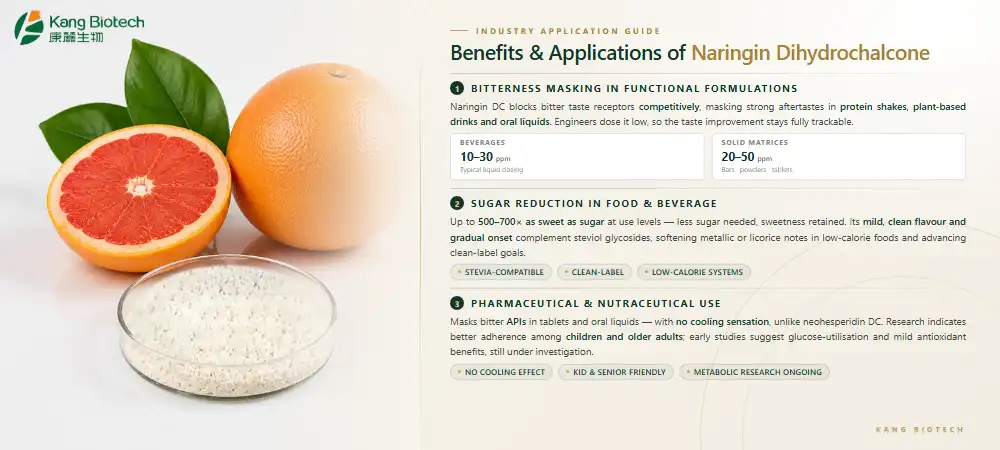
Bitterness Masking in Functional Formulations
Not many people know that naringin dihydrochalcone can be used to block bitter taste receptors in a competitive way. Because of this, it can be used in protein shakes, plant-based drinks, and medicine oral liquids where the active ingredients have strong aftertastes. 10–30 ppm is what application engineers usually use in drinks, and 20–50 ppm is what they use in solid matrices. This keeps the doses low and improves the taste in a way that can be tracked.
Sugar Reduction in Food and Beverage
Naringin dihydrochalcone can be 500–700 times as sweet as sugar in useful amounts. This means that less sugar is required, yet the sweet taste remains. This mild clean flavour and gradual onset make it a perfect complement for steviol glycosides as it reduces the aftertaste of metallic or licorice-heavy drinks and low-calorie meals. All of this helps organisations achieve their clean-label aims without having to start from scratch.
Pharmaceutical and Nutraceutical Use
Naringin dihydrochalcone hides bitter APIs in pills and drinks that you take by mouth. It doesn't make you feel cool like neohesperidin DC does. Researchers who study patient behavior have found that kids and older people find it easier to follow rules when they are not angry. It is also being looked at to see if the nutrient could have any effects on metabolic health. Some early research suggests that it may help the body use glucose better and have some mild antioxidant effects. However, these uses are still being studied.
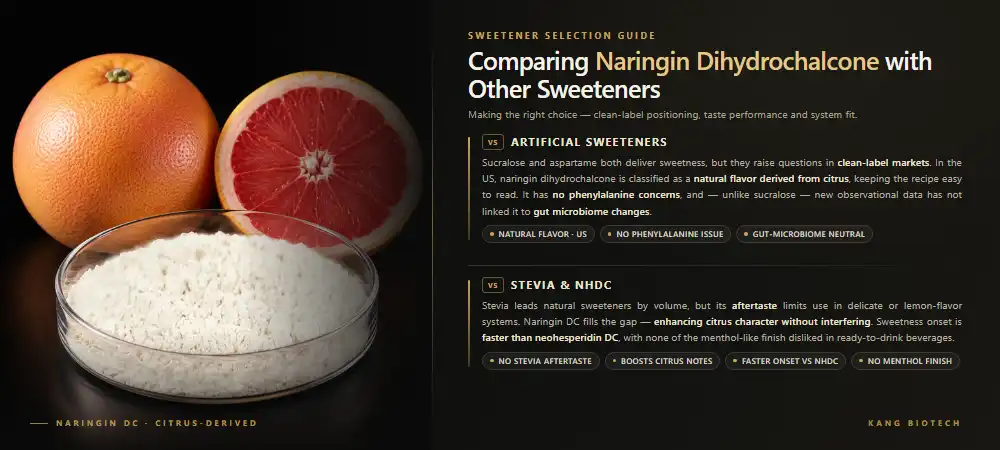
Comparing Naringin Dihydrochalcone with Other Sweeteners: Making the Right Choice
Against Artificial Sweeteners
Both sucralose and aspartame can make foods sweet, but people in clean-label markets may not be able to figure out what they mean. In the US, naringin dihydrochalcone is a natural flavor that comes from citrus fruits. This makes it easier to see what's in the recipe. Some people are allergic to phenylalanine, but this one hasn't been linked to problems. Also, unlike sucralose, it hasn't been linked to changes in the gut bacteria in new observational data.
Against Stevia and NHDC
In terms of volume, stevia is still the most popular natural sweetener. However, its aftertaste makes it hard to use in bland or lemon flavor systems. Naringin dihydrochalcone meets that need; it makes citrus scents better without getting in the way. The sweetness of naringin dihydrochalcone starts off faster than that of neohesperidin dihydrochalcone, and it doesn't have the menthol-like end that some people don't like in drinks that are served at room temperature.
Cost and Formulation Efficiency
When used at normal levels of 10–20 mg/kg in dairy and 25–55 mg/kg in sugar-free drinks, naringin dihydrochalcone has the same price per unit as other high-intensity options. Manufacturers of flavor solutions that work with many downstream brands can do lab tests because the MOQ is only 1 kg. They don't have to commit to big inventory positions. This helps when you have to keep track of a lot of SKUs from different product lines.
Procuring Naringin Dihydrochalcone: A Guide for B2B Clients
What to Verify Before Sourcing
Buying teams should check that the COA contains CAS 18916-17-1, study HPLC purity data at 98%, and request solvent residue reports pertinent to the hydrogenation technique before placing an order. The FCC and EP require heavy metal screens to be tested for cadmium, lead, arsenic and mercury by ICP-MS. Salmonella and E. coli should not be found in microbiological tests.
Most B2B buyers want to examine these crucial papers at the start of their inquiry into a company:
- CAS confirmation number: 18916-17-1 (Not 20702-77-6, which is NHDC)
- Purity: >98% HPLC
- COA Data
- Heavy Metals: ICP-MS
- Moisture: <12%
- Particle Size: 80-100 Mesh
- Regulatory Documents: GRAS status, FEMA number, EU regulatory status of naringin DC isomer limits
- Certifications: ISO 9001, ISO 22000, HACCP, Halal, Kosher, FAMI-QS
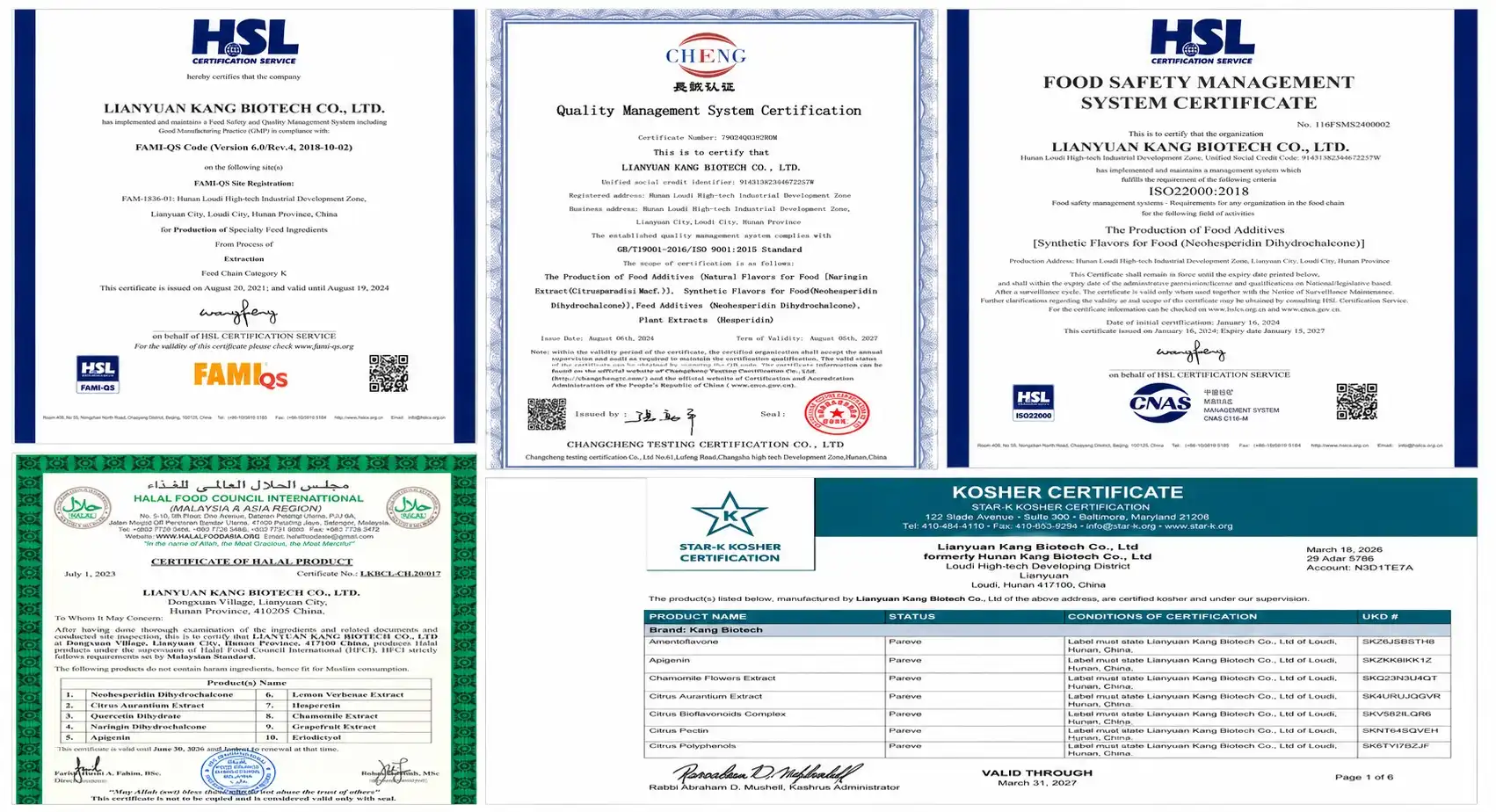
Having these papers allows you to sell things in restricted marketplaces in the US, EU or both. A good manufacturer should be able to provide a client whatever paperwork he wants within 24 to 48 hours after he asks for them.
Kang Biotech is in stock all the time and sends 1kg trial orders via FedEx. For bigger business shipments you may also use air and ocean freight. Standard packaging is in plastic coated fibre drums of 25 kilogram. OEM and ODM are the options if you like a private name, specific specs or an extra high level of purity.
Logistics and Lead Time
Orders from 1kg to 10kg are sent within a few business days. The raw ingredients of the bitter orange supply chain are accessible at various periods of the year, with lead times of 60 to 120 days for industrial quantities of 100 kg to 1 MT. Kang Biotech has bitter orange plantations of more than 20,000,000 m² located in Lianyuan, Hunan Province. This delivers a lot of peace of mind to buyers who manage contracts for many SKUs in the supply chain and pricing consistency.
Future Trends and Innovations in Naringin Dihydrochalcone Research and Applications
Growing Demand in Functional Food Markets
As time goes on, the world market for high-intensity sweeteners keeps moving toward chemicals that come from plants. Naringin dihydrochalcone can lower the amount of sugar in "clean" foods and cover up the bitter taste of functional ingredients. These are two uses that are becoming more common. As the demand for protein-rich drinks and plant-based dairy choices grows, so will the need for better ways to handle bitter flavors.
Pet Food and Oral Care Expansion
It is being studied more how prescription pet food can be used to hide sour flavors in food so that cats and dogs on medicine diets can enjoy it more. Due to its stability when pelletized at high temperatures, naringin dihydrochalcone can be used to make dry feed. Because it is safe to eat or drink by accident, it can be used in toothpaste and mouthwash instead of artificial sweeteners.
Regulatory and Research Developments
Between 2020 and 2024, new studies will help define naringin dihydrochalcone's metabolic profile. This includes its antioxidant activity and how it changes the way glucose is used in the body. As of 2020, FDA GRN 902 puts orange dihydrochalcones in the same GRAS group. However, the CAS level still needs to be confirmed for each one. EU officials are still keeping an eye on the isomer-specific limits under the E 959 class. When you buy something, you should always make sure that the papers from the seller is correct.
Conclusion
Naringin dihydrochalcone is a substance that is rarely found in citrus fruits. It is now used to lower sugar, hide bitterness, and make functional foods. There are no rules about it, so it can be used in drinks, supplements, medicines, and pet food. It has clear chemistry and stays stable at high temperatures. Naringin dihydrochalcone stands out as a natural flavor enhancer because it only needs a small amount to work, can be labeled in a way that doesn't harm the environment, and has safety data to back it up. It will likely be used for more things as more research is done on how it affects metabolism and senses.
FAQ
1. How does naringin dihydrochalcone differ from neohesperidin dihydrochalcone?
Although they belong to the same class of citrus dihydrochalcones, they have distinct CAS numbers: 18916-17-1 and 20702-77-6. Neohesperidin DC creates a noticeable menthol-like aftertaste, whilst naringin dihydrochalcone has a cleaner finish and a shorter sweetness start. Additionally, regulatory constraints vary, especially when it comes to EU regulations.
2. Is naringin dihydrochalcone stable during food processing?
Indeed. It performs consistently during pasteurisation, UHT, and high-temperature pelleting and is stable up to 160°C. It may be used in the production of baked foods, dairy, frozen items, and dry feed.
3. What is the recommended use level in beverages?
Although precise rates vary depending on the planned sweetness profile and overall formulation, typical usage levels in drinks are between 10 and 30 ppm.
4. Does it carry any caloric contribution?
Because of its very high potency compared to sucrose, relatively little is utilised per serving, and it essentially adds no calories to final goods.
5. What documentation should I request before ordering?
A COA with CAS 18916-17-1, purity ≥98% by HPLC, ICP-MS heavy metal findings, microbiological testing results, and copies of relevant certificates like HACCP, Halal, and Kosher should be requested.
Partner with Kang Biotech for Naringin Dihydrochalcone Supply
Since more than 11 years ago, Kang Biotech has been making straight naringin dihydrochalcone. In Hunan Province, they also have an orange supply chain that works together. We have products that are 98% HPLC-grade and come with full COA paperwork. Prices start at 1 kg and are sent quickly by FedEx. Our building has been stamped with ISO 9001, ISO 22000, HACCP, Halal, Kosher, and FAMI-QS. If you email sales02@kangbiotech.com or visit cnkangbiotech.com, we'll get back to you within 24 to 48 hours with a sample or DDP price.
References
-
Horowitz, R. M., & Gentili, B. (1969). Taste and structure in a series of related flavonoid compounds. Journal of Agricultural and Food Chemistry, 17(4), 696–700.
-
Scharbert, S., & Hofmann, T. (2005). Molecular definition of black tea taste by means of quantitative studies, taste reconstitution, and omission experiments. Journal of Agricultural and Food Chemistry, 53(13), 5377–5384.
-
Nabors, L. O. (Ed.). (2012). Alternative Sweeteners (4th ed.). CRC Press.
-
Romo-Hualde, A., et al. (2015). Phenolic compounds from citrus by-products: Antioxidant and biological activities. Food & Function, 6(10), 3234–3243.
-
U.S. Food and Drug Administration. (2020). GRAS Notice 902: Dihydrochalcone Sweeteners from Citrus. FDA.
-
European Food Safety Authority (EFSA). (2011). Scientific opinion on the re-evaluation of neohesperidin dihydrochalcone (E 959) as a food additive. EFSA Journal, 9(5), 2156.

Send Inquiry
Related Industry Knowledge
- Apigenin for Sleep: What This Chamomile Compound Does
- How Sweet Is Neohesperidin Dihydrochalcone Powder?
- NHDC Sweetener Guide: How Neohesperidin Dihydrochalcone Is Changing Low-Calorie Foods
- Naringenin Powder vs Naringin: Key Differences Explained
- Glucosyl Hesperidin Bulk Supplier: What Buyers Should Check
- Apigenin: Health Benefits, Sources, and Safety
- How to Use Neohesperidin Dihydrochalcone Powder in Beverages for a Low-Calorie Boost?
- Exploring Hesperetin Powder for Modern Cosmetic Formulation
- What Is Naringenin Powder and How Is It Used?
- Evidence for the Health Effects of Hesperidin