
What Is Glucosyl Hesperidin? Benefits and Uses Explained
November 19, 2026
Grapefruit flavonoids, such as hesperidin, and glucose are joined together by enzymes to make glucosyl hesperidin. Native hesperidin doesn't dissolve well in water (about 0.01 g per 100 mL), but glucosyl hesperidin dissolves more than 50 g per 100 mL at room temperature. It can be added to clear drinks, powders, supplements, and skin care products in ways that aren't possible with plain hesperidin because of this gap. How does the ingredient work? Where do researchers think it can help? This guide tells you all of that, plus how to choose a supplier.
What Is Glucosyl Hesperidin and How Does It Work?
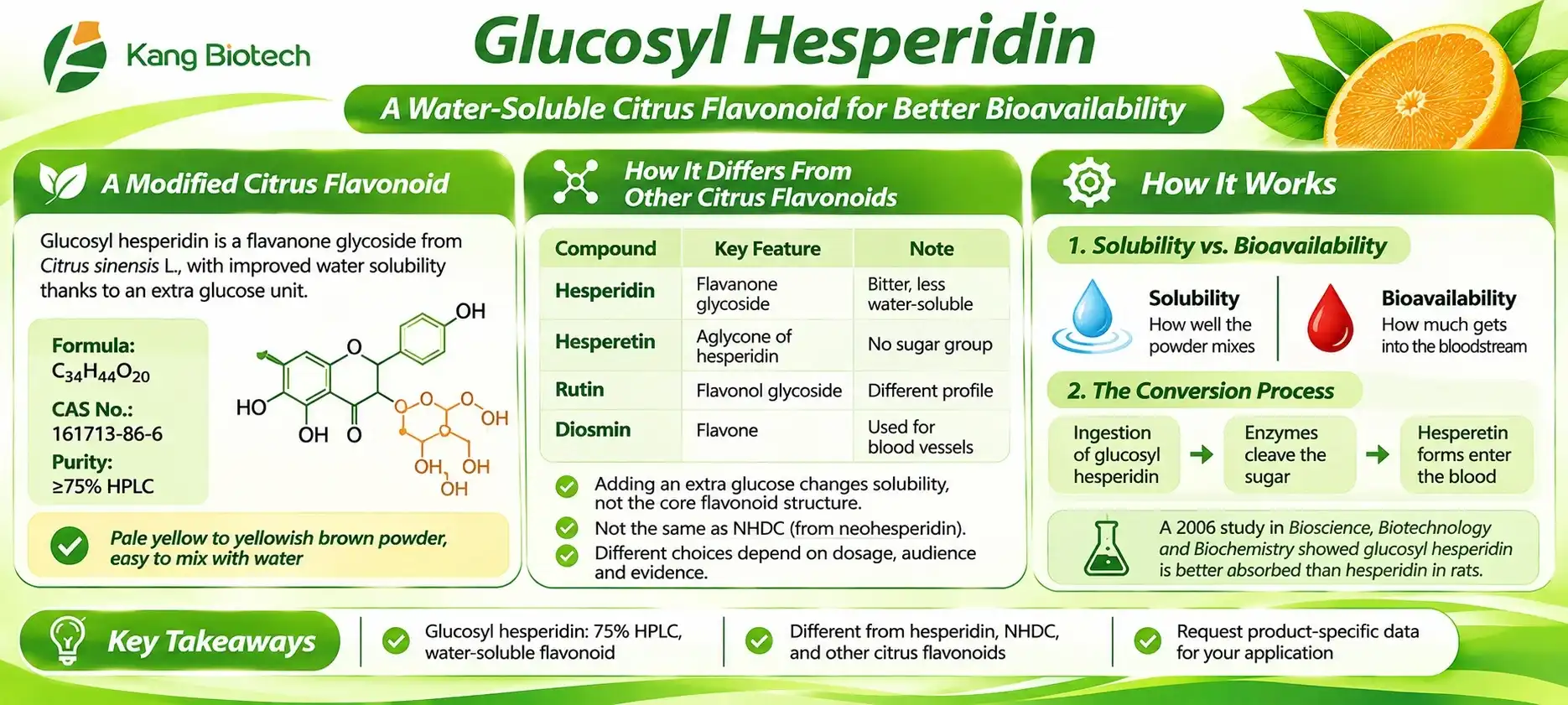
A Modified Citrus Flavonoid
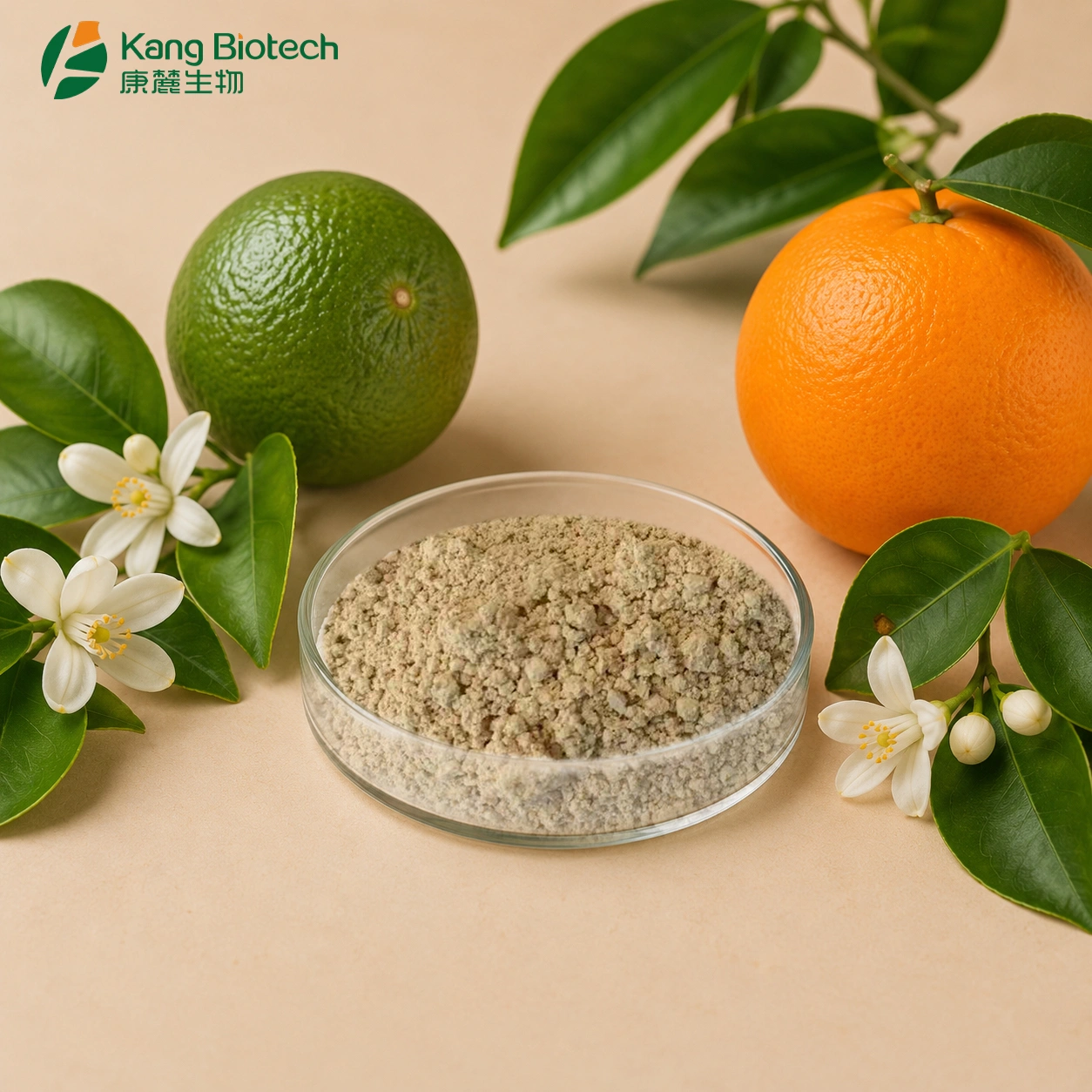
There is a flavanone glycoside called hesperidin that is found in citrus fruits. Bioflavonoids are another name for vitamin P. Main flaw is that it doesn't dissolve well. Citrus sinensis L., which is a type of citrus fruit, is where our α-glucosyl hesperidin powder gets its start. Genes then move glucose units from dextrin to hesperidin. The main thing that makes it work is still flavonoids, which have the chemical formula C34H44O20 and the CAS number 161713-86-6. However, the sugar makes it easy for the flavonoids to mix with water. For food grade, we need 75% HPLC, and the powder is pale yellow to yellowish brown. Buyers should look at the supplier's certificate of analysis to be sure that the product is what it says it is and that it is pure.
How Glucosyl Hesperidin Differs From Other Citrus Flavonoids
Hesperidin, hesperetin, rutin, and diosmin are all flavonoids that work in different ways in a group. Hesperetin, which is hesperidin without the sugar group, is what it is made of. There are two types of flavonoids: flavonol glycoside and diosmin. Flavones are used in products that work on blood vessels. Adding an extra glucose to glucosyl hesperidin doesn't change what's inside it; it changes how it dissolves. People who know about NHDC and make drinks should know that this is not the same thing. Neohesperidin is where it comes from, and hesperidin is where NHDC comes from. Kang Biotech makes both of them. Flavonoids are all different and can't be said to be better than each other. The budget, the type of dose, the audience, and the need for proof will all affect the choice that is best made.
How Glucosyl Hesperidin Works
We should talk about solubility and bioavailability in two different ways. Its solubility is how well a powder mixes with something else. An important thing to know about chemicals is how much of them get into the bloodstream. Neither one is helpful in the real world. It is said that digestive enzymes separate the hesperidin from the sugar after you eat. It is then changed by the body into hesperetin forms that move through the blood. Bioscience, Biotechnology, and Biochemistry published a study in 2006 that looked at rats and found that glucosyl hesperidin was better for the body to use than hesperidin. Because dose and formulation have different effects on people, I tell people who want to buy powder that they should ask for data that are specific to their powder and not assume that one study covers all of them.
Benefits and Uses of Glucosyl Hesperidin
Properties Under Research
A lot of interesting things have been linked to glucosyl hesperidin and other types of hesperidin in research that has been published. The reference data's ORAC value is close to 12,000 µmol TE per gram. This means that the lab does a great job of getting rid of free radicals. Blocking tyrosinase is also being looked into as a way to improve microcirculation, lower inflammation, and make skin brighter. In a study that came out in 2011 in the American Journal of Clinical Nutrition, hesperidin from orange juice improved the function of endothelial cells in healthy volunteers. Because that study only looked at hesperidin and not glucosyl hesperidin, I only use it as background. When used with this evidence, words like "supports" and "is being researched for" make sense. Before it gets to a US label, any claim about blood flow or vascular health has to be checked by people who are qualified to do so.
Uses in Beverages, Foods, and Supplements
Because it dissolves in water, glucosyl hesperidin is great for clear drinks like functional waters, sports drinks, and wellness shots. It can also hold flavored milk, capsules, powdered supplements like vitamin P complexes, jello, candy, and powdered drinks. Some skin care brands use cosmetic grade at least 90% HPLC in their eye creams and brightening serums. There should be different checks for each type of file. At the dose that was planned, drink teams should check the pH, taste, color, and haze. Many drinks with juice don't change much in pH between 3.5 and 8.0, but carbonated colas often drop below pH 3.5 and should be checked. Since the powder doesn't break down below 80°C, you should check any step that is hotter, like filling or pasteurizing.

Safety, Dosage, and US Regulatory Considerations
What you serve, who you serve it to, and the rules of the market all affect how much you should serve. Our records show that it has been approved as a new food ingredient in China, but only up to 500 mg should be eaten each day. It is also on the list of common cosmetic ingredients used in China. It doesn't matter what those facts say about the US. In the United States, an ingredient has to be legal for the job it's meant for. This can be done with either a GRAS conclusion under the FDA's 2016 final rule or a new dietary ingredient notification for supplements. That person in charge of regulations should make sure that your product does things the right way. Before you decide how much glucosyl hesperidin to give, you should look at information about how it works in people, how well it helps digestion, and any interactions that might happen.
How to Choose Glucosyl Hesperidin Powder
Specifications to Request
First, count the things on paper. The glucosyl hesperidin powder we sell is safe for food and meets the 75% HPLC need. It is light yellow to yellowish brown in color and breaks down in more than 50 grams of water for every 100 milliliters of water at room temperature. Between pH 3.5 and 8.0, it doesn't change. Ask each seller the same things: how much water is in it, the size of the particles, how much hesperidin is still there, and the microbiological limits. A certificate of analysis (COA) is sent with every batch. If you ask, we can also give you an MSDS, spec sheet, or pesticide residue report. You need to know the dosage form, target dose, annual volume, and launch date before you ask for quotes. These facts will help you pick the right grade. It takes more tests to make something safe for cosmetic use, so make sure you know what grade your formula needs.
Quality Controls Worth Checking
Inspectors make sure that a drink that is clear stays clear. We check each batch for HPLC purity, heavy metals (lead, arsenic, mercury, and cadmium by ICP-MS), how well it dissolves, and whether it has more than 1,000 CFU/g of growth. Because it can float away, hesperidin that hasn't been changed is important. There are certifications for the systems we use to make things from ISO 9001 to ISO 22000 to HACCP to FAMI-QS. Make sure that the COA has a list of lot numbers and test methods when you compare different suppliers. The COA for a lot tells you exactly what you're getting, while the specification sheet for a type of product tells you about that type of product. They can help you with your audit if they explain how they do things.

Common Mistakes When Selecting a Supplier
If you only compare price, don't forget to check the purity, the number of tests, the packaging, and the paperwork. There are times when a cheaper powder with a lower assay can cost more per serving that works. In the second, solubility is seen as proof of better clinical effect or absorption, which it is not. The third one doesn't test applications. Though a powder might mix well with water, it might not mix well in a protein shake or an electrolyte drink. Check to see if the powder works well with the minerals, sweeteners, and proteins in the recipe. The fourth is the FDA review that began too late. Start it at the same time as the samples so that the process of changing the label and ingredients doesn't slow down your launch.
Buying Glucosyl Hesperidin in Bulk
Samples, MOQ, and Lead Times
It doesn't take long to get what you ask for. Only 1 kg is the least you can order. In 3 to 5 business days, free samples of 10 to 50 g are sent out. Bulk orders can take anywhere from two to three weeks, depending on the grade and amount. We use a fast courier service for small orders. We use the air or the sea for big tasks. The powder comes in 25 kg drums. When you ask for a price quote on glucosyl hesperidin, you should be clear about the container type, size, destination, required paperwork, and due date. Tests, samples, and contracts all cost different amounts. Freight, insurance, customs fees, and Incoterms are all part of the total landed cost.
OEM/ODM and Technical Support
They need to tell you more than just the price. Kang Biotech has been in business since 2011 and has clients in over 40 different countries. Our sales and technical teams can help you pick out the right items, get the right paperwork, and learn how to use them. We offer custom packaging, labeling, purity levels, and specifications, and we do both OEM and ODM work. A lot of the time, the quality and procurement teams ask for quality agreements, traceability records, and COAs that are specific to the lot. We'd be happy to talk about these things during the qualification. The nine production lines in our 33,000 m² building are shared with the Hunan Institute of Agricultural Product Processing and Quality Safety. Together, they help with extraction and product development through a joint research center.

A Simple Five-Step Buying Plan
This is how I think people who want to buy glucosyl hesperidin should do it. First, make a list of your target market, the format, the price, and the amount of demand you expect each year. Second, make a short list of suppliers that meet the needs of your quality team in terms of credentials and exporting experience. Third, look over the samples and papers to make sure they meet your needs. For the fourth step, look at the total value. This includes the cost of shipping, the minimum order quantity, the lead time, and the risk of quality. If you want to get repeat orders, you should agree on how to handle specs, changes, batch releases, and forecasts. That way, there won't be many surprises, and everyone who buys, tests, and makes the medicine will know what to do. Written specifications protect both parties even more as the number of orders rises.
Conclusion
The water solubility of glucosyl hesperidin has increased from about 0.01 g per 100 mL to over 50 g per 100 mL, making it suitable for use in clear drinks, foods, supplements, and skin care products. Certain forms of hesperidin may help the blood flow and act as antioxidants, according to researchers. But the fact that they dissolve doesn't mean that they are absorbed or have a clinical effect. In the US, claims need to be looked over by the regulatory body. If you want to make the right choice, look for things like 75% HPLC food grade, stability from pH 3.5 to 8.0, no degradation below 80°C, lot-specific COAs, and application trials in the finished formula. Teams can choose what to buy more wisely if they look at more than just the price per kilogram. They should also check the documentation, lead time, and MOQ.
FAQ
1. What is glucosyl hesperidin used for?
It's used to make candy, jello, flavored milk, capsules, powdered supplements, clear drinks, and skin care products like serums and eye creams. The pH and taste should be checked by teams that make drinks.
2. How does glucosyl hesperidin differ from hesperidin?
It now dissolves more than 50 times better in water than it did before, from about 0.01 g per 100 mL at room temperature. The flavonoid core stays the same.
3. Can I order a sample, and what is the MOQ?
Yes. For free samples that weigh 10 to 50 g, it takes 3 to 5 business days to ship. To place an order, you must weigh at least 1 kg. A big order takes about two to three weeks.
4. Is it approved for use in the United States?
Status changes based on the product and how it's going to be used. Making supplements, drinks, and food all follow different legal paths. Before you start, talk to a regulatory adviser to make sure you know what those paths are.
5. Which documents come with an order?
Each batch comes with a COA. We can give you MSDS, spec sheets, and pesticide residue reports if you ask. You can look at the COA and the teams' own limits next to each other.
Request Glucosyl Hesperidin Samples From Kang Biotech
Many people want to buy glucosyl hesperidin from a business that has it in stock, packs it in 25 kg drums, does OEM and ODM work, and has ISO 22000, HACCP, Halal, Kosher, and FAMI-QS certificates. They can contact Kang Biotech. Send an email to sales02@kangbiotech.com with the details of the product you want, as well as its application, volume, and final destination. We'll get back to you with an example plan and a price quote for the glucosyl hesperidin powder. You can see our whole line at cnkangbiotech.com as well.
References
1. Yamada M, et al. Bioavailability of glucosyl hesperidin in rats. Bioscience, Biotechnology, and Biochemistry, 2006.
2. Garg A, et al. Chemistry and pharmacology of the Citrus bioflavonoid hesperidin. Phytotherapy Research, 2001.
3. Manach C, et al. Bioavailability and bioefficacy of polyphenols in humans. I. Review of 97 bioavailability studies. The American Journal of Clinical Nutrition, 2005.
4. Nielsen ILF, et al. Bioavailability is improved by enzymatic modification of the citrus flavonoid hesperidin in humans: a randomized, double-blind, crossover trial. The Journal of Nutrition, 2006.
5. Morand C, et al. Hesperidin contributes to the vascular protective effects of orange juice: a randomized crossover study in healthy volunteers. The American Journal of Clinical Nutrition, 2011.
6. U.S. Food and Drug Administration. Substances Generally Recognized as Safe. Federal Register, 2016.

Send Inquiry
Related Industry Knowledge
- What Food Manufacturers Need to Know About Neohesperidin Powder
- Glucosyl Hesperidin as an Antioxidant: What Research Shows
- What is Neohesperidin Dihydrochalcone?
- Horny Goat Weed: How Long Until You Feel the Effects?
- Neohesperidin Powder: Uses, Benefits and Applications
- What Is Hesperetin? Guide to the Flavonoid
- 4 Benefits of Naringin For Your Health
- NHDC Sweetener Guide: How Neohesperidin Dihydrochalcone Is Changing Low-Calorie Foods
- The Power of Naringin
- Naringin Dihydrochalcone: Advances in Applications and Research