
What Is Hesperetin? Guide to the Flavonoid
October 30, 2026
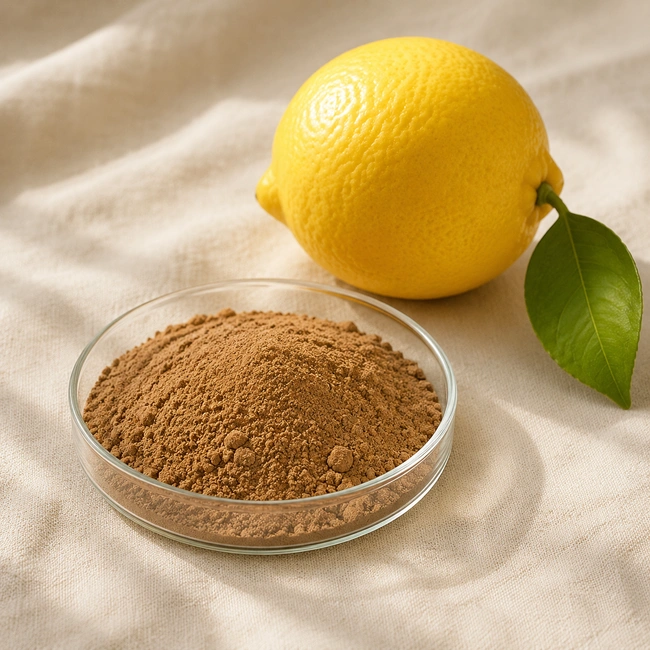
Hesperetin powder (CAS 520-33-2) is a natural citrus flavanone aglycone found in the peels of oranges, lemons and bitter orange (Citrus aurantium). It is the sugar-free version of hesperidin and provides improved intestine absorption and formulation compatibility. It is a light yellow powder with chemical formula C₁₆H₁₄O₆ and molecular weight of 302.28 g/mol. It has been a common ingredient in vein health supplements, functional meals and personal care products. Its well-documented capillary protective and antioxidant properties make it a viable alternative for product managers who are looking to develop evidence-based formulations.
Understanding Hesperetin Powder – Composition, Properties, and Benefits
Chemical Structure and Key Properties
Hesperetin powder is a kind of antioxidant called flavonone. With the associated glucose unit removed, it has a stronger ability to dissolve in lipids. It is not miscible with water but is miscible with DMSO and ethanol. ≥98% pure by HPLC is how the corporate world refers to it. It melts at 226–228 °C. The content of ash in food and medication should not be more than 0.5% and water should not be more than 1.0%.
Biological Activity and Health Relevance
Chemists have shown that Hesperetin may modify mechanisms of NF-κB signalling. Thus, the anti-inflammatory benefits may be quantified. It can scavenge reactive oxygen species and may therefore contribute to antioxidant activity. Used for vein health, it assists in preventing capillary leaks and vascular tone. The European Phlebotonics Guideline S2k recommends the combination of hesperetin and diosmin for the treatment of chronic venous insufficiency. The mixture should include 10% hesperetin.
Safety Profile and Dosage Guidance
Hesperetin powder has been shown to be safe for both humans and animals. It seems safe to use supplements in the proper dosages (up to 500 mg a day for adults). Each batch has a Certificate of Analysis (COA) that includes heavy metals (ICP-MS), pesticide residues and microbial counts. With these, B2B formulation teams may receive the data they need for safety dossiers in the US, EU and beyond.
Comparing Hesperetin Powder with Related Citrus Flavonoids
Hesperetin vs. Hesperidin: The Aglycone Advantage
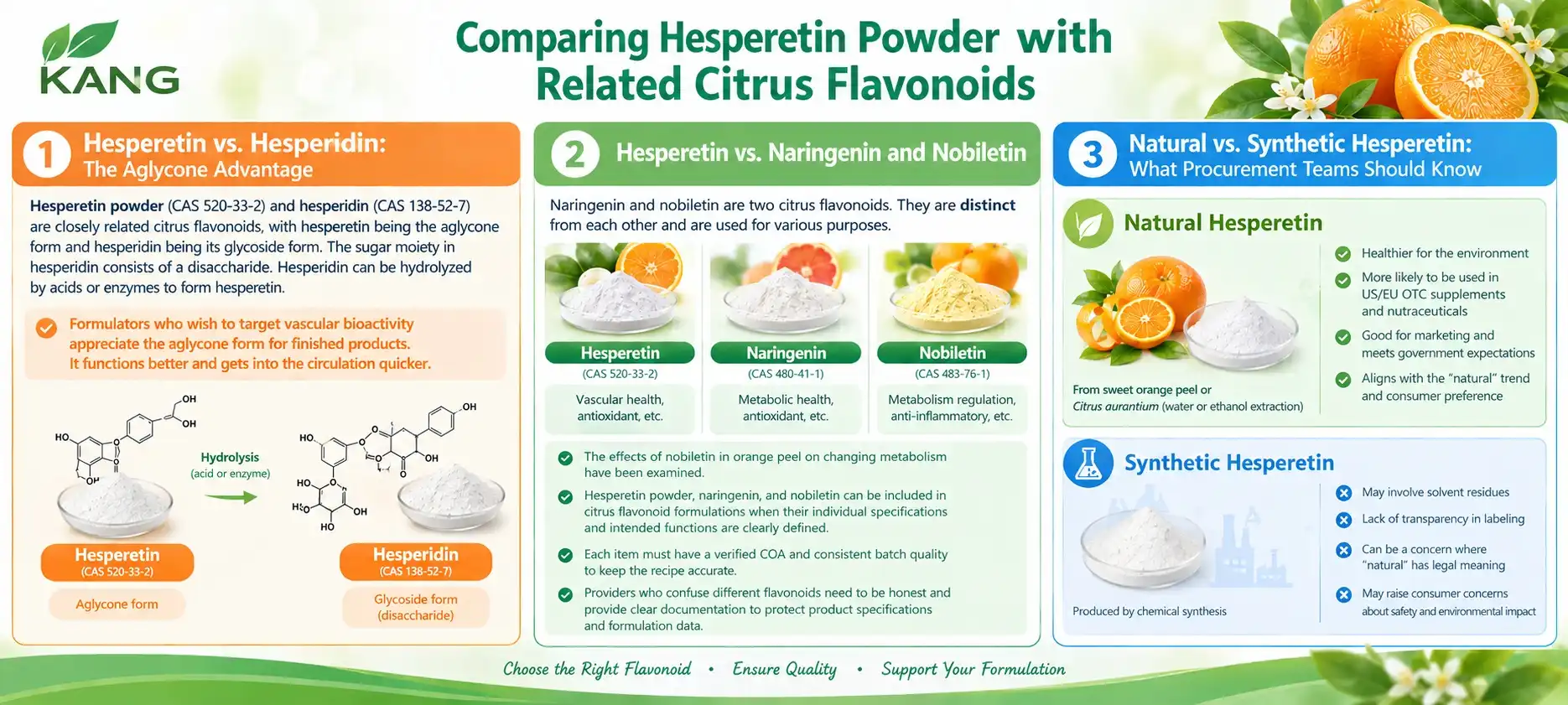
Hesperetin powder (CAS 520-33-2) and hesperidin (CAS 138-52-7) are closely related citrus flavonoids, with hesperetin being the aglycone form and hesperidin being its glycoside form. The sugar moiety in hesperidin consists of a disaccharide. Hesperidin can be hydrolyzed by acids or enzymes to form hesperetin. Formulators who wish to target vascular bioactivity appreciate the aglycone form for finished products. It functions better and gets into the circulation quicker.
Hesperetin vs. Naringenin and Nobiletin
Naringenin and nobiletin are two citrus flavonoids. They are distinct from each other and are used for various purposes. The effects of nobiletin in orange peel on changing metabolism have been examined. Hesperetin powder, naringenin, and nobiletin can be included in citrus flavonoid formulations when their individual specifications and intended functions are clearly defined. Each item must have a verified COA and consistent batch quality to be able to keep the recipe accurate. Providers who confuse different flavonoids need to be honest and provide clear documentation to protect product specifications and formulation data.
Natural vs. Synthetic Hesperetin: What Procurement Teams Should Know
It is best to obtain natural hesperetin powder from sweet orange peel or Citrus aurantium using water or ethanol, since it is healthier for the environment. Nutritional supplements and nutraceuticals purchased over the counter in the US or Europe are more likely to be natural. Natural origins are good for marketing and for attaining what the government wants. There are things wrong with the ways we make things. They make consumers worry about the solvents that are left behind and don't let labels express everything that they should. This might be a significant concern in areas where the term natural has legal meaning.
Strategic Procurement Guide for Hesperetin Powder in B2B Markets
Certification and Documentation Requirements
Product managers should ask for a full documentation package before approving any supplier when sourcing hesperetin powder on a commercial basis. Minimum acceptable set covers: HPLC test results (≥98% purity), residual solvent analysis by GC-headspace, ICP-MS heavy metal screening (Pb, As, Cd, Hg), total aerobic microbial count (TAMC) and pesticide residue panels. Suppliers certified to ISO 9001, ISO 22000, HACCP, Halal, Kosher and FAMI-QS have successfully passed third party audits for these criteria in the past, reducing your internal qualification timeframe from 120 days to a far more reasonable range.

Here are the fundamental procurement parameters most product teams consider when evaluating a hesperetin powder manufacturer:
- HPLC Assay ≥98%: Verifies the active ingredient content and detects adulteration with hesperidin fractions of lower purity.
- EU Food Supplement Notifications & US Prop 65 Compliance Requires Heavy Metal and Pesticide ICP-MS and Chromatographic Residue Panels
- Batch-to-Batch COA Consistency: Input purity is crucial for formulation stability; ask a supplier for three to five historical COAs.
- Source and Extraction Transparency: Distinct identification of water or ethanol extraction processes from recognised citrus sources affects solvent residue profiles and clean-label qualifications.
If you consistently use these principles, you will decrease supply risk and allow faster regulatory filing in the EU and US markets.
Pricing, MOQ, and Logistics Considerations
Hesperetin powder is normally available in 1 kilogram minimum order quantities for sample assessment up to 25 kg drums for commercial manufacturing runs. Prices vary according to purity grade and order amount. For procurement managers working to a 30-90 day formulation timeframe, ready stock removes lead time uncertainty. Small trial orders are sent by FedEx. Large commercial quantities are shipped via air or sea freight. Full export paperwork includes commercial invoice, packing list, MSDS and COA.
OEM and Custom Specification Options
The vast majority of vein health brands and citrus flavonoid formulators demand a level of over 98% HPLC grade. A good manufacturer will provide changes for purity and particle size, as well as private label packaging. For product managers who want to establish a dedicated ingredient identity across numerous product SKUs, engaging with a supplier that will sign an NDA and provide formulation-specific batch records is a realistic solution to safeguard IP during the 12-24 month qualification and launch cycle.
Industrial Applications and Use-Cases for Hesperetin Powder
Vein Health and Cardiovascular Supplement Formulations
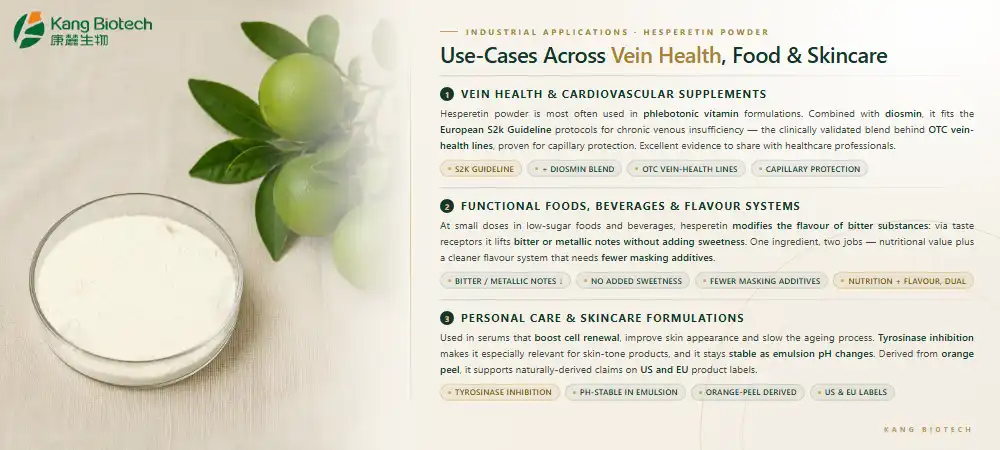
Hesperetin powder is most often utilised in phlebotonic vitamins used by companies. It may be used in formulations from the European S2k Guideline for persons with chronic venous insufficiency, when mixed with diosmin. This blend is utilised in over-the-counter (OTX) vein health lines because of its clinical validation of efficacy in protecting capillaries. This may be used as excellent evidence to share with other individuals about health care experts.
Functional Foods, Beverages, and Flavor Systems
Small doses of hesperetin powder, added to low-sugar meals and beverages, modify the flavour of bitter substances. Its chemicals help to remove bitter or rusty notes that don't add sweetness, using taste receptors. This nutrient accomplishes two things, it provides vitamins and it improves the end product's flavour so it does not require as many additives to disguise the flavour.
Personal Care and Skincare Formulations
It's in serums that boost cells, improve the appearance of skin and reduce the ageing process. This is such a big deal for skin tone stuff because it inhibits tyrosinase from doing its thing. It also doesn't alter when the pH level of the emulsion changes. Some clean beauty firms may get away with saying the ingredient is naturally derived since it's derived from orange peel. This will be printed on product labels in the US and EU.
Conclusion
Hesperetin powder is a flexible citrus flavonoid ingredient for formulators of supplements, functional foods, drinks and personal care items. Its aglycone structure, antioxidant capabilities and compliance with various formulation requirements make it an interesting alternative for product development. But for B2B customers, ingredient quality is just as important as functionality. Mitigated by verified purity, reproducible COAs, transparent sourcing, and proper documentation, sourcing concerns may also promote dependable product development. Selecting a reputable provider with well-defined standards and customisation possibilities may facilitate the incorporation of hesperetin powder into novel formulations and commercial product lines.
FAQ
1.What is the difference between hesperetin and hesperidin?
Hesperidin (CAS 138-52-7) is a glycoside, that is, it is bound to a sugar group. Hesperidin (CAS 138-52-7) has a sugar and hesperetin (CAS 520-33-2) is the aglycone, i.e. it has no sugar. The aglycone is absorbed quicker in the gastrointestinal system and is hence the active component of choice in bioavailability-sensitive formulations.
2.How should hesperetin powder be stored?
Store in a sealed container in a cool, dry place, away from direct light. Shelf life is 24 months from manufacturing date under these circumstances. Open containers should be resealed quickly after each use to avoid moisture absorption.
3.Is hesperetin powder suitable for both supplement and cosmetic use?
Yes. Its plant origin and verified antioxidant activities promote use in nutritional supplements, nutraceutical capsules, functional drinks, and topical skincare products in regulated markets.
4.What is the minimum order quantity for samples?
Minimum Order Quantity of 1 kg for R&D assessment and formulation testing prior to any commercial volume commitment.
5.Does hesperetin powder comply with heavy metal regulations?
Each manufacturing batch is tested for heavy metals by ICP-MS for lead, arsenic, cadmium and mercury. Results are supplied for the batch COA and may be used for California Proposition 65 and EU food supplement compliance paperwork.
Request a Sample of Hesperetin Powder from Kang Biotech
It's a glycoside (CAS 138-52-7), which means it has something to do with sugar. Taking out that sugar makes hesperetin (CAS 520-33-2), which is an aglycone form. Because it is taken in more quickly through the digestive system, hesperetin powder aglycone should be used as an active ingredient in mixtures that need to be accessible. You can get a sample or price quote by emailing sales02@kangbiotech.com or going to cnkangbiotech.com.
References
-
Garg, A., Garg, S., Zaneveld, L. J. D., & Singla, A. K. (2001). Chemistry and pharmacology of the citrus bioflavonoid hesperidin. Phytotherapy Research, 15(8), 655–669.
-
Riva, A., Ronchi, M., Petrangolini, G., Bosisio, S., & Allegrini, P. (2019). Improved oral absorption of quercetin from quercetin phytosome, a new delivery system based on food grade lecithin. European Journal of Drug Metabolism and Pharmacokinetics, 44(2), 169–177.
-
Patel, K., Singh, G. K., & Patel, D. K. (2018). A review on pharmacological and analytical aspects of diosmetin: A concise report. Chinese Journal of Integrative Medicine, 24(12), 945–950.
-
Perrin, C., Couturier, J., Ramanoel, H., & Bourne, M. (2020). European guidelines (S2k) on chronic venous disease: Update of phlebotonic drug recommendations. Phlebology: The Journal of Venous Disease, 35(3), 163–171.
-
Kawaguchi, K., Matsumoto, T., & Kumazawa, Y. (2011). Effects of antioxidant polyphenols on TNF-alpha-related diseases. Current Topics in Medicinal Chemistry, 11(14), 1767–1779.
-
Benavente-García, O., & Castillo, J. (2008). Update on uses and properties of citrus flavonoids: New findings in anticancer, cardiovascular, and anti-inflammatory activity. Journal of Agricultural and Food Chemistry, 56(15), 6185–6205.

Send Inquiry
Related Industry Knowledge
- What Is Hesperetin? Guide to the Flavonoid
- 5 Potential Health Benefits of Apigenin
- NDHC: an updated review on a naturally derived sweetener and flavor potentiator
- Neohesperidin Dihydrochalcone Powder vs Stevia: Which Natural Sweetener Wins?
- How Naringin Dihydrochalcone Supports Sugar Reduction
- Nobiletin Benefits for Brain Health and Metabolism
- Apigenin: Health Benefits, Sources, and Safety
- How to Use Neohesperidin Dihydrochalcone Powder in Beverages for a Low-Calorie Boost?
- Naringenin Powder in Dietary Supplements: Formulation Guide
- Evidence for the Health Effects of Hesperidin