
How to Use Naringenin Powder in Dietary Supplements
November 5, 2026
Before you put naringenin powder in supplements, make sure it is pure, what you think it is, and doesn't break any laws about the people you want to sell them to. Next, pick a dosage form that works with how little water it needs, such as tablets, capsules, or softgels. Based on research that has already been done, safety data, and U.S. law, pick the serving size. Next, carefully add the right things to it and mix it well. Pilot batches should be made to make sure the stability, consistency, and assay are all good. Lastly, make sure you buy from a business that gives you a certificate of analysis that is unique to your batch. At Kang Biotech, we offer 98% HPLC naringenin powder for sale. The steps below are written in easy-to-understand language.
Understand Naringenin Powder Before Adding It to a Supplement Formula
Confirm Identity, Formula, and CAS Number
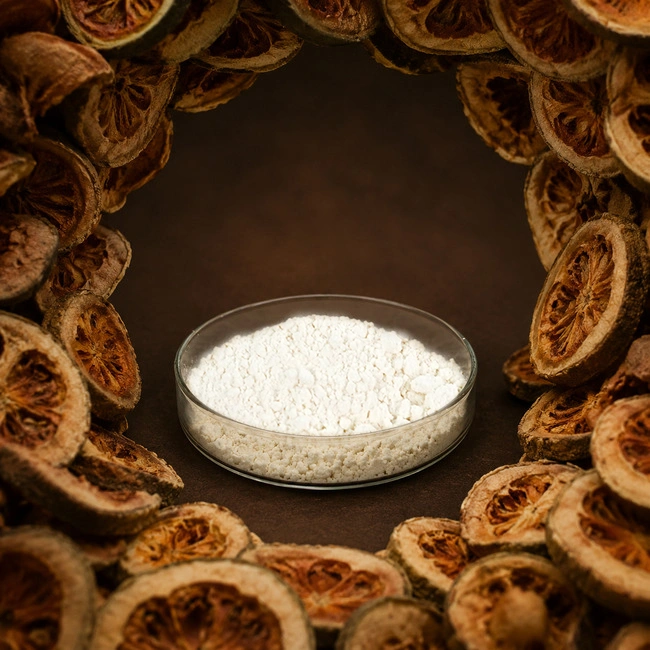
Making sure the ingredient is what it says it is is the first thing that needs to be done. Its CAS number is 480-41-1, and its molecular formula is C15H12O5. Its molecular weight is 272.25 g/mol. Our naringenin powder is white and can melt at temperatures between 247°C and 251°C. HPLC checks to see if it is uniform and 98% pure. If these numbers don't match up on a specification sheet that has been checked, ask the supplier to confirm them. It's possible that the compound or grade is different if they don't. Water, particle size, heavy metals, and microbes should all be limited in a good specification. Your quality team can then compare lots over time and find drift early.
Tell Naringenin and Naringin Apart

These two names are often mixed up when people are shopping, so I'll start here. Naringin is a glycoside, which means it has a sugar group on it. Since it's an aglycone, it doesn't have a sugar group. This difference affects how the ingredient tastes, how well it mixes, and how well it dissolves. It dissolves better in ethanol than in water because it is more lipophilic. Naringin tastes very bitter. On the purchase order, the specification sheet, and the label draft, all of the names of the compounds should match. This is the naringenin powder that we sell. Our HPLC tests look for chemicals like naringin and ones that check for purity. This makes it easy for your team to confirm each lot.
Know the Source and Extraction Route
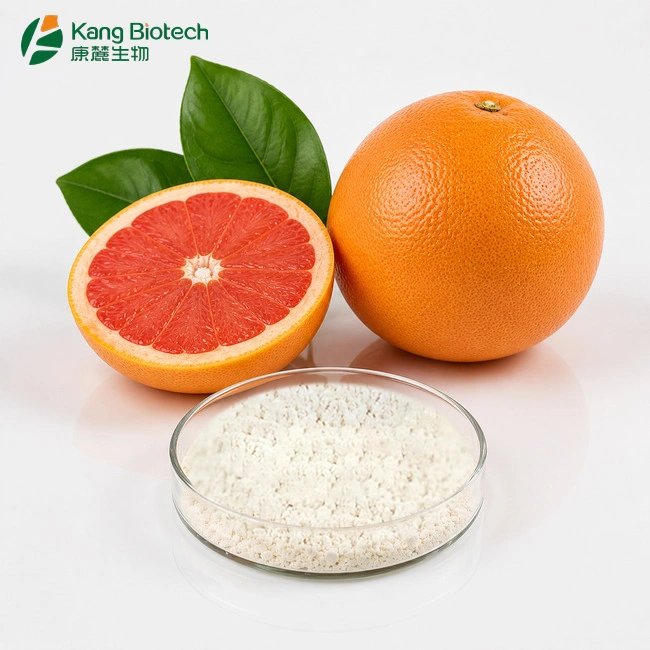
Naringenin is made from citrus fruits and is then taken out of the fruit with water or ethanol. Kang Biotech is in charge of more than 20,000,000 m² of bitter orange plantations in Lianyuan, Hunan Province. The business also has a 33,000 m² factory with 9 production lines. The technical team at our company has been extracting citrus fruits for more than 20 years. We've been in business since 2011. With this chain, which goes from the plantation to the finished product, we can choose the raw materials and keep track of them. To have a source that can be shown to customers when they ask where the naringenin powder comes from is important for brands that buy it. Check each seller's proof of where the goods came from against what it says on the product page.

Evaluate Naringenin Powder Solubility and Pick the Right Delivery System
Plan Around Low Water Solubility
Naringenin does not mix well with water, but it does mix well with DMSO and ethanol. Very rarely, this makes a capsule not work right. It can settle to the bottom of a bottle of drink mix or ready-to-drink and change the amount of alcohol in each serving. What is the customer going to do with the item, and what kind of liquid, if any, will it go in? Before you pick a format, write these down. In that case, ask the supplier for information on how the substance breaks down or spreads in different pH, temperature, and concentration levels. Even if the naringenin powder looks fine in a lab flask, it needs to be tested in the real matrix.
Match the Dosage Form to the Ingredient
Most of the time, capsules and tablets are the best way to go because the powder doesn't taste bad and stays dry. The compound can be put into softgels as an oil phase, which works well for an ingredient that likes to stick to fat. To make stick packs and drink mixes work, the powder needs to be mixed with water in a more even way. Heat, moisture, and pH are now some of the tests that are done on functional foods. I think you should start with capsules or tablets for the first launch. You can move on to more complicated formats once the pilot data seems stable. This order lets your team make mistakes without spending a lot of money, and it gives them time to learn how the ingredients flow and mix.
Use Carriers and Particle Control for Liquids
What drink or liquid would you like? There are three primary categories. It is broken down into tiny bits called microns, the chemical is combined into a stable oil droplet and then complexed to trap it within a carrier molecule. Hydroxypropyl-β-cyclodextrin was added to naringenin in a 2011 research published in PLoS ONE . This increased water solubility and absorption in rats. What occurred with that product is not necessarily what would happen with yours, but it does highlight why carrier choice should be tested out in a pilot project. Better dispersibility and genuine dissolution should be noted as independent outcomes since they influence the dosing accuracy and the quality of the experience. Our experts can take your formulators through naringenin powder in further detail.
Formulate Naringenin Powder With the Right Dose and Safety Review
Build the Formula Around a Clear Concept
Start with the concept of the product: who it's for, how it should be utilised and what positioning you can support. Next, don't simply duplicate a number from a study unrelated to this one, but utilise published research, safety data, government guidelines, and the full formula to determine the active level. This is because when the inclusion rate is low, a little fine powder might be separated in a huge batch. There are items like flow agents , fillers and moisture regulating aids that may assist with mixing and maintaining consistency. Naringenin powder may react to light, air and water, like other flavonoids. And ask your staff to protect the mix throughout storage and processing. Ensure that each pilot batch has the same quantity of flavonoids.
Separate Research Doses From Label Doses
There are four different numbers that you should know: research doses, serving sizes, manufacturing overages, and legal use levels. However, teams often mix them up. Naringenin trials in humans were summed up in a 2019 review in Pharmaceuticals. The review said that there are still not many clinical data available. Because of this, I treat each dose choice as a separate case. Most of the time, a new food ingredient in the US needs to be reported to the FDA at least 75 days before it can be sold. Make sure you talk to your regulatory advisor about the rules for naringenin powder and the claims you're making before you put your product on the market. We think that a trained professional should set the final label dose.
Review Interactions and Special Groups
The finished recipe, the amount, the time, and the purity all have an impact on how safe it is. Plenty of proof shows that grapefruit juice and some medicines can not work well together. A 2013 review in CMAJ talked about how furanocoumarins in grapefruit juice change CYP3A4 in the gut. This can make more of some drugs reach the bloodstream. A study has also been done on citrus flavonoids, such as naringenin, to see how they affect enzymes and transporters. Just because someone is very pure doesn't mean that everyone is safe. Before a product goes on sale, it should be looked over by a toxicologist or a doctor. There should also be warnings on the label for kids, women who are pregnant or breastfeeding, and people who take prescription drugs. You can get more for your money by writing a short review now instead of later.
Verify Quality and Compare Naringenin Powder Options
Read the Certificate of Analysis Line by Line
The certificate of analysis should be specific to the batch. It should include the product, lot number, test date, method, specification limits, results, and the name of the person who approved the test. We use HPLC to check the purity of each batch of our naringenin powder and other compounds like naringin. There is a COA, an MSDS, an allergen declaration, and regulatory documents with every shipment. Naringenin and naringin can be told apart with one more check. 21 CFR Part 111 says that supplement makers in the US need to check that each ingredient is exactly what it says it is. A COA can help with that file after you've checked out the supplier. Our factory is certified by ISO 9001, ISO 22000, HACCP, Halal, Kosher, and FAMI-QS, so you can see the quality system behind every batch.

Set Storage and Shelf-Life Rules
The way you store flavonoids is important because light, water, and air can change them. We suggest keeping naringenin powder in sealed containers in a cool, dry place out of the sun. If you seal containers right, they will last for 24 months. Every pack we sell comes in a 25 kg drum. When you receive goods, write down the storage rule and keep track of when each drum was opened. When you're done sampling, close the drum quickly and keep it away from wet places. For finished goods, you should find out how stable your own formula is. This is because an ingredient may not react the same way when mixed with other parts, and the finished good may need a shorter shelf life.
Compare Purified Powder With Citrus Extracts and Other Flavonoids
You can be sure that the active ingredients are correct when you use pure naringenin. Whole citrus extract has more chemicals, so the color, taste, and words on the label can be different from one lot to the next. There are two types of flavonoids: hesperidin and quercetin. Each one is backed up by a different set of evidence from a different source. Don't use them instead of the real thing. Make a short list of options that includes things like cost, budget, target market, order volume, dispersibility, dosage form, certifications, and how much you can spend. After that, make sure the samples work with the real prototype before you give the supplier the green light. A 98% HPLC naringenin powder is good for teams that don't want a lot of different plants but instead want a clear, pure active.
Choose a Supplier and Run a Practical Implementation Workflow
Qualify the Supplier Beyond Price
First, find out if the company makes things, sells things, acts as a broker, or provides goods on contract. After that, check out their technical support, ability, experience with exports, and quality systems. As for where the product came from, an SDS, an allergen statement, a current COA, and a specification sheet should all be asked for. When you get a quote, it should include the MOQ, lead time, packaging, payment terms, Incoterms, and assumptions for freight. This way, you can compare more than just the unit price of the goods. You can see how much it costs to land them all. The Hunan Institute of Agricultural Product Processing and Quality Safety and Kang Biotech work together to run a joint research center. Kang Biotech makes its own products. People in more than 40 countries and regions buy it. Our sales and technical teams are here to help people who need to know more about naringenin powder.

Avoid Common Mistakes
Some mistakes are found in more than one project. When teams think naringin and naringenin are the same thing, they get the wrong thing in terms of taste or specs. A lot of people make that mistake because the names are only two letters apart. They believe that a 98% assay means the substance won't move or change over time, but it doesn't. It is added to a product that is made with water without a sedimentation test. The dose is copied from a paper, but the government doesn't check it. On top of that, they don't bring the right paperwork for each batch, which can cause customs to check their IDs and wait. We can avoid most of these problems if we have a written list, a test batch, and a supplier who sends paperwork with every batch of naringenin powder.
Follow a Step-by-Step Workflow
I believe brands and OEM clients should follow this order. The best way to start is with a brief that lists the use, dosage form, target market, purity, annual volume, packaging, and certification needs. Ask suppliers about their paperwork, amount of space, minimum order quantity (MOQ), and lead time. You can ask for a sample; we offer samples but need at least 1 kg of your order. Check the identity, the ability to dissolve, the taste and smell, and the stability. First, make a test batch. Then, sign a quality agreement that covers complaints, list changes, and batch release. Sizes that are in stock can be sent out in 3 to 5 business days. A messenger service sends small orders quickly, while freight ships or planes take care of bigger ones. Our OEM and ODM services let you get packaging, labels, and specifications that are made just for you.
Conclusion
You should quickly decide how to use naringenin powder in the best way. Don't mix naringenin and naringin; keep them separate. Check the name, CAS number, and 98% HPLC purity. It's best to match the dosage form to how little water it soaks up. For instance, when making pills or capsules, you should start with carriers or particle control. Doses should be based on proof and be looked over by the government. We need to be careful with interactions and special groups since there aren't many clinical data yet. A different COA should be given to each batch. Keep the powder cool, dry, and closed up. Then you should test your own prototypes against citrus extracts. How do you choose a supplier? Look at the documents, MOQ, lead time, and total landed cost. Then, use a workflow that was created from pilots. There is less chance of technical, regulatory, or supply problems before the product goes on sale if these steps are taken.
FAQ
1. How does naringenin powder differ from naringin?
Since it's an aglycone, it doesn't have a sugar group. It's called naringin and tastes worse. The exact compound should be named in all purchase orders and specifications because it doesn't dissolve or react with other ingredients in the same way.
2. How should I store it, and how long does it last?
Keep it somewhere cool, dry, and out of direct sunlight. If you seal containers right, they will last for 24 months. Close each drum quickly when you're done sampling to keep air and water out.
3. What are the MOQ and sample options?
You can get samples, and 1 kg is the least you can order. We pack in 25-kilogram drums. When you need to send a large package, you can use air or sea freight.
4. Which documents come with each order?
Every shipment comes with a COA, an MSDS, an allergen declaration, and papers required by the government. It takes two to three weeks to make standard formulas and three to five business days to ship standard specifications from stock.
5. Is the product suitable for vegan formulas?
Yes. It doesn't contain any animal products and comes from citrus fruits, so it can be used with vegan and vegetarian foods. Say what allergens are in the food if the label needs one.
Request Naringenin Powder Samples and a Bulk Quote From Kang Biotech
Want to find a business that sells naringenin powder and 98% HPLC material that is already made? Kang Biotech gives samples, needs at least a 1 kg order, has 25 kg drums, and can help with OEM or ODM. Write to sales02@kangbiotech.com and tell them what purity, dosage form, annual volume, and market you want to reach. Our team will get back to you with more information, documents, and a due date. At cnkangbiotech.com, you can also look at our selection of citrus ingredients.
References
1. Salehi B, et al. "The Therapeutic Potential of Naringenin: A Review of Clinical Trials." Pharmaceuticals, 2019.
2. Shulman M, et al. "Enhancement of Naringenin Bioavailability by Complexation with Hydroxypropyl-β-Cyclodextrin." PLoS ONE, 2011.
3. Bailey DG, Dresser G, Arnold JMO. "Grapefruit–Medication Interactions: Forbidden Fruit or Avoidable Consequences?" CMAJ, 2013.
4. Rani N, et al. "Pharmacological Properties and Therapeutic Potential of Naringenin: A Citrus Flavonoid of Pharmaceutical Promise." Current Pharmaceutical Design, 2016.
5. U.S. Food and Drug Administration. "Dietary Supplements: New Dietary Ingredient Notifications and Related Issues: Guidance for Industry (Draft)." FDA, 2016.
6. U.S. Food and Drug Administration. "Current Good Manufacturing Practice in Manufacturing, Packaging, Labeling, or Holding Operations for Dietary Supplements (21 CFR Part 111)." Federal Register, 2007.

Send Inquiry
Related Industry Knowledge
- How to Select a Bulk Naringenin Powder Supplier
- How Sweet Is Neohesperidin Dihydrochalcone Powder?
- What is Neohesperidin Dihydrochalcone?
- Premium Apigenin Extract Powder Superior Manufacturing in China for Global Partnership
- How to Choose a Polymethoxy Flavonoids Powder Manufacturer
- Glucosyl Hesperidin: Rethinking Hesperidin in Drinks
- Apigenin Benefits: Sleep, Anxiety, Healthy Aging, and More
- Neohesperidin Powder: Uses, Benefits and Applications
- What Are the Benefits of Naringin?
- What Is Naringenin Powder and How Is It Used?